Money-Back Guarantee · 100 days Free Worldwide Delivery
449,564artworks 30,613artists 4,660museums 32languages
Catalogue entry

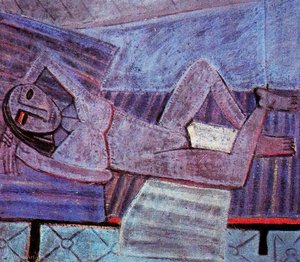
Two Heads

1959. , 63.0 x 48.0 cm.

Fig. 1. Wifredo Lam, Two Heads, 1959. Shown as the reproduction you are specifying: , .

§ 1Catalogue data

Dimensions
63.0 x 48.0 cm

§ 2Abstract

Collectible Description

Explore Wifredo Lam’s ‘Two Heads,’ a surreal watercolor masterpiece blending Cubism & Afro-Cuban influences. A haunting depiction of duality, perfect for art collectors.

Artist Biography

Wifredo Lam (1902-1982) brilliantly fused Surrealism, Cubism & Afro-Cuban traditions. Explore his powerful hybrid figures and unique portrayal of Caribbean culture & African heritage.

§ 3Commentary

The Wifredo Lam painting, Two Heads, is a captivating piece that showcases the artist's unique style and technique. Created in 1959, this watercolor painting measures 63 x 48 cm and is currently housed at the Hirshhorn Museum and Sculpture Garden in the United States.

Understanding the Painting

The image depicts two heads, one of which appears more prominent than the other. The larger head features horns, giving it a demonic appearance, while the smaller head seems to be gazing at its counterpart. This intriguing composition raises questions about the relationship between the two entities and invites the viewer to ponder the symbolism behind the artwork.

Artist's Style and Influences

Wifredo Lam's style is characterized by a blend of Cubism, Surrealism, and African influences. His work often features hybrid creatures, like the one in Two Heads, which reflect his interest in exploring the human condition and the natural world. For more information on Wifredo Lam's artwork, visit Wifredo Lam: Two Heads.

Other Notable Works and Artists

Some notable artists whose work can be found on AllPaintingsStore.com include:
For those interested in learning more about Wifredo Lam and his contemporaries, Wikipedia provides a wealth of information. The Westmoreland Museum of American Art is another valuable resource for art enthusiasts, offering a collection of over 3,000 works of art.

Questions & Answers

Is "Two Heads" free of copyright?

"Two Heads" by Wifredo Lam is still protected by copyright. This status governs how the image of the work may be reproduced.

Can I use augmented reality to see "Two Heads" by Wifredo Lam in my room?

The AR Preview page of "Two Heads" by Wifredo Lam uses augmented reality to show the artwork in your own space, on a compatible device.

Is "Two Heads" by Wifredo Lam in the public domain, and why?

"Two Heads" by Wifredo Lam is still protected by copyright. Copyright duration runs from the artist's death, which occurred in 1982.

§ 4The artist

Wifredo Lam

Wifredo Lam

1902 - 1982, Cuba

Quick facts about Wifredo Lam

  • Full Name: Wifredo Óscar de la Concepción Lam y Castilla
  • Nationality: Cuban
  • Date Of Birth: 1902
  • Date Of Death: 1982
  • Place Of Birth: Caguas, Cuba
  • Notable Artworks:
    • The Jungle
    • Two Heads
    • Seated Woman
    • The Dream
  • Artistic Movement Or Style: Surrealism, Cubism
  • Artists Who Influenced This Artist:
    • Picasso
    • Matisse
    • Bosch
    • Bruegel the Elder
  • Artists Or Movements Influenced By This Artist: Afro-Caribbean artists

Artist Biography

A Crossroads of Cultures: The Life and Art of Wifredo Lam

Wifredo Óscar de la Concepción Lam y Castilla, known simply as Wifredo Lam, was a painter who embodied the complexities of cultural identity in the 20th century. Born in Sagua La Grande, Cuba, in 1902, his very lineage spoke to the island’s layered history – a father descended from Chinese immigrants and a mother tracing her roots back to Spanish conquistadors and enslaved Africans. This multicultural heritage wasn't merely biographical detail; it became the wellspring of his artistic vision, fueling a unique style that fused European modernism with Afro-Cuban spirituality and symbolism. Lam’s early life was marked by an initial pursuit of law in Havana, but even amidst legal studies, he found himself drawn to the natural world, spending time at the botanical gardens – a foreshadowing of the organic forms that would later dominate his canvases. Formal artistic training followed at the Escuela de Bellas Artes in Havana and then in Madrid under Fernando Álvarez de Sotomayor y Zaragoza, where he absorbed traditional techniques while simultaneously beginning to question their limitations.

European Encounters and the Birth of a Hybrid Style

The years Lam spent in Spain proved formative. Immersed in the masterpieces of the Prado Museum, he was particularly captivated by the fantastical worlds of Hieronymus Bosch and Pieter Bruegel the Elder, artists who dared to populate their paintings with strange creatures and unsettling visions. This early exposure instilled a fascination with symbolism and allegory that would resurface throughout his career. However, it wasn’t until Lam arrived in Paris in 1938, on the eve of World War II, that his artistic trajectory truly began to accelerate. There, he encountered the vibrant currents of Surrealism and was profoundly influenced by the work of Henri Matisse. Crucially, this period also brought him into contact with Pablo Picasso, a pivotal encounter that would reshape his approach to art. Picasso encouraged Lam to delve deeper into his own cultural roots, urging him to move beyond imitation and explore a uniquely Cuban aesthetic. This encouragement coincided with a deepening connection to Afro-Cuban religious traditions through his godmother, Matonica Wilson, a Santería priestess. Exposure to the orishas – powerful deities in the Yoruba religion – and their associated rituals unlocked a rich vein of imagery that would become central to Lam’s artistic language.

The Jungle and Beyond: Defining a Visual Language

Lam's most iconic work, The Jungle (1943), stands as a testament to this synthesis of influences. Created during a period of exile in Martinique and Cuba, the painting is not simply a depiction of a tropical landscape; it’s a complex allegory of colonial oppression, cultural hybridity, and spiritual awakening. The canvas teems with fragmented figures – human, animal, and vegetal forms intertwined in a chaotic yet strangely harmonious composition. These are not merely representations of bodies but embodiments of forces, spirits, and memories. The flattened perspective, bold colors, and dynamic energy owe a debt to Cubism, while the surrealist sensibility allows for a dreamlike quality that transcends literal representation. Beyond The Jungle, Lam continued to explore these themes in numerous paintings, drawings, and sculptures. The Fata Morgana Suite, created between 1940 and 1941 while illustrating André Breton’s poem, showcases his evolving artistic vocabulary and demonstrates his ability to translate literary concepts into compelling visual forms. His figures often appear distorted, fragmented, and reassembled, reflecting the fractured experience of identity in a post-colonial world.

A Legacy of Decolonization and Cultural Bridge-Building

Following years spent navigating exile and artistic experimentation, Lam returned to Cuba in 1941, determined to reconnect with his heritage and contribute to a burgeoning sense of national identity. He continued to travel extensively throughout the Caribbean and beyond, absorbing new influences and refining his unique style. His later work saw him experimenting with sculpture, ceramics, and printmaking, further expanding his artistic repertoire. Lam’s impact on 20th-century art is profound. He wasn't simply an artist who incorporated Afro-Cuban motifs into European modernism; he actively challenged the dominant narratives of Western art history, offering a powerful counterpoint to colonial perspectives. His work paved the way for generations of Caribbean artists and continues to inspire those seeking to explore themes of identity, spirituality, and resistance. Lam’s paintings are not merely beautiful objects; they are visual statements – acts of decolonization, as he himself described them – that celebrate the richness and complexity of a culture forged at the crossroads of continents and histories. He remains a pivotal figure in understanding the global art landscape and a testament to the power of art to transcend boundaries and speak to universal human experiences.

Major Works

  • The Jungle (1943): Considered his masterpiece, blending Surrealism with Caribbean motifs.
  • Fata Morgana Suite (1940-1941): Drawings illustrating André Breton’s poem, showcasing his evolving style.
  • Two Heads (c. 1948): A watercolor masterpiece blending Cubism & Afro-Cuban influences.

§ 5Comparanda

§ 6Questions

§ 7Cite this entry

AllPaintingsStore.com, “Wifredo Lam, Two Heads (1959)”, https://allpaintingsstore.com/en/art/wifredo-lam-two-heads-ARAD3J-en/ArtistReproduction/ (accessed 10 October 2026).

§ 8The reproduction

Hand Made Oil Reproduction

Hand-painted oil on canvas in your size and frame, made to order by our artists. ( Switch to Print Switch to Digital Image)

It is specified on the order sheet in the margin; the present state of that sheet reads as follows.

Two Heads

Reproduction Medium

Reproduction Size

-

Elite Senior Artist

More detail, finesse, and extra production time

-

Reproduction Frame

-

-

For artworks or reproductions larger than 105 cm (approximately 41 inches) on any side, the frame will be shipped as a kit, disassembled. This method ensures safe delivery and prevents damage during transport.

Professional assembly required - this is not a DIY product.
The kit must be assembled and the canvas stretched by an experienced professional framer, using wood glue (not supplied), a canvas stretching plier and clamps to hold the bars square while the glue dries. Incorrect assembly or uneven canvas tension can permanently damage the artwork and is not covered by our warranty.

  • All solid wood bars are included, precisely cut to size.

  • Assembled with the screws provided, plus wood glue for the corner joints, which is not supplied and must be sourced by your framer.

  • Professional tools are required and not included: a canvas stretching plier (tensioner) and clamps to hold the bars square while the glue dries.

Important:
The corner joints require wood glue, the bars must be held with clamps until the glue is fully dry, and tightening the canvas on the assembled frame requires a canvas stretching plier. None of these are included in the kit. Please arrange an experienced professional framer before ordering this size.

Nameplate

-

-

Protective Varnish

Glossy Varnish (enhances colors, protects against light/moisture)

-

Customize My Artwork

Examples of what can be changed: Replace face with customer photo; Add pet (e.g., replace cat with dog); Include hidden message in background; Change background landscape or elements.

-

Urgent

Worldwide Delivery () in 3/4 weeks instead of standard 5 weeks. (8 November). No compromise on quality.

-

Express Shipping

Worldwide Delivery () in 5 weeks. (15 November).

Included

Total Price

$ 283

Included with every order

  • Free Worldwide Express Shipping
  • High-Quality Linen Canvas
  • Full Shipping Insurance
  • Customs Tax Refund Guarantee
  • True Color Matching Guarantee
  • 100-Day Return Policy (Defects Only)
  • 100% Money-Back Guarantee
  • Bulk Discount Offer
Order sheet