Early Life, Family and Training
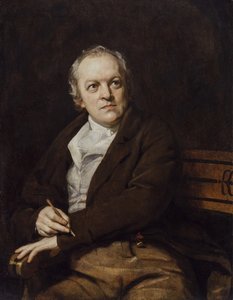
William Blake was born on November 28, 1757, in London, England. He was raised in a household above his father’s hosier shop at 28 Broad Street. His parents, James Blake and Catherine Wright Armitage Blake, provided a stable environment during a period of significant social change in the city. While his upbringing was marked by the modest means of a tradesman's family, his early years were defined by a singular, intense imagination that often manifested in visions, such as seeing angels in the branches of a tree during childhood walks.
Formal training began at the age of ten when he was enrolled at Henry Pars' drawing school. This early instruction provided the technical foundation for a career that would eventually move beyond simple sketching. By the age of 14, the necessity of practical work led him into a seven-year apprenticeship under the engraver James Basire. This period was essential to his development, as it introduced him to the rigorous mechanics of printmaking and the physical properties of metal and acid.
During his apprenticeship, Blake spent significant time sketching the tombs at Westminster Abbey. The Gothic architecture and the weathered stone of these monuments left a lasting impression on his aesthetic sensibilities. These studies allowed him to internalize the forms of the past, which he would later reinterpret through his own unique lens. His training was not merely a pursuit of craft, but a deep immersion into the visual language of history and structure.
Technique and Artistic Innovation
Blake’s creative process was defined by a restless desire to merge the written word with the visual image. He moved beyond the standard commercial engravings of his era to develop a unique method of relief etching for his illuminated books. This technique involved applying an acid-resistant varnish to copper plates, allowing him to etch both text and illustration into a single, integrated form. This method was not merely a technical choice but a spiritual one; he claimed the process was revealed to him through a visionary experience following the death of his brother, Robert. Working alongside his wife, Catherine, who assisted in the printing and coloring, he managed the entire production from the initial etching to the final stitching of the books.
His aesthetic was a deliberate departure from the rigid rules of his contemporaries. He rejected the traditional use of linear perspective, which sought to mimic the physical world, in favor of a more emotive and symbolic representation of space. This flattening of the visual field allowed him to prioritize the internal logic of his visions over the constraints of naturalism. To bring these visions to life, he frequently employed watercolors and tempera paints, applying color by hand to the printed sheets to achieve a specific, personal texture. His work was a labor of both hand and spirit, often produced in the quiet of his London home.
Key Works and Major Publications
The early output of his career began with the publication of Poetical Sketches in 1783. This initial collection of verse was followed by his most widely recognized lyrical achievements: Songs of Innocence in 1789 and Songs of Experience in 1794. These works established a recurring tension in his writing, exploring the contrast between a state of untainted childhood and the corruption of adult reality. Between 1790 and 1793, he produced The Marriage of Heaven and Hell, a provocative work that challenged established moral and religious doctrines through prose and verse.
His engagement with the political turbulence of his era found expression in his prophetic books. He produced America, a Prophecy in 1793 and Europe, a Prophecy in 1794, works that reflected the revolutionary spirit of the time. These publications were not merely texts but integrated visions where the etched image and the written word functioned as a single entity. His later years were marked by expansive, complex projects that required years of sustained effort.
The later stages of his life saw the development of massive, intricate cycles. He worked on the Milton series between 1804 and 1808, and his final major undertaking, Jerusalem, occupied him from 1804 until 1820. These works represent the culmination of his lifelong attempt to construct a private mythology, one that sought to reconcile the human spirit with the divine through a highly personal symbolic language.
Patrons, Workshop and Commissions
The financial reality of Blake’s life was often a struggle for stability. For much of his career, he earned a living as a journeyman engraver, taking on commercial work to sustain himself. In about 1784, he attempted to establish a more permanent professional footing by setting up a print shop alongside James Parker, a friend and former fellow apprentice. This venture, however, did not provide the lasting security he required. Instead, his livelihood frequently depended on the steady support of a few dedicated patrons, most notably Thomas Butts, whose patronage offered a vital lifeline to the artist's more personal pursuits.
His professional geography shifted as his circumstances changed. Between 1800 and 1803, Blake moved to the coastal town of Felpham. During this period, he lived and worked under the patronage of William Hayley. This time in Felpham provided a temporary reprieve from the urban pressures of London, allowing him to focus on his complex series of works. Even as he navigated the demands of commissions, his work remained deeply tied to the specific needs of those who supported his vision, often balancing the practical requirements of engraving for others with the private labor of his own illuminated printing.
Legacy and Enduring Influence
During his lifetime, Blake’s vision was often met with misunderstanding, his work frequently dismissed as the product of an eccentric or unstable mind. He lived a life of relative obscurity, often struggling for financial stability while working as an engraver. Yet, the very qualities that marginalized him in the early nineteenth century eventually secured his place as a pivotal figure in the Romantic movement. His insistence on the primacy of the imagination over the constraints of reason provided a blueprint for those who would later seek to break from traditional academic structures.
The impact of his singular style eventually reached beyond his immediate circle. The Pre-Raphaelite Brotherhood embraced him as a kindred spirit, finding common ground in his rejection of Neoclassical conventions. As the decades passed, his influence moved through the Symbolist and Modernist movements, finding resonance in their shared interest in subjective experience and spiritual depth. He did not merely illustrate poems; he constructed a private mythology that continues to provide a source of inspiration for poets, painters, and thinkers across various disciplines.
- The Tyger
- The Lamb
- London
- Jerusalem
Where to See the Works Today
The physical remnants of Blake’s vision are scattered across several major institutions, reflecting the global reach of his influence. In London, the Tate Gallery holds six of his works, including the significant 1795 depiction of Isaac Newton. This collection offers a substantial look at the technical precision he applied to his engravings and the way he translated complex spiritual concepts into visual form.
Across the Atlantic, his presence is felt in several prominent American collections. The Yale Center for British Art in New Haven maintains four works, such as the 1804 print of Los Entering the Grave. Meanwhile, the Museum of Fine Arts in Boston also holds four pieces, including his 1808 study of Adam and Eve Sleeping. These holdings allow for a comparative study of his development from a commercial engraver to a creator of independent, illuminated volumes.
His reach extends even further to the Southern Hemisphere. The National Gallery of Victoria in Melbourne contains one work, an 1827 piece titled Antaeus setting down Dante and Virgil in the last circle of hell. This single presence in Australia highlights the enduring international interest in his peculiar, highly personal mythology.


 Read More




 Switch to Print


 For artworks or reproductions larger than 105 cm (approximately 41 inches) on any side, the frame will be shipped as a kit, disassembled. This method ensures safe delivery and prevents damage during transport.


