

Acrylic On Canvas.

§ 1Catalogue data

§ 2Abstract
Collectible Description
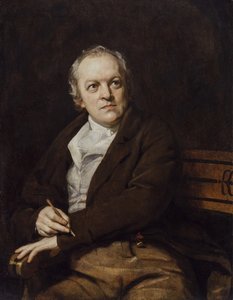
This evocative painting by William Blake captures a moment of contemplation and instruction amidst a group gathered outdoors. The presence of a bird adds an element of serenity to the scene, reflecting Blake’s profound spiritual vision.
 Read More
Artist Biography
Explore William Blake's visionary art & poetry (1757-1827). A Romantic icon known for mystical themes, illuminated printing, & works like 'The Tyger'. Discover his legacy!
§ 3Commentary
William Blake’s “The Poet” – A Symphony of Visionary Symbolism
Blake's "The Poet," completed in 1820, stands as an emblem of Romantic idealism and a testament to the artist's unparalleled ability to translate inner experience into visual form. It depicts a solitary figure—often interpreted as Blake himself—seated upon a stone throne amidst a landscape dominated by towering mountains and swirling clouds. This image transcends mere representation; it embodies a profound meditation on creativity, solitude, and the transformative power of imagination.- Subject Matter: The central figure is presented in profile, gazing upwards with an expression of serene contemplation. He wears a robe adorned with symbols—a laurel wreath signifying poetic honor, and a serpent coiled around his thigh representing both temptation and divine wisdom.
- Style: Blake’s style is unmistakably Romantic, characterized by its dramatic use of color, expressive brushstrokes, and an emphasis on emotional intensity. The composition deliberately isolates the Poet against the vastness of nature, reinforcing the theme of inner contemplation.
Technique – Engraving and Watercolor Collaboration
Blake’s masterful technique involved a collaborative effort between engraving and watercolor. Initially conceived as a printmaking project, Blake painstakingly etched the image onto copper plates using intricate burr tools—a method he perfected during his apprenticeship with James Basire. These engraved lines established the foundational structure of the composition, while subsequent washes of watercolor added depth, luminosity, and atmospheric haze to create an immersive visual experience. The resulting print is remarkably detailed, capturing the textures of stone, fabric, and cloud formations with astonishing accuracy.- Engraving Process: Blake’s engraving technique demanded exceptional precision and patience—a reflection of his unwavering commitment to artistic excellence. He employed a burr tool to create microscopic ridges on the copper plate surface, ensuring that every line etched into the metal would faithfully reproduce in the final print.
- Watercolor Layering: Blake skillfully layered watercolor pigments onto the engraved plates, achieving subtle gradations of color and capturing the ethereal quality of the mountainous landscape. This technique allowed him to convey not only visual beauty but also emotional resonance—a palpable sense of grandeur and spiritual aspiration.
Historical Context – The Spirit of Romantic Rebellion
“The Poet” emerged during a period of fervent intellectual and artistic ferment—the Romantic Age in England. This era witnessed a rejection of Enlightenment rationalism in favor of emotion, intuition, and imagination as guiding forces for understanding the human condition. Blake’s work aligns seamlessly with these Romantic ideals, articulating a vision of art as a conduit for spiritual enlightenment and challenging conventional notions of beauty and morality.- Romantic Ideals: The Romantic movement championed individualism, spontaneity, and an appreciation for the sublime—experiences that transcend ordinary sensory perception. Blake’s depiction of the Poet embodies these ideals, portraying him as a figure who dwells in communion with nature and pursues truth through contemplation.
- Blake's Influence: Blake’s artistic innovations profoundly impacted subsequent generations of artists and writers. His pioneering use of engraving and watercolor techniques served as inspiration for countless printmakers and painters alike, establishing him as a cornerstone of Romantic art history.
Symbolism – Layers of Meaning Beyond Appearances
The artwork is replete with symbolic imagery—each element contributing to a complex tapestry of meaning. The stone throne symbolizes stability and authority, yet it also represents the Poet’s vulnerability—his precarious position amidst the forces of nature. The laurel wreath signifies poetic honor but simultaneously acknowledges the serpent's influence—the inescapable presence of temptation and doubt.- Iconography: Blake meticulously crafted his iconography to convey profound spiritual truths. The serpent, for instance, embodies both destructive impulses and transformative potential—a reminder that darkness can illuminate the path toward enlightenment.
- Emotional Resonance: Ultimately, “The Poet” evokes a powerful emotional response—inspiring awe at the majesty of creation and prompting reflection on the enduring quest for inner peace and artistic integrity.
Conclusion – An Enduring Legacy of Imagination
William Blake’s “The Poet” remains an unparalleled achievement of Romantic art—a masterpiece that continues to captivate audiences worldwide. Its masterful technique, evocative symbolism, and profound historical context solidify its place as a cornerstone of artistic heritage. More than simply a depiction of a solitary figure, it is an invitation to embark on a journey into the depths of imagination—a timeless reminder of the transformative power of art to illuminate the human spirit.Questions & Answers
What kind of colors does "Untitled 2" use?
The palette of "Untitled 2" by William Blake is described as earthy. It is a compact description of the work's colors.
What is the perceived brightness of "Untitled 2" by William Blake?
Overall, "Untitled 2" is recorded as shadow. Perceived brightness describes how light or dark the work appears.
Can I use augmented reality to see "Untitled 2" by William Blake in my room?
"Untitled 2" has an augmented reality preview: the artwork's AR Preview page shows it in your own space on a compatible device.


 Switch to Print


 For artworks or reproductions larger than 105 cm (approximately 41 inches) on any side, the frame will be shipped as a kit, disassembled. This method ensures safe delivery and prevents damage during transport.




