- Home

- Oil Painting Reproduction
- yi eungro
- The travels of Marco Polo Series
 Buy print
 Send
Send Share
Share
 Details

 Download
 Similars
 X-Ray
X-Ray Diaporama
The travels of Marco Polo Series
 Acrylic On Canvas
- WallArt
- East Asian Landscape
 1980
1980 17.0 x 16.0 cm
 Lee Ungno Museum
 Read More
Hand Made Oil Reproduction
Hand-painted oil on canvas in your size and frame, made to order by our artists.




P118B $10

P118H $10

P118W $10

P438Z $10

P508JH $12

P508YH $12

P805H $10

P805Z $10

P919BZ $10

P919G $10

P919XJ $10

P959ZH $10

P968JZ $12

W106C $8

W218G $10

W218JH $8

W218Y $10

W307PJ $10

W316G $10

W316PJ $8

W316Y $10

W398PJ $8

W4111J $10

W500HY $15

W500JH $15

W692G $12

W849H $8

W940BG $15

W953PJ $8




Pick from our preset sizes that match the artwork's original proportions.

You may enter your own dimensions to fit a specific frame or space. If your selected size does not match the original image's proportions, we will either crop the artwork or extend the painting with additional hand-painted elements. A digital mockup will be sent for your approval before production begins.
Please note that the on-screen preview does not reflect the actual cropping or extension. Only the mockup will accurately show the final composition.
While custom sizes are available, we recommend selecting a dimension from the predefined list to preserve the original proportions.
After order, AllPaintingsStore.com team will email client for instructions and provide a mockup preview
Worldwide Delivery () in 3/4 weeks instead of standard 5 weeks. (16 July). No compromise on quality.

Free Worldwide Express Shipping

High-Quality Linen Canvas

Full Shipping Insurance

Customs Tax Refund Guarantee

True Color Matching Guarantee

60-Day Return Policy (Defects Only)

100% Money-Back Guarantee

Bulk Discount Offer
 Glass option is only available in size under 110 CM

The travels of Marco Polo Series
Reproduction Medium
Reproduction Size
-


Total Price
-
Artwork Description
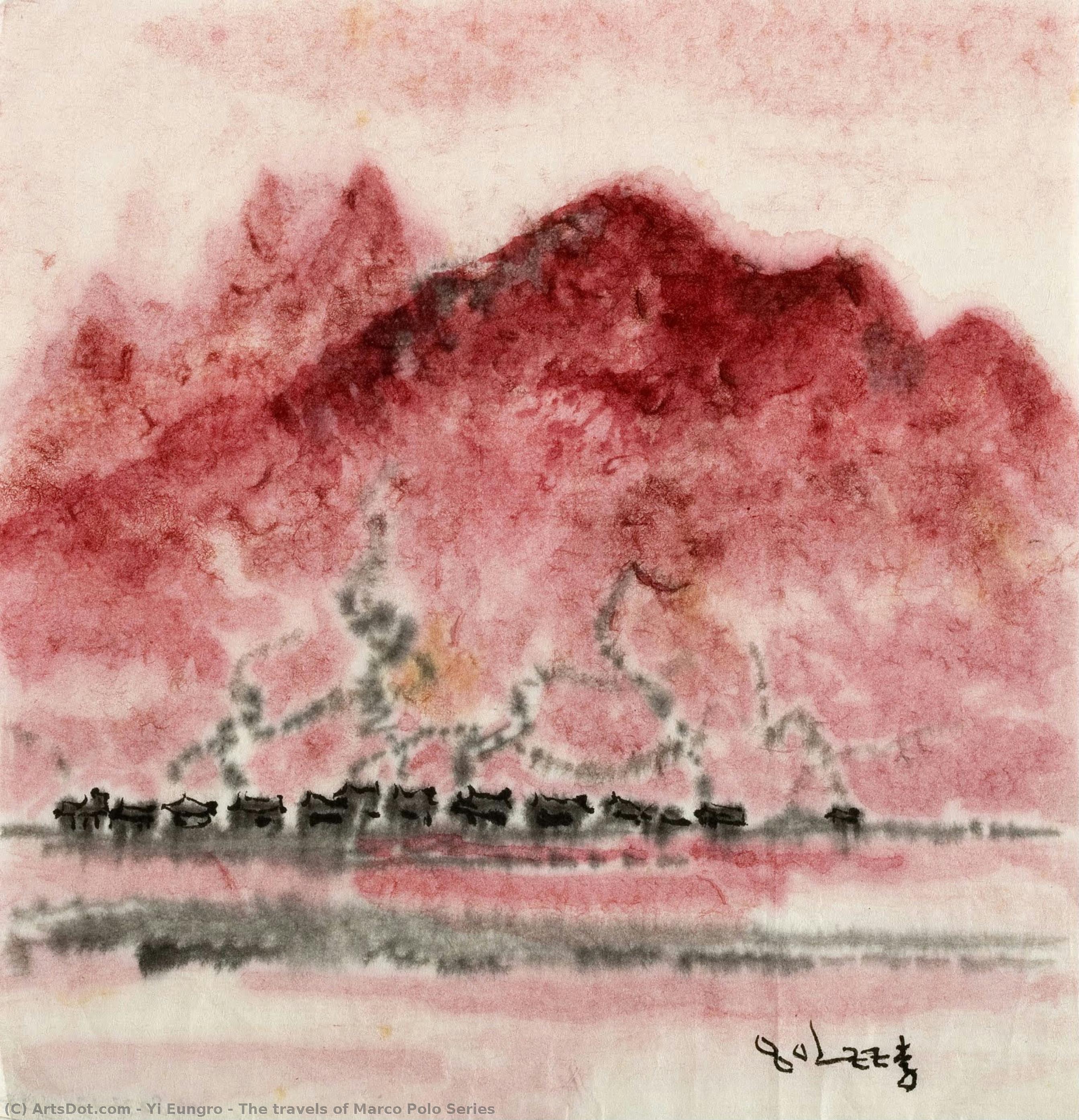
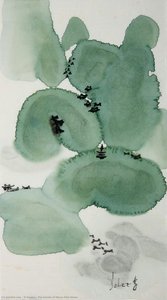
A Panoramic Vision of Exploration: Yi Ungro’s “The Travels of Marco Polo Series”
Yi Ungro's "The Travels of Marco Polo Series" stands as a remarkable testament to Korean art history and the enduring fascination with Eastern aesthetics blended with Western curiosity. Created in 1980, this monumental landscape painting—one of seventy-nine artworks commissioned for a book exploring Marco Polo’s legendary expeditions—represents more than just a depiction of scenery; it embodies a profound philosophical dialogue between East and West. The artwork's genesis lies in Ungro’s desire to elevate Korean ink painting beyond traditional conventions, embracing innovative perspectives inspired by the pioneering spirit of European travelers like Marco Polo himself.Style and Technique: Echoes of Zen Landscape Painting
Ungro skillfully employs techniques rooted in Zen landscape painting—specifically, *gaoya* (高野風)—a style characterized by expansive vistas dominated by triangular forms resembling mountains or islands. These forms recede into the distance, creating a palpable sense of depth and conveying an atmosphere of serene contemplation. The artist’s meticulous brushwork captures subtle tonal variations, mirroring the nuanced observations of Eastern artists who sought to represent nature's grandeur with understated elegance. Notably, Ungro utilizes a bird’s-eye view—a hallmark of East Asian painting—further emphasizing the panoramic scope of his vision and inviting viewers to contemplate the immensity of the natural world.Historical Context: Bridging Cultures Through Artistic Representation
The Series emerged during a period of significant cultural exchange between Korea and France, reflecting Ungro’s commitment to modernizing Korean art while acknowledging influences from Western artistic traditions. The inclusion of miniature architectural figures—stylized representations reminiscent of unfamiliar East Asian structures—adds another layer of complexity to the composition. These figures serve as visual cues, prompting viewers to consider how a European traveler might perceive the beauty and mystery of Eastern landscapes. This deliberate juxtaposition underscores Ungro’s ambition to capture not merely what he saw but also *how* he saw it – filtered through the lens of cultural difference.Symbolism: Harmony and Distance
The triangular forms themselves are laden with symbolic significance, representing stability and permanence amidst the dynamic forces of nature. Simultaneously, their receding perspective symbolizes the concept of “distance,” both physical and intellectual—a reminder that true understanding requires acknowledging perspectives beyond one’s immediate experience. The tranquil depiction of cattle grazing peacefully at the base of the mountain reinforces themes of harmony and balance – values central to Zen philosophy and reflected throughout Ungro's oeuvre.Emotional Impact: A Momentary Escape into Sublime Beauty
Ultimately, “The Travels of Marco Polo Series” succeeds in transporting viewers to a realm of contemplative wonder. The painting’s luminous hues—particularly the dominant reds—evoke the grandeur of a sunset or volcanic eruption, capturing both dramatic intensity and breathtaking beauty. Ungro's masterful execution captures not just visual information but also an emotional resonance that speaks to our innate desire for connection with nature and contemplation on the vastness of existence. It’s a piece designed to inspire awe and invite reflection—a timeless reminder of the transformative power of art.


Artist Biography
**early life and training**
lee ungno, also known as yi eungro, was a korean-born french painter and printmaker born in séoul, south korea in 1904. his early life was marked by a brief stint at the hongseong botong hakyo (홍성보통학교, 홍城초등학교, 洪城普通學校), after which he dedicated himself to studying painting under yeomjae song tae-hoe from 1920.**artistic career in korea and japan**
lee ungno's artistic career began in earnest when he moved to seoul in 1922, becoming an apprentice to celebrated calligrapher-painter-photographer haegang kim gyu-jin. he primarily learned to paint the four gentlemen in the 'haegang style.' notably, his inkwash painting of a bamboo, mukjuk (묵죽, 墨竹, ink bamboo), won a prize in the 3rd annual joseon art exhibition. lee ungno consecutively won prizes in the joseon art exhibition throughout the colonial period. however, he believed that eastern ink painters should modernize their style. in the early 1930s, lee began producing inkwash landscapes influenced by new, modern eastern ink painting styles and naturalistic renditions found in western-style paintings.**international recognition and later life**
after training in traditional inkwash painting in korea from the 1920s to the 1930s, lee gradually experimented with western-style painting techniques in japan. his works from the 1950s showcase creative attempts at merging eastern medium and brushstrokes with western perspective and forms. lee ungno relocated to france in 1958, where he fully established his standing as an abstract artist. he is most known for his series of ink and paper collage, abstract letters, and crowd paintings that developed during his stay in france.- view yi eungro's artworks on AllPaintingsStore: [https://AllPaintingsStore.com/@/yi-eungro](https://AllPaintingsStore.com/@/yi-eungro)
- explore the musée national jean-jacques henner, a museum featuring a vast collection of art pieces, including those inspired by eastern styles: [https://AllPaintingsStore.com/@@/a@d3cew9-il-museo-musee-national-jean-jacques-henner-di-parigi-francia](https://AllPaintingsStore.com/@@/a@d3cew9-il-museo-musee-national-jean-jacques-henner-di-parigi-francia)
- discover more about the ilkhanid art movement, which also blends eastern and western influences: [https://AllPaintingsStore.com/art.nsf/o/a@d3cq2m](https://AllPaintingsStore.com/art.nsf/o/a@d3cq2m)
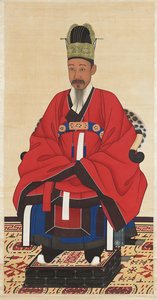
yi eungro
1904 - 1989 , South Korea
Quick Facts
- Artistic Movement Or Style: Eastern & Western Expressionism
- Artists Or Movements Influenced By This Artist: ['Haegang Style']
- Artists Who Influenced This Artist: ['Yeomjae Song Tae-hoe']
- Date Of Birth: January 12, 1904
- Date Of Death: January 10, 1989
- Full Name: Yi Eungro (Lee Ungno)
- Nationality: Korean-French
- Notable Artworks: ['Composition']
- Place Of Birth: Seoul, South Korea
Related Articles

Hokusai's Masterpieces: 25 Iconic Prints & Paintings for Art Lovers | AllPaintingsStore
Journey through Katsushika Hokusai’s 25 most iconic artworks, including *The Great Wave*. Explore the ukiyo-e master's history, style & timeless Japanese woodblock prints. Find museum-quality reproductions for your home at AllPaintingsStore.com.
Ephemeral Expressions: Exploring the Nuances of Ink on Paper Through History & Contemporary Art
Explore the captivating world of ink wash painting – from its ancient origins to contemporary masters. Discover techniques, symbolism & conservation insights with AllPaintingsStore.com.
Harmonizing Heritage: A Cross-Cultural Approach to Interior Design with Asian, European, and African Art Reproductions
Discover the art of cross-cultural interior design with AllPaintingsStore.com. Explore museum-quality reproductions & expert guidance to create a globally inspired, sophisticated home. Shop now!

Yi Eungro: Bridging East & West in the Landscape of Korean Modernism
Explore the captivating world of Yi Eungro (Lee Ungno), a pivotal figure in Korean modernism. Discover his unique fusion of Eastern and Western artistic traditions, abstract masterpieces, and lasting legacy. A must-read for discerning art collectors.

Concrete Visions: Exploring the Urban Landscape in Painting – From Realism to Contemporary Art
Explore the evolution of cityscape painting from Realism to contemporary art with AllPaintingsStore. Discover key artists & invest in timeless urban visions. Expert guidance, museum-quality reproductions.