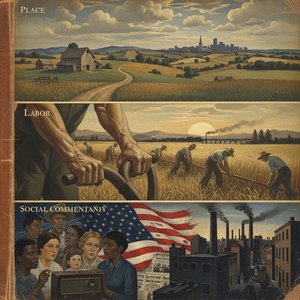
Arthur Rothstein: Documenting America's Struggles
Arthur Rothstein (1915-1985) was a prominent American photojournalist whose career spanned five decades. He is celebrated for his powerful and poignant documentation of rural life, particularly during the Great Depression and its aftermath. His work offers invaluable insights into a pivotal period in American history, capturing both hardship and resilience.
Early Life and Education
Born in Manhattan, New York City, and raised in the Bronx, Rothstein came from a family of Jewish immigrants. He developed an early interest in photography, which he pursued at Columbia University. While there, he founded the university camera club and served as the photography editor of the Columbian yearbook.
Early Career & The Farm Security Administration
Rothstein’s career took a defining turn after graduating from Columbia during the Great Depression. He was invited to Washington D.C. by his former professor, Roy Stryker, who was establishing a photo unit within the Resettlement Administration (RA). Rothstein became the first photographer sent out by Stryker, embarking on a five-year journey documenting the lives of rural Americans.
Documenting Rural America
Rothstein’s photographs captured the stark realities faced by farmers and sharecroppers during this era. He traveled extensively throughout the country, including assignments to document evictions in Virginia (for Shenandoah National Park) and conditions in the Dust Bowl and Montana cattle ranches. His work aimed to publicize the plight of the rural poor and garner support for New Deal programs.
The Gee's Bend Project
One particularly significant assignment took Rothstein to Gee’s Bend, Alabama, a remote community of African American farmers. His photographs of the residents showcased their unique cultural heritage and resilience. These images offered a nuanced portrayal of life in Gee’s Bend, emphasizing dignity and self-sufficiency rather than solely focusing on hardship.
Transition to the Office of War Information
As the nation geared up for World War II, the Farm Security Administration (FSA) transitioned into the Office of War Information (OWI). Rothstein continued his work as a photographer, documenting wartime industries and homefront life. His role evolved to include more staged and propagandistic imagery reflecting the war effort.
Later Career & Legacy
After leaving the OWI, Rothstein pursued various photographic projects, including commercial assignments and educational work. He taught photography at several institutions and continued to document American life. While his later work didn’t achieve the same level of recognition as his FSA photographs, it demonstrated his versatility and commitment to visual storytelling.
Influences & Artistic Development
Roy Stryker was a major influence on Rothstein's early career, shaping his approach to documentary photography and emphasizing its potential for social impact. The artistic style of the FSA photographers generally leaned towards social realism, aiming to depict subjects truthfully and without embellishment.
Major Achievements & Historical Significance
- Created a comprehensive visual record of rural America during the Great Depression.
- Documented the lives of African Americans in Gee’s Bend, Alabama, preserving their cultural heritage.
- Contributed to public awareness of social and economic issues facing the nation.
- His work remains an important historical resource for understanding a critical period in American history.
Arthur Rothstein's photographs are not merely historical documents; they are powerful works of art that continue to resonate with audiences today, reminding us of the challenges and triumphs of the human spirit.
Questions & Answers
Where can I see Arthur Rothstein's artworks arranged by atmosphere?
The Mood Room of Arthur Rothstein is a page that arranges the artist's artworks by mood.
Can I study Arthur Rothstein's use of color across all works?
The Palette Genome of Arthur Rothstein is a page that presents the color profile of the artist's body of work.
How many artworks by Arthur Rothstein are available to browse?
You can browse 24 artworks by Arthur Rothstein on the All Artworks page.