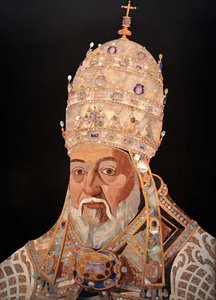
The Visionary Synthesis of Jacopo Ligozzi
In the vibrant, transformative era of late-Renaissance and Mannerist Italy, few figures embodied the intersection of aesthetic grace and empirical curiosity as profoundly as Jacopo Ligozzi. Born in Verona in 1547 to the respected artist Giovanni Ermano Ligozzi, Jacopo was immersed from birth in a world where craftsmanship and visual storytelling were paramount. His early life was shaped by the rigorous traditions of the artisan guilds, yet his spirit possessed an insatiable hunger for the wonders of the natural world. This dual passion—the disciplined technique of the painter and the observant eye of the naturalist—would eventually allow him to bridge the gap between art and science, earning him a legacy that transcends mere decoration.
Ligozzi’s artistic journey was significantly shaped by his time in Florence, where he studied under the legendary sculptor Giovanni Battista Buonarroti. This period of intense training within the Florentine Mannerist tradition instilled in him a mastery of form, light, and dramatic composition. However, Ligozzi was never content to remain solely within the confines of stylistic imitation. His ambitions led him toward the burgeoning scientific inquiries of his age. His invitation to the Habsburg court in Vienna served as a pivotal moment in his career; there, he presented exquisite drawings of botanical and zoological specimens that captivated the imperial gaze. These works were not merely beautiful illustrations but were early precursors to modern scientific documentation, demonstrating a level of precision that would later lead many to refer to him as the "Audubon of Florence."
A Master of the Medici Court and Natural Wonders
Upon settling in Florence, Ligozzi ascended to the highest echelons of the artistic community. Following the death of Giorgio Vasari in 1574, he assumed leadership of the Accademia e compagnia delle arti del disegno, a position that granted him immense influence over the direction of Florentine art. His career was inextricably linked to the powerful Medici dynasty, as he served successive Grand Dukes including Francesco I, Ferdinando I, and Cosimo II. This prestigious patronage allowed him to experiment with diverse media, from grand historical narratives to the delicate artistry of pietre dure design.
His body of work is characterized by a remarkable versatility that ranges from the deeply spiritual to the intensely biological:
- Biblical Narratives: In works such as his 1596 Sacrifice of Isaac, Ligozzi utilized the dramatic tension of the Baroque style to explore profound themes of faith and divine intervention, using light and shadow to heighten the emotional stakes of the biblical drama.
- Botanical Precision: His illustrations, such as the meticulous depiction of Agave americana, showcase a scientific rigor that captures the intricate textures and muted tones of the natural world, serving as vital records for botanists of his era.
- Historical and Naval Drama: In pieces like the Return of the Cavalier of Santo Stefano from Lepanto, he demonstrated an ability to capture large-scale historical events with a sense of movement and cultural significance that resonated with the political climate of the time.
Legacy of the Florentine Naturalist
The historical significance of Jacopo Ligozzi lies in his refusal to see art and science as separate disciplines. While many of his contemporaries focused on the idealized human form or mythological allegories, Ligozzi looked toward the earth, the flora, and the fauna with a reverence that demanded accuracy. He transformed the canvas into a laboratory of observation, where every petal and every scale was rendered with an almost tactile reality.
By integrating the meticulousness of scientific illustration with the sophisticated language of Mannerism, Ligozzi helped pave the way for the natural history movements of subsequent centuries. His life remains a testament to the power of curiosity, proving that the artist's brush can be just as potent a tool for discovery as the scientist's lens. Today, his works stand as enduring monuments to a period when the pursuit of beauty and the pursuit of truth were one and the same.
Questions & Answers
Where is Jacopo Ligozzi from?
Jacopo Ligozzi was born in Italy.
Can I browse Jacopo Ligozzi's works by color palette?
Jacopo Ligozzi's works can be browsed by color palette on the artist's By Palettes page.
Where are Jacopo Ligozzi's artworks grouped by art movement?
The movements Jacopo Ligozzi worked in can be seen on the artist's All Movements page, which groups the artworks by movement.