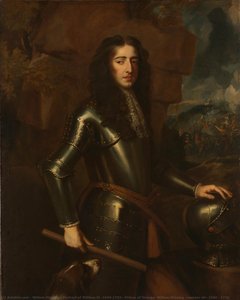
A Prodigy of the Portrait
The story of Willem Wissing is one of meteoric rise and tragic brevity, a narrative that mirrors the fleeting brilliance of his own life. Born in either Amsterdam or The Hague, this Dutch master emerged from a rigorous training ground under the guidance of Willem Doudijns and Arnoldus van Ravancstyn. His journey took him from the artistic hubs of the Netherlands to the heart of England in 1676, a move that would forever alter the landscape of British portraiture. In London, Wissing found himself immersed in the prestigious studio of Sir Peter Lely, serving as an assistant and absorbing the sophisticated elegance of the era's most sought-after style.
Upon the passing of Lely in 1680, Wissing did not merely fill a void; he ascended to become his most significant pupil, standing as a formidable force in the London art scene. His talent was so profound that only the legendary Godfrey Kneller could be considered a true contemporary rival. The brushwork of Wissing captured more than just physical likeness; it distilled the very essence of power, grace, and royal prestige, making him the preferred chronicler for the most influential figures of the late seventeenth century.
Royal Splendor and Artistic Legacy
The canvases of Wissing served as mirrors to the majesty of the English court. His repertoire included some of the most iconic figures of his age, painting portraits that radiated with the dignity of their subjects. Among his most notable sitters were Charles II of England, Catherine of Braganza, and James Scott, 1st Duke of Monmouth. His reach even extended back to his Dutch roots when, in 1685, James II commissioned him to travel to the Netherlands to capture the likenesses of the future William III and Mary II of England.
The technical execution of his work often involved a collaborative brilliance. While Wissing focused on the masterful rendering of faces and figures, fellow Dutch immigrant Jan van der Vaart frequently contributed the lush draperies and evocative landscapes that framed his subjects. This synergy created a complete, immersive experience for the viewer, blending human character with atmospheric grandeur. His ability to capture royal elegance was so impactful that many of his portraits were disseminated through mezzotint, ensuring his visual language reached far beyond the palace walls.
Tragically, Wissing’s career was cut short at the very peak of his fame. He died in 1687 at Burghley House, leaving behind a legacy shrouded in both admiration and mystery, as some even whispered of darker ends to his sudden departure. Though his life was brief—as reflected in the poignant epitaph Immodicis brevis est aetas—his impact on the art of portraiture remains indelible. Through his work, the splendor of a bygone era continues to breathe, preserved in the exquisite details of his painted legacies.
Questions & Answers
How popular are Willem Wissing's artworks?
A Stats page exists for Willem Wissing, presenting statistics about the artist's artworks on this website.
Is there a complete list of Willem Wissing's artworks?
Every work by Willem Wissing on this website can be browsed from the artist's All Artworks page.
Where is Willem Wissing from?
Willem Wissing was born in Netherlands.