


The most famous artists with works in the Fitzwilliam Museum are Claude Monet, Paul Cézanne, Henri Matisse, Peter Paul Rubens and Paul Gauguin.
Our catalogue lists 902 works of the Fitzwilliam Museum by 571 artists; the 25 best known are ranked below, each with the works the museum holds.
Top 10
10 famous artists in the Fitzwilliam Museum, from the most famous down
Dates, birthplace, movement, the works held by the museum in our catalogue and a note from the biography.
-
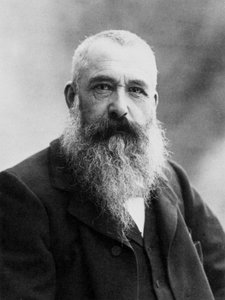
Impressionism
1. Claude Monet 1840–1926
1840–1926 Born in Paris, France Impressionism 5 works held
Born in Paris, France, on 14 November 1840, Claude Monet entered a world of diverging expectations. Tragedy arrived in January 1857, when Monet was sixteen years old. In 1883, Monet moved to a house and property in Giverny, a village northwest of Paris.
Held by the Fitzwilliam Museum
-
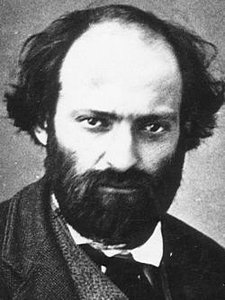
Post-Impressionism
2. Paul Cézanne 1839–1906
1839–1906 Born in Aix-en-Provence, France Post-Impressionism 3 works held
Born on January 19, 1839, at 28 rue de l'Opéra in Aix-en-Provence, Paul Cézanne entered a world of established order. In 1860, he made the decisive choice to abandon his law studies, turning his focus entirely toward the pursuit of painting. By 1859, his technical proficiency was evident when he earned second prize in the school's figure studies course.
Held by the Fitzwilliam Museum
-
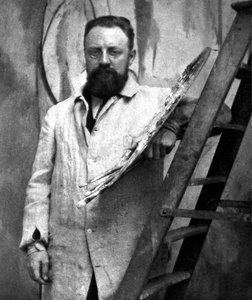
Fauvism
3. Henri Matisse 1869–1954
1869–1954 Born in Le Cateau-Cambrésis, France Fauvism 2 works held
After finishing secondary school, Matisse moved to Paris to study law. In 1889, an attack of appendicitis forced a long recovery, and it was during this confinement that the act of painting first took hold. By around 1905, this approach had coalesced into the Fauvist movement.
Held by the Fitzwilliam Museum
-
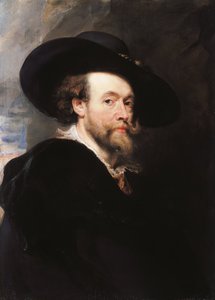
Baroque
4. Peter Paul Rubens 1577–1640
1577–1640 Born in Siegen, Germany Baroque 15 works held
Born on 28 June 1577 in Siegen, Germany, his early years were shaped by the religious instability of the era. By the time he began working with Otto van Veen between 1594 and 1598, Rubens had already acquired the technical vocabulary necessary to move beyond simple representation into the realm of sophisticated narrative art.
Held by the Fitzwilliam Museum
-
Post-Impressionism
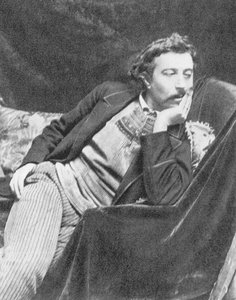
5. Paul Gauguin 1848–1903
1848–1903 Born in Paris, France Post-Impressionism 2 works held
Born in Paris in 1848, Eugène Henri Paul Gauguin entered a world of shifting social and political currents. The boy spent his childhood in Peru until the age of six, a period that left an indelible mark on his memory. Before finding his footing in the art world, Gauguin’s life took a more rugged, maritime turn.
Held by the Fitzwilliam Museum
-
High Renaissance
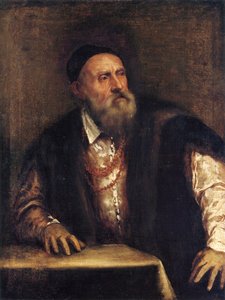
6. Titian 1490–1576
1490–1576 Born in Pieve di Cadore, Italy High Renaissance 2 works held
In the rugged, mountainous reaches of Pieve di Cadore, a boy named Tiziano Vecellio began a life that would eventually reshape the very language of oil on canvas. Born around 1490, he was the son of Gregorio Vecellio, a man of the military, and a woman named Lucia.
Held by the Fitzwilliam Museum
-
Early Renaissance
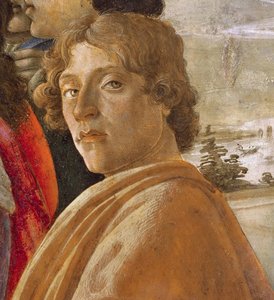
7. Sandro Botticelli 1445–1510
1445–1510 Born in Florence, Italy Early Renaissance 3 works held
Sandro Botticelli lived his life within the narrow, busy streets of Florence, Italy. Born Alessandro di Mariano di Vanni Filipepi around 1445, he was the son of a tanner. Born Alessandro di Mariano di Vanni Filipepi, he was the youngest of four surviving children.
Held by the Fitzwilliam Museum
-

Romanticism
8. Eugène Delacroix 1798–1863
1798–1863 Born in Saint-Maurice, France Romanticism 4 works held
The lineage of Eugène Delacroix is rooted in a blend of craftsmanship and diplomacy. Through him, the artist received numerous anonymous commissions, allowing his work to circulate through elite circles under a veil of discretion.
Held by the Fitzwilliam Museum
-
Realism
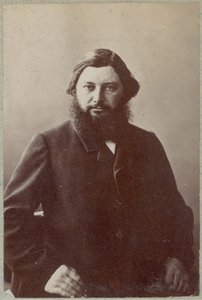
9. Gustave Courbet 1819–1877
1819–1877 Born in Ornans, France Realism 3 works held
Jean Désiré Gustave Courbet was born on June 10, 1819, in Ornans, France. Growing up in the department of Doubs, his early years were shaped by the landscape of his home. In 1839, he moved to Paris. Later, Bruyas commissioned The Meeting, also known as Bonjour Monsieur Courbet, which reflected this established connection between patron and painter.
Held by the Fitzwilliam Museum
-

Romanticism
10. J. M. W. Turner 1775–1851
1775–1851 Born in Maiden Lane, United Kingdom Romanticism 3 works held
In a house on Maiden Lane, within the busy Covent Garden district of London, Joseph Mallord William Turner entered the world. The boy’s talent was evident early on, and his father even displayed the child's drawings in the shop window to catch the eyes of passing customers.
Held by the Fitzwilliam Museum


No. 11–25
The other famous artists in the Fitzwilliam Museum
-
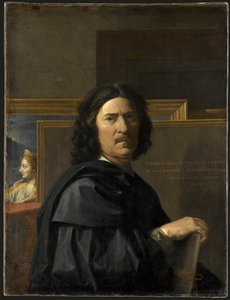
French Classicist of geometric, rational compositions and mythological scenes, using wax figures and light boxes to plan every detail.
-
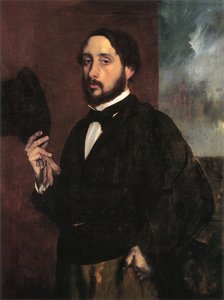
French Realist known for capturing the movement of ballet dancers and racehorses through precise draftsmanship and artificial light.
-
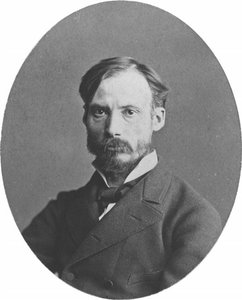
French Impressionist known for luminous, broken brushstrokes that capture the warmth of social gatherings and the soft glow of outdoor light.
- La danse (1895)
- Landscape with figures (1919)
- Le retour des champs (1886)
-
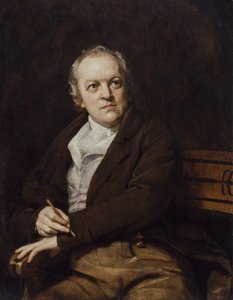
English Romantic visionary known for mystical illuminated prints and symbolic relief etching, blending poetry and image into a single form.
-
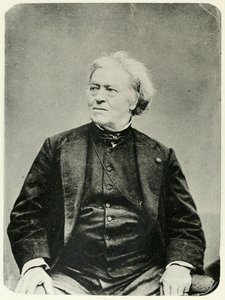
French Realist of atmospheric landscapes and soft vegetation, using thin washes and loosely dabbed strokes to capture the play of light.
- La Châtaigneraie (1835)
- Dutch Landscape in Holland (1854)
- Auvers-sur-Oise: La mare à Daubigny (1857)
-
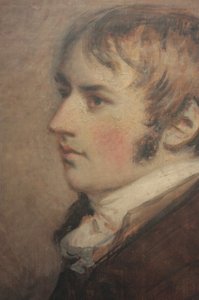
British Romantic landscape painter of the Stour Valley, known for textured impasto and capturing the shifting light of the English countryside.
- Salisbury (1829)
- At Hampstead
- Archdeacon John Fisher (1816)
-
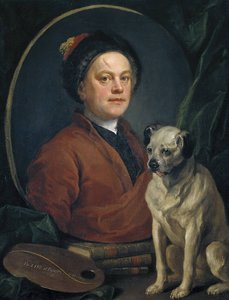
17. William Hogarth
1697–1764 · born in London, United Kingdom · 9 works held
English satirist and engraver of modern moral subjects, using biting narrative series to dissect the social fabric of 18th-century London life.
-
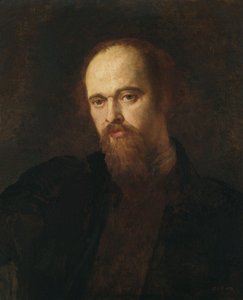
Pre-Raphaelite leader of sensual, symbolic works featuring lush vegetation and female forms, often accompanied by his own evocative sonnets.
- Girl at Lattice (1862)
- Bruna Brunelleschi (1878)
- Algernon Charles Swinburne (1862)
-
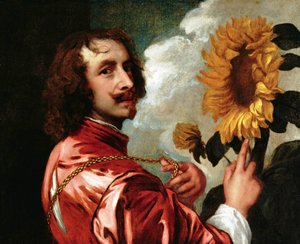
Flemish Baroque portraitist who defined the English court with effortless grace, capturing the dignity of royalty through refined oil and etching.
-
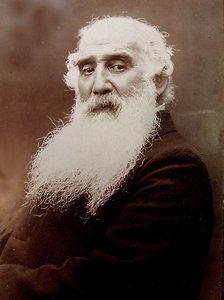
20. Camille Pissarro
Impressionism
1830–1903 · born in Charlotte Amalie, United States Virgin Islands · 6 works held
Danish-French Impressionist who captured rural life and city streets through textured plein air landscapes and pointillist experiments.
-

Spanish Baroque painter of luminous Immaculate Conceptions and tender genre scenes of street urchins and flower girls in Seville.
-
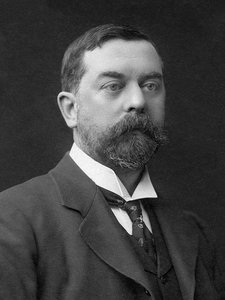
American expatriate portraitist of the Gilded Age, known for fluid brushwork and elegant depictions of high-society figures and landscapes.
-

Venetian vedutista of precise architectural views and luminous cityscapes of canals and squares, capturing light on stone and water.
-

Italian Baroque classicist of graceful mythological scenes and luminous religious subjects, known for an idealized and serene beauty.
- Christ appearing to the Virgin (1608)
- Ecce Homo (1639)
-

Famous artists in the Fitzwilliam Museum, No. 26 to 50
 Annibale Carracci1560–1609 · 2 works held
 Pierre Bonnard1867–1947 · 2 works held
 Jan Brueghel the Elder1568–1625 · 3 works held
 Jan Steen1626–1679 · 3 works held
 Frederic Leighton1830–1896 · 3 works held
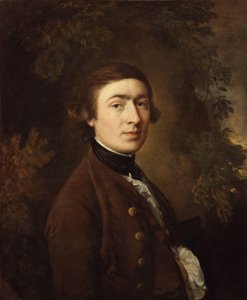 Thomas Gainsborough1727–1788 · 4 works held
 Théodore Rousseau1812–1867 · 3 works held
 John Everett Millais1829–1896 · 3 works held
 Eugène Louis Boudin1824–1898 · 10 works held
 William Holman Hunt1827–1910 · 2 works held
 Bernardo Bellotto1722–1780 · 3 works held
 Charles-François Daubigny1817–1878 · 3 works held
 Henri Fantin-Latour1836–1904 · 3 works held
 Sebastiano del Piombo1485–1547 · 2 works held
 Jan van Goyen1596–1656 · 2 works held
 Nicholas Hilliard1547–1619 · 2 works held
 Joseph Wright of Derby1734–1797 · 3 works held
 Benjamin West1738–1820 · 2 works held
 David Teniers the Younger1610–1690 · 2 works held
 Meindert Hobbema1638–1709 · 2 works held
 Francesco Albani1578–1660 · 2 works held
 Francesco Solimena1657–1747 · 4 works held
 Gerrit Dou1613–1675 · 2 works held
 John Martin1789–1854 · 2 works held
 Rachel Ruysch1664–1750 · 5 works held
Figures
Artists of the Fitzwilliam Museum: the counts
Most works held, per artist
Artists by century of birth (two works or more)
Artists by country of birth (two works or more)
Artists by movement (two works or more)
Women
Women artists with works in the Fitzwilliam Museum
17 women artists, 26 works held, in our catalogue of the Fitzwilliam Museum.
-
Rachel Ruysch
1664–1750 · born in The Hague, Netherlands · 5 works held
-

Magdalena van den Hecken
1615–1650 · born in Antwerp, Belgium · 3 works held
- Flowers in a Glass Vase (1635)
-

-

Francina Margaretha van Huysum
1707–1789 · born in Amsterdam, Netherlands · 2 works held
- A Vase of Flowers (1729)
- A Dish of Fruit (1729)
-

Maria Weenix
1697–1774 · born in Amsterdam, Netherlands · 2 works held
- Flowers and fruit (1720)
- A group of flowers (1711)
-

-

Catarina van Hemessen
1528–1600 · born in Antwerp, Belgium · 1 works held
- Portrait of a woman (1555)
-

Maria van Oosterwijck
1630–1693 · born in Nootdorp, Netherlands · 1 works held
- A vase of flowers (1650)
FAQ
Artists of the Fitzwilliam Museum: questions and answers
Click to expand an answer.
Which famous artists are displayed in the Fitzwilliam Museum?
By fame: Claude Monet (5), Paul Cézanne (3), Henri Matisse (2), Peter Paul Rubens (15), Paul Gauguin (2), Titian (2), Sandro Botticelli (3), Eugène Delacroix (4), Gustave Courbet (3) and J. M. W. Turner (3).
Which artist in the Fitzwilliam Museum is the most famous?
Claude Monet (1840–1926): our catalogue holds 5 works by Claude Monet at the Fitzwilliam Museum, among them Springtime, The Rock Needle and Porte d’Aval, Etretat and Rocks at Port Coton. Paul Cézanne and Henri Matisse follow.
Which painter is most represented in the Fitzwilliam Museum?
Our catalogue holds 15 works by Peter Paul Rubens at the Fitzwilliam Museum; next come George Morland (12), Pierre-Auguste Renoir (11) and John Constable (10).
What did Claude Monet paint that hangs in the Fitzwilliam Museum?
5 works by Claude Monet at the Fitzwilliam Museum are in our catalogue: Springtime (1886), The Rock Needle and Porte d’Aval, Etretat (1885), Rocks at Port Coton (1886) and The Bridge under Repair (1872) among them.
Which Paul Cézanne works are in the Fitzwilliam Museum?
3 works by Paul Cézanne at the Fitzwilliam Museum are in our catalogue: Apples, Sous-bois – La Forêt (1902) and The abduction,1867 among them.
How many Henri Matisse paintings are in the Fitzwilliam Museum?
2 works by Henri Matisse at the Fitzwilliam Museum are in our catalogue: L' atelier sous les toits (1903) and La Blouse Bulgare (1920) among them.
How many artists does the collection of the Fitzwilliam Museum cover?
571 artists have at least one work of the Fitzwilliam Museum in our catalogue; 161 have two or more. They were born between 1365 and 1884, in 8 countries.
Does the Fitzwilliam Museum have any Leonardo da Vinci paintings?
No: the Fitzwilliam Museum holds no work by Leonardo da Vinci in our catalogue.
Is Pablo Picasso in the Fitzwilliam Museum?
No: the Fitzwilliam Museum holds no work by Pablo Picasso in our catalogue.
Are the artists in the Fitzwilliam Museum mostly French, Italian or Dutch?
Counting the artists with two works or more, the Fitzwilliam Museum holds painters born mostly in United Kingdom (45), Netherlands (36), Italy (28), France (23) and Belgium (17).
Which women artists are in the Fitzwilliam Museum?
17 women artists have works of the Fitzwilliam Museum in our catalogue, among them Rachel Ruysch (5), Magdalena van den Hecken (3), Gwen John (2), Francina Margaretha van Huysum (2), Maria Weenix (2) and Angelica Kauffmann (1).
Who is the earliest artist in the Fitzwilliam Museum?
Most of the artists with two works or more at the Fitzwilliam Museum were born in the 17th century (55 artists); the earliest in this ranking is Sandro Botticelli (1445–1510), the latest Henri Matisse (1869–1954).
Museum
The Fitzwilliam Museum, , United Kingdom
The History of Fitzwilliam Museum
Its origins trace back to 1816, established through the will of Richard FitzWilliam, 7th Viscount FitzWilliam. This foundation transformed a private legacy into a public institution dedicated to the study of art and history. The museum is situated on Trumpington Street in central Cambridge, United Kingdom. Before its current location, the institution was based at Fitzwilliam House. This original site sat in south-west Cambridge, positioned opposite the present museum building. The collection has grown through centuries of acquisition and careful preservation.
The Grand Architecture of the Museum
The museum buildings and street frontage boundary are Grade I listed, marking the site as a significant architectural presence in Cambridge, United Kingdom. Designed by Sir Richard Richardson in the 1870s, the structure is a neo- Renaissance work of considerable weight and purpose. The exterior is defined by a classical stone facade that meets the eye with a sense of permanence. This grand façade is constructed from creamy stone, providing a pale, steady backdrop to the activity of Trumpington Street. Upon entering, the scale of the design becomes apparent through a grand entrance and well-structured exhibition spaces. The spatial organization remains orderly, guiding the eye through the halls without the need for excessive ornamentation.
Famous paintings, the Fitzwilliam Museum: ranked, with pricesThe Fitzwilliam Museum: 959 works
How we rank them
Artists with two works or more of the Fitzwilliam Museum in our catalogue, by fame: Wikipedia language editions, visits to the artist's AllPaintingsStore.com page, our own ranking. Works are counted in our catalogue (one entry per work, details and copies excluded), not in the museum's inventory. Dates, birthplaces, movements: the artist's record. Notes: the artist's biography.
See also