




A Journey Through the Soul of Belgium
Located in the historic heart of Brussels, the Musées Royaux des Beaux-Arts exists as a sprawling complex where the history of visual arts is preserved from the 15th to the 21st century. The institution traces its neoclassical origins back to 1801, born under the vision of Napoleon Bonaparte. It functions as a living chronicle of artistic evolution, housing a vast collection that includes over 20,000 paintings, sculptures, and drawings. To walk these halls is to encounter the physical weight of centuries of human expression.
The scale of the collection allows for a profound encounter with the evolution of form and thought. Within these walls, the transition from the meticulous precision of the early modern period to the complex expressions of the contemporary era is made tangible. The presence of so many works ensures that the dialogue between different eras remains constant. It is a global beacon of culture where the quiet observation of a single canvas can reveal the shifting tides of history.
- Island of Treasures, about 1942 - René Magritte
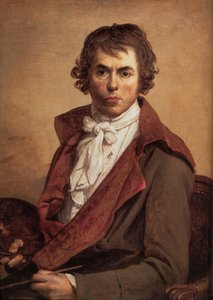
- The Death of Marat, 1793 - Jacques-Louis David
- Sforza Triptych, 1460 - Rogier van der Weyden
The Oldmasters Museum and Flemish Tradition
The Oldmasters Museum functions as a cathedral dedicated to the Flemish tradition. Within these walls, the scale of Rubens commands the space, his Baroque canvases exploding with a dynamic energy that fills the room. This intensity finds a different, more grounded expression in the works of Bruegel the Elder. His depictions of peasant life offer a window into the human condition, rendered with a startling realism that remains deeply felt. The technical virtuosity of Rogier van der Weyden is equally present, particularly in religious compositions where every fold of fabric and every expression of sorrow is captured with precision.
The collection traces a lineage of skill through the hands of many significant painters. Bernaert Van Orley and Jan Gossart are represented here, contributing to the depth of the institution's holdings. The presence of works by Quentin Massys, dating from about 1507, and Jan Sanders van Hemessen, from about 1536, allows for a quiet observation of the shifting styles that defined the era. These paintings exist as physical presences, inviting a slow study of the pigment and the intent behind the brushwork.
- St. Anne Altarpiece (central panel), 1507 - Quentin Massys
- The Prodigal Son, 1536 - Jan Sanders van Hemessen
The Magritte Museum and Surrealism
Housed within the historic Hôtel du Lotto, this space functions as a sanctuary for the surrealist movement. The collection is dedicated entirely to the enigmatic vision of René Magritte, offering the largest assembly of his extraordinary oeuvre in existence. Here, the boundaries between dream and waking life dissolve. The architecture, characterized by clean lines and stark contrasts, complements the conceptual rigor of the works on display.
The experience invites an intellectual interrogation of the relationship between image and reality. One encounters bowler-hatted figures and unsettlingly familiar objects that challenge the stability of perception. The tension between opposites is felt in the way light and shadow interact, forcing a confrontation with the unexpected. It is a place where logic is suspended in favor of the mysterious.
- Island of Treasures, 1942
- The Temptation of St Anthony, 1530
Masterpieces of the Royal Museums
To stand before these works is to encounter the weight of history through the precision of the brush. In the quietude of the galleries, the 1461 Portrait of Antony of Burgundy by Rogier van der Weyden maintains a presence that demands stillness. Nearby, the 1480 Crucifixion with a Donor by Hieronymus Bosch offers a complex, detailed vision of devotion. These pieces exist as physical anchors to the 15th century, where every line and shadow was rendered with a specific, intentional purpose.
The collection also holds the tension of political and mythological drama. Jacques-Louis David’s 1793 The Death of Marat captures a moment of profound silence following a violent end, rendered with a rigorous, neoclassical clarity. His 1824 Mars Disarmed by Venus and the Three Graces presents a different kind of order, focusing on the balance of form and the grace of the human figure. These works do not merely represent history; they occupy the space with the gravity of the eras they depict.
The evolution of the visual language continues into the more modern and surreal realms. René Magritte’s Island of Treasures, created about 1942, invites a different kind of contemplation, where the logic of the image shifts. Salvador Dalí’s The Temptation of Saint Anthony, from about 1946, brings a sense of psychological intensity to the halls. Each work remains a distinct presence, inviting a slow, focused observation of the artist's hand.


