



Origins and History of Palazzo Pubblico
The Palazzo Pubblico is a historic palace located in Siena, Italy. Construction of the structure commenced in 1297 to provide a seat for the government of the Republic of Siena. This governing body was composed of the Podestà and the Council of Nine. The Republic of Siena maintained its independence for over 400 years, existing from 1125 until 1555.
The building was established to accommodate the administrative and judicial functions of the state. As the seat of the Republic, the palace functioned as the center of political authority for the Sienese territory. The governance of the city during this period was characterized by the rule of the Nove, a group of merchant families that shaped the political landscape of the era.
The Building and its Architecture
The Palazzo Pubblico is a significant example of medieval and Gothic architecture. Its design achieves a harmonious blend of these two styles through a deliberate use of materials and form. The lower story is constructed from robust stone, providing a solid foundation for the structure. Above this, the upper crenellated stories are built from brick. This choice of materials reflects both the economic realities of the era and the functional requirements of a civic seat. The façade is not a flat plane; it curves subtly inward, a concave design that mirrors the outward sweep of the Piazza del Campo.
Dominating the skyline is the Torre del Mangia, the building's bell tower. Construction of the tower took place between 1325 and 1344. It reaches a total height of 102 meters, including the bell loft. The tower was designed to assert the independence of the Republic of Siena, standing as a vertical counterpoint to the horizontal expanse of the square below. The architecture of the palace and its tower remains a central feature of the Sienese urban landscape.
The Civic Museum Collection
The building houses the Civic Museum, where the interior walls are lined with frescoes. Unlike many collections of this period, the focus here is on secular themes commissioned by the governing body of Siena rather than religious institutions. These works belong to movements such as International Gothic, Late Gothic, and the Renaissance. The collection provides a view into the political and social values of 14th-century Italy through these visual narratives.
The museum contains significant works by Simone Martini and Ambrogio Lorenzetti. These artists contributed to the visual identity of the Republic. Other notable frescoes include those by Lippo Vanni and Spinello Aretino. The presence of these works reflects the artistic development of the region across several centuries.
- Victory of the Sienese Troops at Val di Chiana in 1363, 1364 - Lippo Vanni
- Scenes from the Life of Alexander III, 1407 - Spinello Aretino
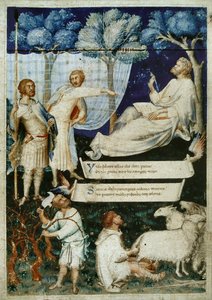
- Pope Alexander III Receives an Ambassador, 1407 - Spinello Aretino
Masterpieces of the Collection
The Sala della Pace contains the significant fresco cycle by Ambrogio Lorenzetti titled the Allegory of Good and Bad Government. In the depiction of good governance, Lorenzetti personifies Justice, Wisdom, and Virtue to illustrate the foundations of a stable state. This stands in direct contrast to the Allegory of Bad Government, which presents a vision of tyranny and corruption. These works reflect the political philosophy of the Sienese government during the 14th century.
The collection includes significant works by Simone Martini, a central figure in Sienese painting. His contributions include a detail of the Maestà from about 1315 and the Equestrian portrait of Guidoriccio da Fogliano, painted about 1328. These pieces demonstrate the stylistic developments of the era through their specific portraiture and religious iconography.
Other notable works within the civic collection include:
- Victory of the Sienese Troops at Val di Chiana in 1363, Lippo Vanni


