- Home

- Oil Painting Reproduction
- Alfred Wallis
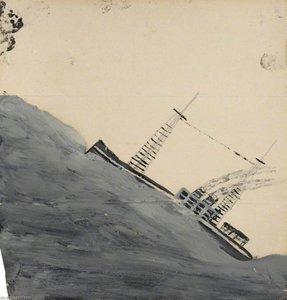
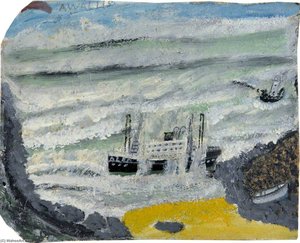
- Motor Vessel Mounting a Wave

 Buy print
 Send
Send Share
Share
 Details

 Download
 Similars
 X-Ray
X-Ray Diaporama
Motor Vessel Mounting a Wave
 Giclée Print
- Digital
- Coastal Modernism
 19th Century
 23.0 x 23.0 cm
 Kettle's Yard
 Read More
Hand Made Oil Reproduction
Hand-painted oil on canvas in your size and frame, made to order by our artists.




































Pick from our preset sizes that match the artwork's original proportions.

You may enter your own dimensions to fit a specific frame or space. If your selected size does not match the original image's proportions, we will either crop the artwork or extend the painting with additional hand-painted elements. A digital mockup will be sent for your approval before production begins.
Please note that the on-screen preview does not reflect the actual cropping or extension. Only the mockup will accurately show the final composition.
While custom sizes are available, we recommend selecting a dimension from the predefined list to preserve the original proportions.
After order, AllPaintingsStore.com team will email client for instructions and provide a mockup preview
Worldwide Delivery () in 3/4 weeks instead of standard 5 weeks. (16 July). No compromise on quality.

Free Worldwide Express Shipping

High-Quality Linen Canvas

Full Shipping Insurance

Customs Tax Refund Guarantee

True Color Matching Guarantee

60-Day Return Policy (Defects Only)

100% Money-Back Guarantee

Bulk Discount Offer
 Glass option is only available in size under 110 CM

Motor Vessel Mounting a Wave
Reproduction Medium
Reproduction Size
-


Total Price
-
Artwork Description
Alfred Wallis’s Stark Chronicle of Maritime Ruin
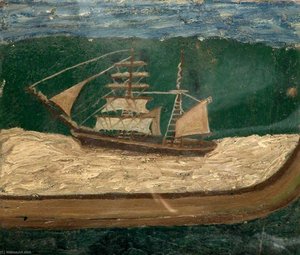
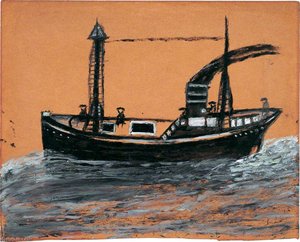
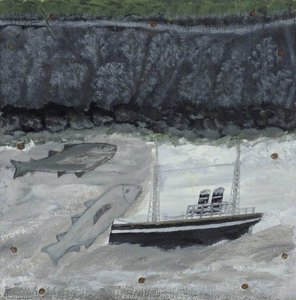
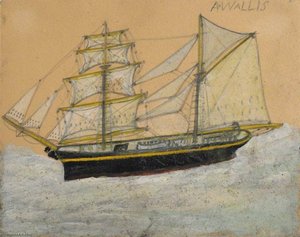
AllPaintingsStore presents a meticulously crafted hand-painted reproduction of Alfred Wallis's "Motor Vessel Mounting a Wave," a hauntingly beautiful and profoundly evocative image that captures the raw power and inherent danger of the sea. This artwork, measuring 23 x 23 cm, offers a rare glimpse into the artistic vision of a man largely untouched by formal training, yet possessed of an unparalleled understanding of form, light, and the elemental forces that shape our world.
- Subject Matter: The photograph depicts a dramatic shipwreck – a motor vessel lying prone on the ocean floor. It’s not merely a depiction of destruction; it's a study in the aftermath, a frozen moment of collapse and surrender to the relentless power of water.
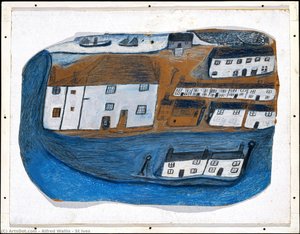
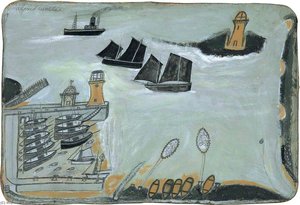
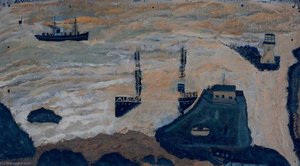
- Style & Technique: Wallis’s style is instantly recognizable—characterized by simplified forms, bold outlines, and a deliberate lack of detail. He eschewed academic precision for an intensely observational approach, capturing the essence of the scene with remarkable economy. The hand-painted reproduction faithfully recreates this distinctive aesthetic, utilizing traditional oil painting techniques to achieve depth and texture.
A Mariner’s Vision: Contextualizing Wallis
Born in Devonport in 1855, Alfred Wallis was a former shipbuilder whose life was inextricably linked to the sea. This experience profoundly shaped his artistic sensibility. Unlike many of his contemporaries who sought inspiration in classical mythology or contemporary trends, Wallis relentlessly returned to the subject that defined his existence: the Cornish coastline and its maritime activity. His lack of formal training – he never attended art school – is a crucial element of his appeal; it suggests an authenticity born from direct engagement with the world, rather than learned theory.
- The Cornish Breakthrough (1920s): Wallis’s artistic recognition came relatively late in his life, primarily through the influence of Roger Fry and other members of the Bloomsbury Group. They recognized the power and originality of his work, elevating him to a position of prominence within the British art scene.
- Influence of Maritime Craftsmanship: His background as a shipbuilder is evident in the solidity and structural integrity of his paintings. He understood how materials responded to forces, translating this knowledge into a powerful visual language.
Symbolism & Emotional Resonance
“Motor Vessel Mounting a Wave” transcends a simple depiction of a shipwreck; it’s a meditation on vulnerability, power, and the precariousness of human endeavor against the backdrop of nature's immensity. The overturned vessel becomes a symbol of lost control, a reminder of our limitations in the face of overwhelming forces. The monochrome palette – dominated by shades of grey and white – amplifies the drama and emphasizes the stark contrast between the ship’s former glory and its current state of ruin. The artist's deliberate simplification reduces the scene to its most essential elements, inviting viewers to contemplate the profound themes it evokes.
- Emotional Impact: The artwork generates a powerful sense of unease and awe, prompting reflection on mortality, resilience, and the enduring relationship between humanity and the natural world.
- Historical Significance: Created in an era of rapid technological advancement – marked by the rise of motor vessels – the painting subtly foreshadows the increasing risks associated with maritime travel.
A Statement for Your Space
This hand-painted reproduction offers a unique opportunity to own a piece of art history, bringing the raw power and contemplative beauty of Alfred Wallis’s vision into your home or office. Perfect for collectors seeking distinctive British modernism, or interior designers aiming to create a dramatic focal point, this artwork is more than just an image; it's a conversation starter, a testament to artistic ingenuity, and a poignant reminder of the sea’s enduring influence.


Artist Biography
Alfred Wallis: The Cornish Mariner’s Vision
Alfred Wallis (1855-1942) stands apart from the artistic landscape of his era—a figure whose quiet simplicity belies a profound engagement with observation and an unwavering dedication to capturing the essence of coastal Cornwall. Born in Devonport, England, Wallis possessed no formal art training; he was a self-taught craftsman who worked as a shipbuilder for much of his life, shaping timbers into vessels that sailed the Atlantic waters. Yet, it is precisely this practical experience—coupled with an almost childlike fascination with the sea and its rhythms—that fueled his extraordinary artistic output.- Early Life & Craftsmanship: Wallis’s formative years were spent honing skills in shipbuilding, a trade passed down through generations of Cornish families. This hands-on mastery instilled in him a meticulous attention to detail and an understanding of materials that would later translate into his paintings.
- The Cornish Breakthrough (1920s): Wallis’s artistic career truly blossomed in the 1920s when he relocated to St Ives, Cornwall. Drawn by the vibrant artistic community established there—including artists like Ben Burrell and George Nash—he began producing a prolific series of paintings depicting boats, harbors, and landscapes bathed in Cornish light.
- A Distinctive Style: Wallis’s aesthetic is undeniably unique. Characterized by flattened perspectives, bold outlines, and muted color palettes dominated by blues and greens, his work embodies the principles of naive art—a style rooted in direct sensory experience rather than intellectual contemplation.
- Key Themes & Influences: Recurring motifs in Wallis’s oeuvre include boats – often solitary vessels navigating turbulent seas – reflecting his lifelong connection to maritime life. These images are rendered with unwavering precision, capturing not just their physical form but also conveying a feeling of movement and vulnerability.
- Notable Works: Among his most celebrated paintings are “Three Masted Ship Near Lighthouse,” “Trawler,” and “Boat,” each demonstrating Wallis’s masterful ability to distill complex visual information into deceptively simple forms. These works exemplify the artist's commitment to capturing the beauty of the Cornish coastline.
- Legacy & Significance: Wallis’s work continues to resonate with viewers today because it speaks to a fundamental human desire for connection with nature and for experiencing beauty in its purest form. His unwavering devotion to craftmanship and his refusal to compromise on stylistic integrity serve as an inspiration to artists seeking authenticity and emotional resonance.

Alfred Wallis
1855 - 1942 , United Kingdom
Quick Facts
- Artistic Movement Or Style: Naive painting
- Artists Or Movements Influenced By This Artist: ['Cornish Art']
- Artists Who Influenced This Artist: ['']
- Date Of Birth: August 8, 1855
- Date Of Death: August 29, 1942
- Full Name: Alfred Wallis
- Nationality: British
- Notable Artworks:
- Boat
- Trawler
- Three Masted Ship near Lighthouse
- Place Of Birth: Devonport, United Kingdom
Related Articles

The Subtleties of Shade: Exploring Black, White & Gray Abstraction in Modern Interior Design
Explore the power of black, white & gray abstraction in modern interior design. Discover how minimalist art impacts spatial perception & creates sophisticated hotel spaces. Expert insights for designers.

Beyond the Lens: Photography's Enduring Influence on Modern & Contemporary Art
Explore photography's pivotal role in shaping modern & contemporary art. Discover key movements, influential artists like Stieglitz, and expert collecting advice from AllPaintingsStore.

Alfred Wallis: Rediscovering the Naïve Visionary of Cornish Life
Discover the captivating world of Alfred Wallis, the self-taught Cornish painter championed by modernists. Explore his unique naive style, maritime scenes & lasting legacy with AllPaintingsStore.
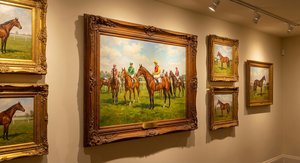
Sir Alfred Munnings' Masterpieces: 25 Paintings That Define Equine Art | AllPaintingsStore
Explore 25 iconic Sir Alfred Munnings paintings! Discover the beauty of British Impressionism, equine art & rural England. Find museum-quality reproductions and elevate your home decor with AllPaintingsStore. Explore the full collection online.

Alfred Freddy Krupa: A Modern Visionary of New Ink Art & Emotional Depth
Explore the captivating world of Alfred Freddy Krupa, a pioneering Croatian artist redefining New Ink Art. Discover his unique technique, powerful themes, and global impact. A must-read for art enthusiasts & collectors.