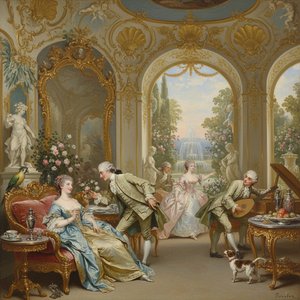
1749. Acrylic On Canvas, 74.0 x 53.0 cm. Harris Museum - Art Gallery.

§ 1Catalogue data

- 74.0 x 53.0 cm


§ 2Abstract
Collectible Description
 Read More
Artist Biography
Arthur William Devis (1762-1822) was an English portrait & history painter known for intimate 'conversation piece' portraits, depictions of naval life including the Death of Nelson, and family portraits. Discover his legacy at AllPaintingsStore!
§ 3Commentary
Mr Peter du Cane (1713–1803): A Portrait of Quiet Dignity Amidst Georgian Elegance
Arthur William Devis’s “Mr Peter du Cane” stands as a quintessential example of the conversation piece—a genre that flourished in Britain during the mid-18th century and captured not merely likeness but also social status and psychological nuance. Painted in 1749, this portrait exemplifies Devis's meticulous craftsmanship and his ability to convey an understated sense of character within a carefully constructed landscape setting. It’s more than just a depiction; it’s a window into the refined tastes and intellectual currents of Georgian England.The Artist and His Style
Arthur William Devis (1762–1822) emerged from a lineage steeped in artistic tradition, inheriting his father’s passion for painting and furthering the family's reputation as skilled artisans. Trained initially under Peter Tillemans, Devis honed his observational skills and developed a distinctive style characterized by serene realism—a deliberate contrast to the flamboyant Rococo aesthetic that dominated Europe at the time. Unlike many of his contemporaries who sought dramatic theatricality, Devis favored subtlety and restraint, prioritizing accuracy in detail and capturing the essence of his subjects with quiet dignity. This approach aligns perfectly with the conversation piece’s aim: to stimulate contemplation and invite viewers to engage in a dialogue about virtue, intellect, and social standing.A Landscape Backdrop Reflecting Inner Calm
The painting's composition is masterful—centering on Mr. Peter du Cane seated upon a rock amidst a tranquil hillside landscape. The artist skillfully employs atmospheric perspective, blurring distant trees and hills under a muted sky to create depth and reinforce the sense of serenity. This backdrop isn’t merely decorative; it serves as a symbolic counterpoint to Du Cane's pose—a deliberate choice that speaks volumes about his temperament. He is dressed in formal attire – a brown coat adorned with gold trim, a blue waistcoat, and white breeches – reflecting the status of an educated gentleman deeply embedded within Georgian society. The soft lighting contributes to this mood of contemplative repose, suggesting either dawn or dusk and enhancing the painting’s emotional resonance.Technique and Palette: Precision and Earthy Tone
Devis's technique is characterized by meticulous brushwork—evident in the textured surfaces of Du Cane’s clothing and the foliage of the landscape. He achieved remarkable realism through careful layering of pigments, utilizing a palette dominated by earthy tones – browns, greens, and blues – to create a harmonious visual experience. The subtle interplay of light and shadow sculpts Du Cane's form, emphasizing his posture and conveying an impression of quiet confidence. Notably, Devis’s use of gold trim on the coat is not merely ornamental; it symbolizes wealth and prestige—a key element in communicating social status within the context of Georgian portraiture.Symbolism Beyond Appearance
“Mr Peter du Cane” transcends mere visual representation. It embodies the values prized by the Enlightenment – intellect, virtue, and refined taste. Du Cane’s seated position suggests thoughtfulness and contemplation, mirroring the intellectual pursuits favored during this period. The landscape serves as a reminder of the natural world—a realm valued for its beauty and tranquility—further reinforcing the painting's overarching message of balance and harmony. As a conversation piece intended to provoke reflection, Devis’s portrait invites viewers to consider not just what they see but also what it represents – a testament to his artistic vision and enduring legacy.Questions & Answers
How big is the original "Mr Peter du Cane (1713–1803)"?
The original "Mr Peter du Cane (1713–1803)" by Arthur William Devis measures 74 x 53 cm.
Is "Mr Peter du Cane (1713–1803)" available as a fine art print?
A print of "Mr Peter du Cane (1713–1803)" by Arthur William Devis can be ordered directly on its Fine Art Print page: a fine art print on cotton canvas or archival canvas paper.
Where in the home does a reproduction of "Mr Peter du Cane (1713–1803)" fit well?
A reproduction of "Mr Peter du Cane (1713–1803)" fits well in a living room.


 Switch to Print


 For artworks or reproductions larger than 105 cm (approximately 41 inches) on any side, the frame will be shipped as a kit, disassembled. This method ensures safe delivery and prevents damage during transport.