


 Preview
 Send
Send Share
Share
 Details
 Guide
Guide

 Download
 Similars
 X-Ray
X-Ray Diaporama
 Q&A
Q&A Stats
StatsSeparation


 Read More
Get a print-ready file that goes far beyond the web preview. Every digital image we sell comes from a high-resolution master in our stock database — usually 5,000 to 15,000 pixels wide — so you can print large, crop tightly, or reproduce fine detail with confidence.
No file leaves our studio untouched. A digital expert checks the colors against the original painting and corrects them if needed, then improves clarity and detail with professional retouching tools — always staying faithful to the artist's brushwork and style. The result is an image that looks like the painting, not like a filtered scan.
You approve before you're done: our expert sends the image by e-mail within 72 hours for your review. Not satisfied? Ask for improvements or corrections, or request a refund if the quality falls short.
This is the quality relied on by publishers, design studios, galleries and print shops.
Digital Image
Download a high-resolution file for personal display, printing, and creative projects. ( Switch to Print Buy Hand Made Painting)
Included in Every Digital Image Order
Expert Digital Delivery, Guaranteed
When you choose AllPaintingsStore.com, you're not just getting an image - you're receiving a professionally enhanced digital artwork, crafted with precision and backed by a satisfaction guarantee. Here's everything that comes with your order, automatically:

Fast Email Delivery
Your high-resolution digital image file will be emailed to you within 72 hours of ordering - ready for immediate use.

AI-Enhanced Digital File
Your artwork is professionally optimized using advanced AI tools and manual editing, ensuring maximum detail, clarity, and color accuracy.

Free Lifetime Re-Delivery
Accidentally deleted or lost your file? No worries - we'll resend it to you anytime, free of charge.

No Import Fees - Ever
Enjoy your artwork instantly with zero customs, duties, or delivery fees - digital downloads are always tax-free.

Color Accuracy Guarantee
We ensure your digital image reflects the original colors as closely as possible using professional tools and color management.

100-Day Satisfaction Guarantee
If you're not satisfied with your digital image, we'll revise it or refund 100% within 100 days - no questions asked.

100% Money-Back Guarantee
Not satisfied? Get a full refund within 100 days of receiving your digital file - no questions asked.

Bulk Order Discounts
Buy 3 images, save 10% - Buy 5, save 15% - Buy 10+, save 20%. Great for creative projects, galleries, and agencies.
The Heart’s Silent Scream: Unpacking Edvard Munch's "Separation"
Edvard Munch’s “Separation,” a lithograph created in 1896, isn’t merely a depiction of two figures; it’s a raw, visceral exploration of human disconnection and the agonizing weight of unspoken sorrow. Belonging to the heart of the Expressionist movement, this work transcends simple representation, plunging the viewer directly into the emotional turmoil at its core. The painting immediately commands attention with its stark contrast – the deep blacks and somber hues of the man against the muted blues and greens of the landscape, punctuated by a jarring crimson that speaks volumes about the source of their distress. It’s a scene frozen in a moment of profound, almost unbearable, separation, a testament to Munch's ability to translate personal anguish into universally resonant imagery.
At first glance, the composition appears deceptively simple: a man, rigidly turned away, clutching his chest as if enduring an invisible wound; and a woman reaching out towards him with a desperate plea. However, beneath this surface lies a complex web of symbolism and psychological depth. The man’s posture – shoulders hunched, head bowed – speaks to a profound sense of defeat and withdrawal. His hand, gripping his heart, isn't just an expression of physical pain; it represents the crushing weight of emotional rejection. The woman, rendered in softer tones, embodies a yearning for connection, her outstretched hand a poignant symbol of lost intimacy. The flowing hair, almost like a spectral extension of herself, further emphasizes this feeling of being irrevocably distanced.
Echoes of Trauma and the Expressionist Vision
To understand “Separation,” it’s crucial to delve into the context of Edvard Munch's life and the broader movement of Expressionism. Born in 1863, Munch was profoundly shaped by a childhood marked by loss – the early deaths of his mother and sister from tuberculosis instilled within him an enduring preoccupation with mortality, illness, and psychological distress. These experiences weren’t just personal tragedies; they formed the bedrock of his artistic vision, fueling his exploration of the darker recesses of the human psyche. Expressionism, emerging in the late 19th and early 20th centuries, rejected the objective representation favored by previous art movements, instead prioritizing the subjective experience – the raw emotions, anxieties, and nightmares that haunted the artists’ inner worlds.
Munch's work is deeply intertwined with this movement. He sought to capture not just what he *saw*, but what he *felt*. “Separation” exemplifies this approach perfectly; it’s less a portrait of two individuals and more an embodiment of the feeling of profound isolation, a sensation that Munch himself experienced acutely throughout his life. The lithograph medium itself—known for its ability to capture subtle tonal variations and create a sense of immediacy—was ideally suited to conveying the intensity of Munch's emotional landscape.
Symbolism in Shadow and Light: A Deeper Look
The painting’s symbolism is layered and evocative. The dominant use of black, particularly in the man’s attire and posture, immediately establishes a mood of despair and grief. However, it's not simply darkness; there are hints of color—the woman’s pale skin, the crimson plant that blooms between them—that add complexity to the scene. This plant, often interpreted as a mandrake root (a symbol of both love and death in folklore), represents the painful blossoming of emotions within this relationship. The man's hand clutching his heart is not just a gesture of pain but also a visual metaphor for the very core of his being—his capacity for love and vulnerability.
The setting, reminiscent of Aasgaardsstrand – a coastal area near Oslo where Munch often painted – contributes to the overall atmosphere. The blurred shoreline suggests a sense of disorientation and uncertainty, mirroring the emotional state of the figures. Notably, Munch employed gold paint in the woman’s hair, an unusual choice that adds a touch of ethereal beauty amidst the prevailing gloom, perhaps representing a fleeting memory of joy or a yearning for something lost.
A Window into the Soul: Reproduction and Beyond
AllPaintingsStore offers meticulously crafted hand-painted reproductions of “Separation,” allowing you to experience Munch’s masterpiece in stunning detail. Our artists carefully replicate the painting's nuanced colors, textures, and emotional intensity, capturing the essence of this iconic work. Whether displayed in your home or office, a AllPaintingsStore reproduction will serve as a powerful reminder of the complexities of human relationships and the enduring power of art to express profound emotions. Explore our collection here to discover other exceptional reproductions by Munch and delve deeper into his extraordinary artistic legacy. For further insights, consider visiting the Bergen Kunstmuseum, where “Separation” resides, or exploring resources like Wikipedia and Google Arts & Culture for a more comprehensive understanding of this seminal work.
Questions & Answers
What is the overall mood of "Separation" by Edvard Munch?
"Separation" has a dramatic atmosphere.
Is there a factsheet about "Separation" by Edvard Munch for students?
The Guide page of "Separation" by Edvard Munch offers a printable two-sheet factsheet: the artwork with its identity table, a decade band placing it in the artist's lifetime, other works by the artist, the measured color palette, and ready-to-copy citations in four styles.
What are the author and date of "Separation"?
The author of "Separation" is Edvard Munch, and the work is dated 1896.
Related Artworks


Artist Biography
The Life and Identity of Edvard Munch
Edvard Munch was a Norwegian painter whose life was deeply tied to the landscapes and the heavy atmosphere of his homeland. Born on 12 December 1863, he spent much of his existence navigating the complexities of the human psyche through his brush and printmaking tools. His work often felt like a direct extension of his own internal struggles, turning private emotions into something visible and shared. He remained an active presence in the art world until his death on 23 January 1944.
His ability to capture the tremors of human existence reached a peak in 1893 with the creation of The Scream. This specific work has become one of the most acclaimed images in Western art, recognized globally for its depiction of existential dread. While many artists sought to replicate the physical world, Munch was interested in the things that cannot be seen, such as anxiety and the weight of loneliness. He used color and form to give a shape to the invisible forces that pull at the human spirit.
Throughout his long career, he produced a vast body of work that spanned many different mediums. His output included:
- The Scream
- Madonna
- The Sick Child
- The Dance of Life
Early Life, Family and Training
Edvard Munch was born in 1863 amidst the stark landscapes of Norway. His childhood was shaped by a household where the presence of sickness was a constant companion. In 1868, his mother died from tuberculosis, a loss that left a heavy mark on the young boy. This sense of fragility deepened in 1877 when his sister, Johanne Sophie, also succumbed to tuberculosis at the age of 15. These early bereavements meant that the shadows of mortality were woven into the fabric of his daily life.
His father, Christian Munch, worked as a physician and medical officer. Christian was a man of intense religious devotion, but he also struggled with a temperament that was nervous and obsessively religious. The atmosphere of the home was often heavy with this sense of dread. Growing up in such a setting, Edvard often found himself drawing to keep occupied during the long winters when illness kept him from school. These early experiences of grief and fear would eventually find their way onto his canvases.
For his formal education, he attended the Royal School of Art and Design in Kristiania. It was here that he began to develop the technical skills that would support his later explorations of the human psyche. His training provided the foundation for a career spent translating internal distress into visual form.
The Bohemian Circles of Kristiania
In the streets of Kristiania, the former name of Oslo, Munch found a community that challenged everything he had been taught. He moved within the bohemian circles of the city, a group of people who lived outside the strict rules of the era. Among them was the naturalistic painter Christian Krohg, who was a part of this progressive circle. These gatherings were not just social; they were spaces where new ways of seeing the world were debated and lived.
It was through the influence of the nihilist Hans Jæger that Munch’s own path began to shift. Jæger urged him to move away from the polite, academic traditions of the time. He encouraged the artist to look inward and paint his own emotional and psychological state. This was a radical idea. Instead of trying to capture the world as it appeared to others, Munch began to use his canvas to express the internal storms of his own mind.
Travels and Influences in Paris and Berlin
Moving through the centers of European art allowed Munch to see his own impulses reflected in the work of others. In Paris, he encountered the techniques of artists like Paul Gauguin and Vincent van Gogh. He learned much from them, absorbing how they used color and form to move beyond simple representation. His time in the city also brought him into contact with Henri de Toulouse-Lautrec. These encounters helped him refine a way of seeing that prioritized the internal over the external.
His time in Berlin shifted his focus toward the deeper, more unsettling layers of the human mind. It was there that he met the Swedish dramatist August Strindberg. These connections with figures such as Strindberg pushed his investigations into psychological themes. He began to use his art to explore the tremors of human existence, moving away from naturalistic depictions toward a style that could communicate the heavy weight of fear and anxiety.
Technique and Style of Soul Painting
Munch did not aim to replicate the physical world as it appeared to the eye. Instead, he sought to externalize his internal state, a method he called soul painting. He used distorted forms and rhythmic lines to communicate the tremors of human existence, turning psychological distress into a visible, tangible form. His brushwork often reflected the turbulence of his own mind, using color and shape to translate what he felt rather than what he saw.
This focus on the internal led him to experiment extensively with various mediums. He was a highly active printmaker, working through lithography, woodcut, and etching to expand his reach. His technical range was broad, involving intaglio processes such as aquatint, drypoint, and engraving on copper. These methods allowed him to layer textures and lines that mirrored the complexity of human emotion.
- The Scream (1893)
- Madonna (1894)
- The Sick Child (about 1926)
The Frieze of Life and Key Works
Munch sought to capture the recurring cycles of human existence through a series of works he called The Frieze of Life. This collection focused on the heavy, inescapable themes of love, fear, death, and anxiety. He did not aim for a simple depiction of life, but rather an exploration of the internal storms that define it. His paintings often functioned as a way to process the grief and the psychological tremors that stayed with him from his youth.
Many of his most recognized images emerged from these personal struggles. He conceived The Scream while in Kristiania, using swirling, fiery landscapes to represent a sense of existential dread. In other works, he turned his gaze toward the complexities of human connection and the fragility of life. Madonna explores the intersection of sexuality and mortality, while The Sick Child remains a poignant reminder of the loss of his sister, Sophie. These pieces reflect a man trying to make sense of the shadows that followed him.
- The Scream (1893)
- Madonna (1894)
- The Sick Child (about 1926)
- Puberty (1894–95)
Later Years and Death
The later years of Munch's life were marked by a significant shift in his personal habits and his creative environment. Following a mental breakdown in 1908, he made the decision to give up heavy drinking. This period of change led him away from the turbulent social scenes of his youth. Instead, he spent his remaining years working in peace and privacy, finding a quiet space to continue his practice.
His output remained steady until the end of his life. By the time he passed away in 1944, he had amassed a collection of 1006 paintings. While the world around him faced the immense upheaval of World War II, the majority of his works survived the conflict, ensuring that his visual language would remain available for future generations to study and experience.
The Lasting Legacy and Influence
Munch's ability to confront the darker aspects of the human condition helped pave the way for German Expressionism. He was a pioneer of Expressionism, moving away from the polite rules of academic art to find a way to show the internal storms of the mind. By translating psychological distress into visual form, he changed how artists approached the canvas. His work became a cornerstone of the modernism movement, shifting the focus from what the eye sees to what the soul endures.
His presence is felt deeply within the history of Norwegian art. He helped define a national identity through his exploration of universal human experiences. The way he used color and distorted lines to communicate the tremors of existence left a mark that many artists followed. His influence reached far beyond the borders of Norway, affecting how the modern world perceives anxiety and isolation.
- The Scream (1893)
- Madonna (1894)
- The Sick Child (about 1926)
Where to See the Works Today
To experience the breadth of his life's work, one must travel to Oslo, Norway. The Munch Museum is the primary guardian of his legacy, housing a vast collection that spans the full range of his artistic output. It is a place where the sheer scale of his production becomes clear, offering a deep look into the themes he explored throughout his years of painting and printmaking.
Other significant pieces are held in the city's other major institutions. The National Gallery in Oslo holds the 1893 tempera and crayon on cardboard version of The Scream. This specific piece offers a different texture and feeling compared to other versions. Additionally, the National Museum of Norway is home to a version of Madonna, allowing visitors to see how he approached the same subject through different lenses.
- The Scream (1893) - National Gallery, Oslo
- Madonna - National Museum of Norway
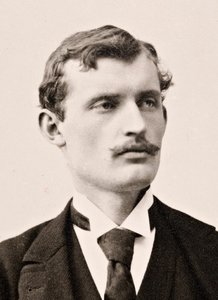
Edvard Munch
1863 - 1944 , Sweden
Quick Facts
- Artistic Movement Or Style:
- Expressionism
- Symbolism
- Artists Or Movements Influenced By This Artist: ['German Expressionism']
- Artists Who Influenced This Artist:
- Paul Gauguin
- Vincent van Gogh
- Full Name: Edvard Munch
- Nationality: Norwegian
- Notable Artworks:
- The Scream
- Madonna
- The Sick Child
- Puberty
- Place Of Birth: Adelsbruk, Sweden
- Date Of Birth: 1863
- Date Of Death: 1944