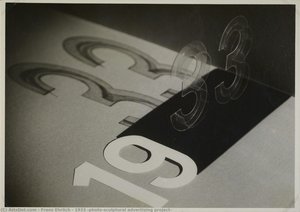
Acrylic On Canvas, 47.0 x 36.0 cm. Bauhaus Dessau Foundation.

§ 1Catalogue data

- 47.0 x 36.0 cm


This Artwork Is Under Copyright Protection
The artwork displayed on this page is protected by copyright law, which means we cannot legally create or sell an identical reproduction. This protection is enforced under international agreements such as the Berne Convention and by national laws, including those outlined by the U.S. Copyright Law - Title 17.
As a respectful and legal alternative, we offer custom, hand-painted artworks inspired by the original. Our skilled and professional artists carefully study the original's style, mood, and artistic essence to create a new, unique piece that evokes the same feeling - while remaining an original creation in its own right.
This method fully complies with copyright regulations because it does not involve copying or duplicating the protected artwork. Instead, it is a creative reinterpretation - a new painting that is influenced by the original but not identical to it.
 Read more
§ 2Abstract
Collectible Description
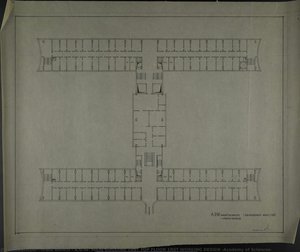
Admire Franz Ehrlich’s architectural blueprint 'DEVELOPMENT SCHEMES,' showcasing meticulous detail and geometric precision—a testament to Bauhaus principles and communist ideals.
Artist Biography
Explore the art of Franz Ehrlich: German architect, calligrapher & graphic designer. Discover Bauhaus influence, communist affiliations & innovative designs.
§ 3Commentary
Franz Ehrlich’s Development Schemes: A Blueprint for Vision
This meticulously crafted architectural drawing by Franz Ehrlich, dated unknown but originating from the mid-20th century, transcends mere technical documentation; it embodies a profound reflection of modernist ideals and the ambition to reshape urban landscapes. Executed in black ink on paper—a testament to traditional drafting techniques—the artwork presents a striking visual narrative that speaks volumes about its creator’s artistic sensibilities and intellectual engagement with the burgeoning field of architectural planning.- Subject Matter: The drawing focuses squarely on urban development, depicting detailed plans for constructing new buildings alongside existing structures. It's not simply about construction; it’s about reimagining spaces and integrating them harmoniously into the broader cityscape.
- Style & Technique: Ehrlich adheres to a distinctly architectural drafting style—characterized by orthogonal projection and prioritizing dimensional accuracy over artistic embellishment. The use of hatching patterns subtly conveys depth and shading, lending an illusion of realism to the schematic representation. Precise lines delineate building outlines and structural elements, reflecting the meticulous attention to detail demanded by professional architects.
- Historical Context: Produced during a period marked by significant architectural experimentation—particularly influenced by the Bauhaus movement—the drawing embodies the modernist ethos of functionality, simplicity, and rational design. The Bauhaus’s emphasis on uniting art and craft aimed to liberate architecture from ornamentation and elevate it to a higher level of aesthetic expression.
- Composition & Visual Elements: The image is dominated by three horizontal rows of building designs arranged in a grid format—a deliberate choice that underscores the systematic planning inherent in urban development schemes. A rectangular border frames the artwork, reinforcing its formal character and conveying a sense of seriousness.
- Symbolism & Emotional Impact: Beyond its technical precision, the drawing evokes a powerful feeling of order, control, and optimism—reflecting the belief that architecture could contribute to creating more efficient and aesthetically pleasing environments. It’s a visual manifesto for shaping cities according to enlightened principles.
Detailed Examination of Drawing Techniques
Ehrlich's masterful use of hatching is particularly noteworthy. Rather than relying on shading gradients, he employs dense lines to simulate tonal variations within the building facades—a technique that maximizes clarity and minimizes visual distortion. The density of hatching corresponds directly to the perceived level of illumination, creating a convincing illusion of depth without resorting to perspective conventions. This deliberate stylistic choice underscores Ehrlich’s commitment to conveying spatial information accurately while maintaining an understated aesthetic sensibility.Exploring Connections to Bauhaus Ideals
The drawing's stylistic lineage can be traced directly back to the Bauhaus school in Dessau, where Ehrlich honed his artistic skills during a formative period of experimentation and innovation. Like other Bauhaus architects, Ehrlich championed the concept of “Gesamtkunstwerk”—a holistic approach to design that integrates various art forms into a unified aesthetic experience—rejecting the decorative excesses of Victorian architecture. This commitment to functionality and simplicity aligns perfectly with the drawing’s core message: architecture should serve humanity's needs while elevating its visual beauty.A Legacy of Precision and Vision
Franz Ehrlich’s “Development Schemes” remains a compelling exemplar of modernist architectural drafting—a testament to his artistic talent and intellectual curiosity. Its enduring appeal lies not only in its technical accuracy but also in its ability to communicate a powerful vision for shaping urban spaces—a vision rooted in the belief that architecture could contribute meaningfully to improving human life and fostering a more harmonious relationship between art and society.Questions & Answers
Can I watch "DEVELOPMENT SCHEMES. Existing buildings / development as currently intended / development as it should be intended" as a full-screen slideshow?
A slideshow is available: the Diaporama page of "DEVELOPMENT SCHEMES. Existing buildings / development as currently intended / development as it should be intended" by Franz Ehrlich.
Is "DEVELOPMENT SCHEMES. Existing buildings / development as currently intended / development as it should be intended" by Franz Ehrlich kept in the artist's home country?
Yes - the artwork is kept in the artist's home country. The birth country of Franz Ehrlich is Germany, and the museum holding the original of "DEVELOPMENT SCHEMES. Existing buildings / development as currently intended / development as it should be intended" is in Germany.
What size should I print "DEVELOPMENT SCHEMES. Existing buildings / development as currently intended / development as it should be intended" for my room?
For a living room, the recommended print size of "DEVELOPMENT SCHEMES. Existing buildings / development as currently intended / development as it should be intended" by Franz Ehrlich is large.


 Switch to Print


 For artworks or reproductions larger than 105 cm (approximately 41 inches) on any side, the frame will be shipped as a kit, disassembled. This method ensures safe delivery and prevents damage during transport.