Money-Back Guarantee · 100 days Free Worldwide Delivery
449,587artworks 30,613artists 4,660museums 32languages
Currency
    Language
      Atelier · Est. 2015 · Paris, France
      AllPaintingsStore
      allpaintingsstore.com
      Catalogue entry

      The Red Disk

      1960. Oil On Canvas.

      Fig. 1. Joan Miró, The Red Disk, 1960. Shown as the reproduction you are specifying: , .

      § 1Catalogue data

      § 2Abstract

      Collectible Description

      Explore Joan Miró’s ‘The Red Disk,’ a vibrant 1960 abstract expressionist masterpiece! Discover its dynamic composition, impasto texture & symbolic red circle. A captivating piece of modern art.

      Artist Biography

      Explore Joan Miró's vibrant world! Discover Surrealist & abstract masterpieces, Catalan symbolism, & playful forms. A pioneer of modern art – view works at AllPaintingsStore!

      § 3Commentary

      A Burst of Energy: Exploring Joan Miró’s “The Red Disk”

      “The Red Disk,” painted in 1960, is a powerful example of Joan Miró's mature abstract expressionist style. This large-scale work isn’t about depicting the world as we see it, but rather evoking raw emotion and exploring the fundamental elements of color and form.

      Decoding the Abstract Landscape

      The painting immediately commands attention with its dramatic contrast between stark black and white. A vibrant red circle dominates the composition, acting as a focal point amidst an explosion of gestural marks. These aren’t carefully planned brushstrokes; instead, Miró employed techniques like dripping and splattering paint onto the canvas – a method that prioritizes spontaneity and the physical act of creation. The absence of traditional perspective or recognizable imagery invites viewers to engage with the artwork on a purely visceral level. Shapes are amorphous and undefined, existing as overlapping masses of color and texture.

      Technique & Materials

      Miró’s masterful use of impasto – applying paint thickly – creates a highly textured surface. You can almost *feel* the raised areas and pools of pigment. This tactile quality adds another dimension to the work, emphasizing its physicality. The materials are likely oil paints on canvas, judging by the rich sheen and depth of color. The technique is reminiscent of action painting, where the process itself becomes as important as the final result.

      Miró & The Post-War Artistic Climate

      Born in Barcelona in 1893, Joan Miró was a pivotal figure in 20th-century art. He moved through various styles – from early representational work to Surrealism and finally, the more liberated abstract expressionism seen in “The Red Disk.” The 1960s were a period of significant cultural upheaval, marked by experimentation and a rejection of traditional norms. This context is crucial for understanding Miró’s work; it reflects a broader desire to break free from established conventions and explore new forms of artistic expression. The counterculture movement, with its emphasis on individuality and emotional liberation, resonates strongly within the energy of this piece.

      Symbolism & Interpretation

      While abstract, “The Red Disk” is ripe for interpretation. The central red circle could be seen as a stylized sun, an eye – a window into the artist’s subconscious – or simply a powerful symbol of life and energy. The chaotic white surrounding it might represent the turbulence of the modern world, or the unpredictable nature of creativity itself. Miró often incorporated Catalan symbolism into his work, hinting at deeper cultural meanings that add layers to the viewing experience.

      Emotional Resonance & Interior Design

      “The Red Disk” evokes a sense of both chaos and control. The energetic application of paint suggests unrestrained emotion, while the bold simplicity of the composition provides a grounding force. Its dramatic color palette and dynamic form make it a striking statement piece for any interior.
      • For Modern Living Rooms: This artwork would serve as a captivating focal point in a minimalist or mid-century modern space, adding depth and visual interest.
      • In Corporate Settings: The painting’s energy and abstract nature can inspire creativity and innovation in office environments.
      • As an Accent Piece: Even a high-quality reproduction can add a touch of sophistication and artistic flair to smaller spaces.
      Ultimately, “The Red Disk” is more than just a painting; it’s an invitation to explore the power of abstraction and connect with the artist's inner world. It remains a testament to Miró’s enduring legacy as one of the most important artists of the 20th century.

      Questions & Answers

      How does "The Red Disk" balance light and dark?

      The recorded values for "The Red Disk" by Joan Miró are: shadow brightness, gentle luminance luminance.

      What color leads the composition of "The Red Disk" by Joan Miró?

      The dominant color of "The Red Disk" by Joan Miró is phthalo green (#1e2026).

      Do the colors of "The Red Disk" appear strong or soft?

      The colors in "The Red Disk" by Joan Miró have a monochromatic intensity.
      § 4The artist

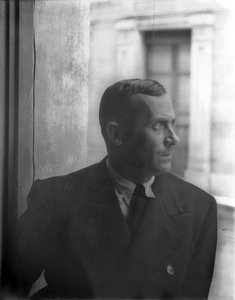
      Joan Miró

      Joan Miró

      1893 - 1983, Spain

      Quick facts about Joan Miró

      • Artistic Movement Or Style: Surrealism, Abstract Art
      • Artists Or Movements Influenced By This Artist:
        • Surrealism
        • Abstract Art
      • Artists Who Influenced This Artist:
        • Van Gogh
        • Cézanne
      • Date Of Birth: 1893
      • Date Of Death: 1983
      • Full Name: Joan Miró i Ferrà
      • Nationality: Spanish
      • Notable Artworks:
        • The Farm
        • Dutch Interiors
        • Painting
      • Place Of Birth: Barcelona, Spain

      Artist Biography

      A Catalan Visionary: The Life and Art of Joan Miró

      Joan Miró i Ferrà, born in Barcelona in 1893, stands as one of the most significant figures in 20th-century art. His journey was not merely a progression through styles but an exploration of inner worlds, translating dreams, memories, and Catalan identity onto canvas with a uniquely poetic visual language. From humble beginnings marked by illness and initial parental reservations about his artistic pursuits, Miró persevered, driven by an innate need to express the intangible—the emotions, sensations, and subconscious currents that lie beneath the surface of reality. His early life was steeped in the traditions of Barcelona, a city brimming with architectural marvels thanks to Antoni Gaudí, whose organic forms would subtly influence Miró’s later abstractions. The goldsmithing profession of his father instilled an appreciation for meticulous craftsmanship, while the rugged Catalan landscape became a recurring motif and source of inspiration throughout his career.

      Early Influences and the Path to Surrealism

      Miró's formal artistic training began at La Llotja in Barcelona, where he honed his skills in traditional techniques. However, it was exposure to the avant-garde movements sweeping through Paris that truly ignited his creative evolution. The vibrant colors of Fauvism and the fragmented forms of Cubism resonated deeply, prompting him to move to Paris in 1920. This period proved pivotal as he encountered artists like Pablo Picasso and began experimenting with increasingly abstract compositions. Yet, Miró didn’t simply adopt these styles; he synthesized them, forging a path toward his own distinctive aesthetic. He sought to distill forms to their essence, stripping away representational details in favor of symbolic shapes and evocative colors. This exploration led him to the Surrealist group in 1924, aligning him with artists such as Max Ernst and Salvador Dalí. While embracing the Surrealist interest in the subconscious, Miró maintained a unique sensibility—his work was less about shocking imagery or Freudian symbolism than it was about creating a world of playful forms and poetic suggestion.

      The Language of Symbols: Key Works and Artistic Innovations

      Throughout the 1920s and 30s, Miró developed his signature visual vocabulary—a universe populated by biomorphic shapes, floating forms, and vibrant colors. The Farm (1922), often considered a cornerstone of his oeuvre, exemplifies this transition. It’s not merely a depiction of rural life but an evocation of Catalan identity and a symbolic representation of the natural world. His collaborative spirit led to innovative techniques like *grattage*, pioneered with Max Ernst in 1926 for designs intended for Sergei Diaghilev's ballet, where textures were revealed by scraping paint across canvas. The Dutch Interiors (1928) series demonstrated his ability to reinterpret the Old Masters through a distinctly modern lens, transforming domestic scenes into dreamlike abstractions. Painting (1933), with its bold colors and simplified forms, encapsulates Miró’s exploration of the subconscious and his rejection of conventional artistic boundaries. Beyond painting, Miró fearlessly experimented with sculpture, ceramics, and printmaking, expanding his creative horizons and demonstrating a remarkable versatility.

      Legacy and Enduring Influence

      Joan Miró's impact on 20th-century art is undeniable. He wasn’t simply a painter; he was a visionary who challenged the very definition of artistic expression. His work paved the way for abstract expressionism and continues to inspire artists across disciplines. He established two foundations—the Fundació Joan Miró in Barcelona (1975) and the Fundació Pilar i Joan Miró in Palma de Mallorca (1981)—ensuring that his legacy would endure, providing spaces for artistic exploration and education. Throughout his long career, he remained committed to pushing boundaries, questioning conventions, and exploring the depths of human imagination. Miró’s art is a testament to the power of abstraction, symbolism, and poetic expression—a vibrant celebration of life, dreams, and the enduring spirit of Catalan culture. His work continues to resonate with audiences worldwide, inviting us to enter a world where anything is possible and the boundaries between reality and fantasy blur into a captivating dance of color and form.

      § 5Comparanda

      § 6Questions

      Quick Facts

      • movement: Surrealism, Abstract Art
      • medium: Oil on canvas (presumed)
      • artist: Joan Miró
      • style: Abstract Expressionism, Gestural Abstraction

      Art Quiz

      There is only one correct answer for each question.

      Question 1:
      To which artistic movement is Joan Miró most closely associated in 'The Red Disk'?
      Question 2:
      What is the dominant visual characteristic of 'The Red Disk' regarding its application of paint?
      Question 3:
      What is the primary subject matter of 'The Red Disk'?
      Question 4:
      Considering the date of creation (1960), what broader cultural context might have influenced Miró's style?
      Question 5:
      What is a key element that draws the viewer's eye in 'The Red Disk'?

      § 7Cite this entry

      AllPaintingsStore.com, “Joan Miró, The Red Disk (1960)”, https://allpaintingsstore.com/en/art/joan-miro-the-red-disk-8XYBWK-en/ArtistReproduction/ (accessed 2 October 2026).

      § 8The reproduction

      Hand Made Oil Reproduction

      Hand-painted oil on canvas in your size and frame, made to order by our artists. ( Switch to Print Switch to Digital Image)

      It is specified on the order sheet in the margin; the present state of that sheet reads as follows.

      The Red Disk

      Reproduction Medium

      Reproduction Size

      -

      Elite Senior Artist

      More detail, finesse, and extra production time

      -

      Reproduction Frame

      -

      -

      For artworks or reproductions larger than 105 cm (approximately 41 inches) on any side, the frame will be shipped as a kit, disassembled. This method ensures safe delivery and prevents damage during transport.

      Professional assembly required - this is not a DIY product.
      The kit must be assembled and the canvas stretched by an experienced professional framer, using wood glue (not supplied), a canvas stretching plier and clamps to hold the bars square while the glue dries. Incorrect assembly or uneven canvas tension can permanently damage the artwork and is not covered by our warranty.

      • All solid wood bars are included, precisely cut to size.

      • Assembled with the screws provided, plus wood glue for the corner joints, which is not supplied and must be sourced by your framer.

      • Professional tools are required and not included: a canvas stretching plier (tensioner) and clamps to hold the bars square while the glue dries.

      Important:
      The corner joints require wood glue, the bars must be held with clamps until the glue is fully dry, and tightening the canvas on the assembled frame requires a canvas stretching plier. None of these are included in the kit. Please arrange an experienced professional framer before ordering this size.

      Nameplate

      -

      -

      Protective Varnish

      Glossy Varnish (enhances colors, protects against light/moisture)

      -

      Customize My Artwork

      Examples of what can be changed: Replace face with customer photo; Add pet (e.g., replace cat with dog); Include hidden message in background; Change background landscape or elements.

      -

      Urgent

      Worldwide Delivery () in 3/4 weeks instead of standard 5 weeks. (30 October). No compromise on quality.

      -

      Express Shipping

      Worldwide Delivery () in 5 weeks. (6 November).

      Included

      Total Price

      $ 258

      Included with every order

      • Free Worldwide Express Shipping
      • High-Quality Linen Canvas
      • Full Shipping Insurance
      • Customs Tax Refund Guarantee
      • True Color Matching Guarantee
      • 100-Day Return Policy (Defects Only)
      • 100% Money-Back Guarantee
      • Bulk Discount Offer
      Order sheet
