Money-Back Guarantee · 100 days Free Worldwide Delivery
449,587artworks 30,613artists 4,660museums 32languages
Currency
    Language
      Atelier · Est. 2015 · Paris, France
      AllPaintingsStore
      allpaintingsstore.com
      Catalogue entry

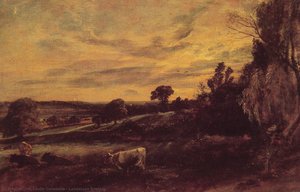
      View on the Stour

      Acrylic On Canvas.

      Fig. 1. John Constable, View on the Stour. Shown as the reproduction you are specifying: , .

      § 1Catalogue data

      § 2Abstract

      Collectible Description

      Discover 'View on the Stour' by John Constable – a serene landscape capturing the beauty of the English countryside. Explore this iconic Romantic masterpiece and Constable's dedication to nature.

      Artist Biography

      Discover John Constable (1776-1837), the Romantic British landscape painter who revolutionized the genre with emotive scenes of Suffolk & nature. Explore iconic works now!

      § 3Commentary

      A Glimpse into Constable’s England: The Serenity of “View on the Stour”

      John Constable's “View on the Stour” is more than just a landscape; it’s an intimate portrait of a cherished place and a pivotal moment in the evolution of British painting. Executed around 1822, this work encapsulates the artist’s lifelong dedication to capturing the beauty and emotional resonance of the Suffolk countryside – specifically, the area surrounding his home known today as “Constable Country.” The scene unfolds with a gentle tranquility, inviting the viewer into a world where the river Stour meanders through lush meadows, framed by mature trees that stand as silent witnesses to the passage of time. It’s a composition built on observation and affection, a deliberate departure from the grand historical narratives favored by many of his contemporaries.

      The Romantic Embrace of Nature

      Constable emerged during a period of significant artistic transition, bridging the gap between the Neoclassical tradition and the burgeoning Romantic movement. While he received formal training at the Royal Academy, he found its emphasis on idealized forms and classical compositions restrictive. Instead, he sought inspiration in the works of 17th-century Dutch masters like Jacob van Ruisdael and Claude Lorrain, admiring their ability to convey atmosphere and light with remarkable sensitivity. However, Constable wasn’t simply imitating these artists; he was forging his own path, grounding his landscapes in direct observation and personal experience. “View on the Stour” exemplifies this approach – it's not a picturesque fantasy but a faithful rendering of a specific place, imbued with the artist’s deep emotional connection to the land. The subtle interplay of light and shadow across the water, the delicate rendering of foliage, and the inclusion of everyday figures engaged in simple activities all contribute to a sense of authenticity and immediacy.

      Technique and Atmosphere: A Masterclass in Observation

      Constable’s technique was revolutionary for its time. He rejected the highly finished, polished surfaces favored by many academic painters, opting instead for a more painterly approach characterized by loose brushwork and visible texture. In “View on the Stour,” this is evident in the way he renders the clouds – not as solid forms but as shifting masses of light and air. This technique wasn’t merely stylistic; it was integral to his goal of capturing the fleeting effects of weather and atmosphere. He often worked on paintings over extended periods, returning to them repeatedly to refine details and capture subtle changes in light. The result is a painting that feels alive, breathing with the same energy as the natural world it depicts. The composition itself is carefully balanced, drawing the eye through the scene along the winding river, while the strategically placed trees create depth and frame the view.

      A Legacy of Landscape Painting

      “View on the Stour” wasn’t an immediate success upon its exhibition at the Royal Academy in 1822. Critics were initially puzzled by Constable's focus on seemingly mundane subjects, accustomed as they were to more grandiose themes. However, his work gradually gained recognition, influencing a generation of artists both in England and abroad. The painting’s impact extended beyond the art world, contributing to a growing appreciation for the beauty of the English countryside and inspiring a sense of national identity. Today, “View on the Stour” is celebrated as a masterpiece of Romantic landscape painting, a testament to Constable's skill, vision, and unwavering commitment to capturing the essence of nature. A reproduction of this work brings not only a beautiful image into a space but also a piece of art history—a window into a world where tranquility reigns and the beauty of the natural world is celebrated with profound sincerity.

      Questions & Answers

      Which artistic current is "View on the Stour" by John Constable part of?

      "View on the Stour" is a work of John Constable. The movement indicates the artistic tradition the work is part of.

      Is "View on the Stour" by John Constable in the public domain, and why?

      "View on the Stour" by John Constable is in the public domain - its copyright has expired. Copyright terms are measured from the artist's death, and John Constable died in 1837.

      Do the colors of "View on the Stour" appear strong or soft?

      "View on the Stour" by John Constable shows a balanced color intensity.
      § 4The artist

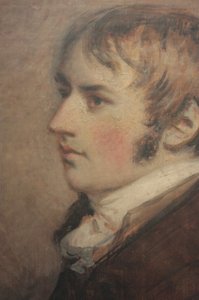
      John Constable

      John Constable

      1776 - 1837, United Kingdom

      Quick facts about John Constable

      • Artistic Movement Or Style: Romanticism
      • Artists Or Movements Influenced By This Artist:
        • Barbizon School
        • Impressionists
      • Artists Who Influenced This Artist:
        • Claude Lorrain
        • Thomas Gainsborough
        • Peter Paul Rubens
        • Annibale Carracci
        • Jacob van Ruisdael
      • Full Name: John Constable
      • Nationality: British
      • Notable Artworks:
        • The Hay Wain
        • Hadleigh Castle
        • Salisbury Cathedral from the Meadows
        • Netley Abbey
      • Place Of Birth: East Bergholt, United Kingdom
      • Date Of Birth: 1776
      • Date Of Death: 1837

      Artist Biography

      A Life Rooted in the English Landscape

      John Constable, born in 1776 in the idyllic Suffolk village of East Bergholt, wasn’t merely a painter of landscapes; he was a poet of the land, translating its subtle moods and enduring beauty onto canvas with an unprecedented emotional depth. His father, a prosperous corn merchant who owned both Dedham Vale and mills along the River Stour, provided not only financial security but also the very subject matter that would define Constable’s artistic life. This early immersion in the rural world – the slow rhythm of agricultural life, the ever-changing light on fields and water, the intimate details of nature – became indelibly etched into his sensibility. While initially destined to follow his father into business, a burgeoning passion for art, nurtured by local patrons like George Beaumont who introduced him to the works of Claude Lorrain, ultimately steered him toward a different path. Constable’s artistic journey wasn't immediate; it was a gradual unfolding, shaped by careful observation and a persistent desire to capture not just *what* he saw, but *how* it felt to be present within the landscape.

      Breaking with Convention: A New Vision of Nature

      Constable’s artistic development was marked by a deliberate rejection of prevailing academic conventions. Dissatisfied with the idealized and often theatrical landscapes favored by the Royal Academy, he sought instead a truthful representation of nature, imbued with personal feeling. He wasn't interested in grand historical narratives or mythological scenes; his focus remained steadfastly on the familiar countryside surrounding him. This commitment to depicting ordinary subjects – hay wains, farm buildings, village life – was initially met with resistance from critics who deemed his work too commonplace and lacking in ambition. However, Constable persevered, driven by a conviction that beauty resided in the everyday. He pioneered a technique of *plein air* painting, venturing outdoors to directly observe and capture the fleeting effects of light and weather. This direct engagement with nature allowed him to infuse his canvases with an immediacy and vitality previously unseen in British landscape art. His brushwork became increasingly loose and expressive, employing impasto – thick layers of paint – to create texture and convey a sense of movement and atmosphere. He wasn’t simply recording what he saw; he was translating his emotional response to the land into visual form.

      Iconic Works and Lasting Influence

      Constable's most celebrated works stand as testaments to his unique vision. The Hay Wain (1821), perhaps his most recognizable painting, depicts a quintessential rural scene on the River Stour, capturing the tranquility and harmony of agricultural life. Hadleigh Castle (1829) showcases his dramatic use of light and atmospheric effects, transforming a crumbling ruin into a powerful symbol of time’s passage. The series of paintings depicting Salisbury Cathedral from the Meadows (1831) demonstrates his ability to evoke different moods and times of day, revealing the cathedral as an integral part of the natural landscape. Netley Abbey (1824), with its evocative depiction of architectural grandeur amidst encroaching nature, exemplifies his skill in blending human creation with the wild beauty of the countryside. Despite facing initial struggles for recognition in England, Constable achieved considerable acclaim in France, where his innovative techniques and emotional depth resonated deeply with artists seeking a more naturalistic approach to landscape painting. He profoundly influenced the Barbizon School, a group of French painters who shared his commitment to *plein air* painting and direct observation of nature.

      A Legacy of Emotional Resonance

      John Constable’s historical significance lies not only in his artistic innovations but also in his profound impact on the development of landscape painting. He challenged academic conventions, elevated the status of ordinary subjects, and paved the way for a more personal and emotionally expressive approach to art. His emphasis on direct observation, atmospheric effects, and truthful representation of nature anticipated many of the concerns of later Impressionist painters. He demonstrated that landscape could be a vehicle for profound emotional expression, capable of evoking feelings of nostalgia, tranquility, and awe. Though he faced financial hardship throughout much of his career, and died relatively young in 1837, his legacy endures. Today, Constable is celebrated as one of Britain’s greatest artists, whose paintings continue to captivate audiences with their beauty, sincerity, and enduring power. His work serves as a poignant reminder of the profound connection between humanity and the natural world, and the transformative potential of art to capture its essence.

      Personal Life & Final Years

      Constable’s personal life was marked by both joy and sorrow. He married Maria Bicknell in 1816, and they had seven children, though sadly several did not survive infancy. His marriage provided him with emotional support but also financial strain. Elected a Royal Academician in 1829, he continued to face criticism from some quarters, particularly regarding his unconventional techniques. His later years were shadowed by Maria’s declining health and eventual death in 1828, an event that deeply affected him. Despite these hardships, Constable remained dedicated to his art, continuing to paint until his own passing on March 31, 1837. He left behind a rich artistic legacy—a testament to his unwavering commitment to capturing the beauty and emotional resonance of the English countryside. His paintings remain powerful evocations of a bygone era, inviting viewers to experience the landscape through his uniquely sensitive eyes.

      § 5Comparanda

      § 6Questions

      Quick Facts

      • Location: Huntington Library
      • Title: View on the Stour
      • Movement: Romanticism
      • Artist: John Constable
      • Artistic style: Landscape painting

      Art Quiz

      There is only one correct answer for each question.

      Question 1:
      Who is the artist of "View on the Stour"?
      Question 2:
      What is the primary subject matter of "View on the Stour"?
      Question 3:
      John Constable was known for his paintings of which region?
      Question 4:
      What artistic movement is John Constable most closely associated with?
      Question 5:
      The painting depicts a river scene. What elements contribute to the serene atmosphere of the artwork?

      § 7Cite this entry

      AllPaintingsStore.com, “John Constable, View on the Stour”, https://allpaintingsstore.com/en/art/john-constable-view-on-the-stour-8XYC73-en/ (accessed 3 October 2026).

      § 8The reproduction

      Hand Made Oil Reproduction

      Hand-painted oil on canvas in your size and frame, made to order by our artists. ( Switch to Print Switch to Digital Image)

      It is specified on the order sheet in the margin; the present state of that sheet reads as follows.

      View on the Stour

      Reproduction Medium

      Reproduction Size

      -

      Elite Senior Artist

      More detail, finesse, and extra production time

      -

      Reproduction Frame

      -

      -

      For artworks or reproductions larger than 105 cm (approximately 41 inches) on any side, the frame will be shipped as a kit, disassembled. This method ensures safe delivery and prevents damage during transport.

      Professional assembly required - this is not a DIY product.
      The kit must be assembled and the canvas stretched by an experienced professional framer, using wood glue (not supplied), a canvas stretching plier and clamps to hold the bars square while the glue dries. Incorrect assembly or uneven canvas tension can permanently damage the artwork and is not covered by our warranty.

      • All solid wood bars are included, precisely cut to size.

      • Assembled with the screws provided, plus wood glue for the corner joints, which is not supplied and must be sourced by your framer.

      • Professional tools are required and not included: a canvas stretching plier (tensioner) and clamps to hold the bars square while the glue dries.

      Important:
      The corner joints require wood glue, the bars must be held with clamps until the glue is fully dry, and tightening the canvas on the assembled frame requires a canvas stretching plier. None of these are included in the kit. Please arrange an experienced professional framer before ordering this size.

      Nameplate

      -

      -

      Protective Varnish

      Glossy Varnish (enhances colors, protects against light/moisture)

      -

      Customize My Artwork

      Examples of what can be changed: Replace face with customer photo; Add pet (e.g., replace cat with dog); Include hidden message in background; Change background landscape or elements.

      -

      Urgent

      Worldwide Delivery () in 3/4 weeks instead of standard 5 weeks. (31 October). No compromise on quality.

      -

      Express Shipping

      Worldwide Delivery () in 5 weeks. (7 November).

      Included

      Total Price

      $ 258

      Included with every order

      • Free Worldwide Express Shipping
      • High-Quality Linen Canvas
      • Full Shipping Insurance
      • Customs Tax Refund Guarantee
      • True Color Matching Guarantee
      • 100-Day Return Policy (Defects Only)
      • 100% Money-Back Guarantee
      • Bulk Discount Offer
      Order sheet