Preview
 Send
Send Share
Share
 Details

 Download
 Similars
 X-Ray
X-Ray Diaporama
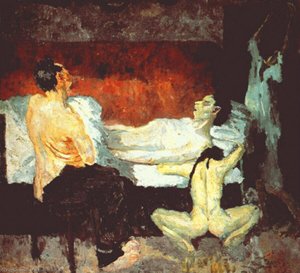
Day and Dream. Magic Mirror
 Acrylic On Canvas
- WallArt
- Expressionist Modernism
 1946
1946- Early Modern
 31.0 x 22.0 cm
 Read More
Giclée / Art Print
Museum-quality giclée or canvas print with fast production and flexible finish options. ( Buy Hand Made Painting Buy Image)




P118B $10

P118H $10

P118W $10

P438Z $10

P508JH $12

P508YH $12

P805H $10

P805Z $10

P919BZ $10

P919G $10

P919XJ $10

P959ZH $10

P968JZ $12

W106C $8

W218G $10

W218JH $8

W218Y $10

W307PJ $10

W316G $10

W316PJ $8

W316Y $10

W398PJ $8

W4111J $10

W500HY $15

W500JH $15

W692G $12

W849H $8

W940BG $15

W953PJ $8




Pick from our preset sizes that match the artwork's original proportions.

You may enter your own dimensions to fit a specific frame or space. If your selected size does not match the original image's proportions, we will either crop the artwork or extend the image with a mirrored or solid-fill edge. A digital mockup will be sent for your approval before production begins.
Please note that the on-screen preview does not reflect the actual cropping or extension. Only the mockup will accurately show the final composition.
While custom sizes are available, we recommend selecting a dimension from the predefined list to preserve the original proportions.
Worldwide Delivery () in 2 weeks instead of standard 4/5 weeks. (19 August)

Free Worldwide Express Shipping

High-Quality Linen Canvas

Full Shipping Insurance

Customs Tax Refund Guarantee

True Color Matching Guarantee

60-Day Return Policy (Defects Only)

100% Money-Back Guarantee

Bulk Discount Offer
 Glass option is only available in size under 110 CM

Day and Dream. Magic Mirror
Giclée / Art Print
Reproduction Size
-


Total Price
$ 65
Collectible Description
Max Beckmann's "Day and Dream. Magic Mirror" – A Study in Disquiet
This meticulously crafted hand-painted reproduction of Max Beckmann’s “Day and Dream. Magic Mirror” (1946) offers a profound glimpse into the artist’s intensely personal and psychologically charged vision. Executed on archival quality paper with exacting attention to detail, this artwork transcends mere representation; it is an exploration of identity, reflection, and the unsettling nature of perception itself. Beckmann, born in Leipzig in 1884, was a pivotal figure in 20th-century art, moving from early academic training to a powerfully expressive style marked by distortion and fragmentation – a direct response to his experiences during World War I.
- Subject Matter: The scene depicts a solitary woman confronting her reflection within a mirror. This seemingly simple composition is layered with complex symbolism, inviting viewers to contemplate the nature of self-awareness and the potential for illusion.
- Style & Technique: Beckmann’s technique is characterized by bold lines, flattened perspective, and a deliberate rejection of traditional realism. The use of stark black and white amplifies the emotional intensity, creating a sense of claustrophobia and unease. Notice the meticulous rendering of textures – the smooth surface of the mirror contrasting with the rough fabric of the chairs – adding to the artwork’s tactile quality.
Historical Context & Beckmann's Vision
Created in 1946, “Day and Dream. Magic Mirror” emerged from a period of profound upheaval in Europe following World War II. Beckmann’s artistic trajectory was deeply influenced by the trauma of war and his experiences as a medical orderly during the conflict. This led to a shift in his style – moving away from representational accuracy towards a more subjective and emotionally driven approach. His work echoes the anxieties and uncertainties of the post-war era, reflecting a fractured sense of reality and a questioning of established values. Beckmann’s artistic lineage is equally significant; he drew inspiration from medieval stained glass, particularly the symbolic imagery found in Bosch and Grünewald, alongside influences from Cézanne, Van Gogh, Blake, Rembrandt, and Rubens – creating a unique synthesis that anticipates both Expressionism and Surrealism.
- Medieval Symbolism: The mirror itself is a potent symbol, harking back to medieval iconography where mirrors were often associated with divine revelation and the soul’s journey.
- Expressionist Roots: Beckmann's distortion of form anticipates the key tenets of Expressionism, prioritizing emotional impact over objective representation.
Symbolic Layers & Emotional Resonance
The inclusion of two additional figures – one on either side of the woman – adds another layer of complexity to the scene. These ambiguous presences could represent memories, anxieties, or perhaps even distorted versions of the self. The dining table, a recurring motif in Beckmann’s work, suggests themes of social interaction and isolation. The overall effect is deeply unsettling, prompting viewers to confront uncomfortable questions about identity, perception, and the fragility of human experience. “Day and Dream. Magic Mirror” isn't merely a depiction; it’s an invitation to engage with the darker aspects of the human psyche.
- The Mirror as Metaphor: The mirror serves as a powerful metaphor for self-reflection, but also for the potential for deception and illusion.
- Emotional Impact: This artwork evokes feelings of melancholy, introspection, and perhaps even a sense of dread – qualities that have long defined Beckmann’s most compelling works.
Perfect for Interior Design & Art Collection
This hand-painted reproduction of “Day and Dream. Magic Mirror” is more than just a beautiful image; it's an investment in art history and a statement of sophisticated taste. Its compact size (31 x 22 cm) makes it ideal for a variety of settings, from a study or bedroom to a gallery wall. The high-quality materials and meticulous craftsmanship ensure that this reproduction will retain its beauty and value for years to come. Bring the profound vision of Max Beckmann into your home or office – a timeless piece that continues to challenge and inspire.
Related Artworks


Artist Biography
early life and artistic development
max beckmann, a renowned german painter, draftsman, printmaker, sculptor, and writer, was born on february 12, 1884, in leipzig, saxony. his artistic journey began with academically correct depictions, which later transformed into distorted figures and spaces, reflecting his altered vision of humanity after serving as a medical orderly in world war i.artistic style and influences
beckmann's style, rooted in the imagery of medieval stained glass, was influenced by various artists, including cézanne, van gogh, blake, rembrandt, and rubens. he also drew inspiration from northern european artists of the late middle ages and early renaissance, such as bosch, bruegel, and matthias grünewald.notable works and exhibitions
* the bark (acquired by the national gallery in berlin) * self-portrait in tuxedo (purchased in 1928) * retrospectives at the städtische kunsthalle mannheim (1928) and in basle and zurich (1930)later life and exile
beckmann's fortunes changed with the rise of adolf hitler, leading to his dismissal from the art school in frankfurt and the confiscation of over 500 of his works. he lived in self-imposed exile in amsterdam for ten years, failing to obtain a visa for the united states.legacy
* taught at the art schools of washington university in st. louis and the brooklyn museum * first retrospective in the united states took place in 1948 at the city art museum, saint louis * max-slevogt galerie, germany, features a collection of his works key dates: * born: february 12, 1884 * died: december 27, 1950
Max Beckmann
1884 - 1950 , Germany
Quick Facts
- Artistic Movement Or Style: Expressionism
- Artists Or Movements Influenced By This Artist:
- Rembrandt
- Bosch
- Artists Who Influenced This Artist:
- Georges Seurat
- Vincent van Gogh
- Date Of Birth: February 12, 1884
- Date Of Death: December 27, 1950
- Full Name: Max Carl Friedrich Beckmann
- Nationality: German
- Notable Artworks:
- The Bark
- Self-Portrait in Tuxedo
- Place Of Birth: Leipzig, Germany
Related Articles

White on Canvas: 10 Masterpieces & Timeless Elegance for Your Home Decor
Explore 10 iconic white paintings by Monet, Whistler & Rothko! Discover the stories behind these serene masterpieces and their impact on art history. Find museum-quality reproductions for your home decor at .

Dark Masterpieces: 10 Iconic Paintings Dominated by Black Tones |
Explore 10 iconic paintings dominated by black tones, from Rembrandt’s chiaroscuro to Goya's dark expressions. Discover the stories behind these masterpieces & find museum-quality art reproductions for your home at .

Giclée Prints: Archival Quality & Aesthetic Nuances for the Discerning Collector
Explore the world of giclée prints with AllPaintingsStore. Learn about archival quality, aesthetic nuances & investment potential. Expert guidance for discerning art collectors seeking museum-quality reproductions and lasting value.

Beyond Color: The Timeless Power and Artistry of Black and White Photography
Explore the profound artistry of black and white photography. From the chemistry of gelatin silver to the chiaroscuro of the Old Masters, discover how monochrome captures the eternal essence of light, form, and emotion for the discerning art collector.
Monochrome Visions: Exploring the Aesthetic & Historical Significance of Black & White Photography
Explore the rich history & artistic power of black and white photography. From early techniques to iconic masters like Ansel Adams, discover why monochrome continues to captivate art lovers today. Expert insights for collectors.