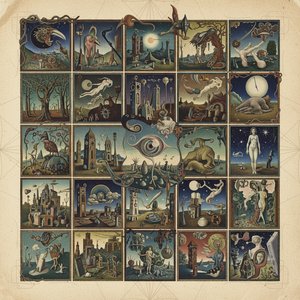
Oil On Canvas.

§ 1Catalogue data


This Artwork Is Under Copyright Protection
The artwork displayed on this page is protected by copyright law, which means we cannot legally create or sell an identical reproduction. This protection is enforced under international agreements such as the Berne Convention and by national laws, including those outlined by the U.S. Copyright Law - Title 17.
As a respectful and legal alternative, we offer custom, hand-painted artworks inspired by the original. Our skilled and professional artists carefully study the original's style, mood, and artistic essence to create a new, unique piece that evokes the same feeling - while remaining an original creation in its own right.
This method fully complies with copyright regulations because it does not involve copying or duplicating the protected artwork. Instead, it is a creative reinterpretation - a new painting that is influenced by the original but not identical to it.
 Read more
§ 2Abstract
Collectible Description
Surrealist Max Ernst’s ‘Celebes’ depicts an enigmatic tableau featuring a man beside a tennis racket-bearing elephant statue—a whimsical blend of sculpture and sport reflecting Ernst's intellectual exploration of the subconscious. Explore this captivating artwork and bring its dreamlike vision home.
Artist Biography
Explore the surreal world of Max Ernst (1891-1976), a Dada & Surrealism pioneer! Discover his innovative frottage, collages & dreamlike paintings featuring birds, landscapes & psychological themes. #MaxErnst #Surrealism #Dada
§ 3Commentary
A Dreamscape Forged in Chaos: The Enigma of Max Ernst’s Celebes
To step into the world of Max Ernst is to abandon the safety of logic and surrender to the beautiful, unsettling currents of the subconscious. His 1921 masterpiece, Celebes, stands as a monumental gateway into this realm, acting as one of the most profound early achievements of the Surrealist movement. At first glance, the viewer is confronted by an arresting juxtaposition of figures and fauna—a scene that feels less like a painted landscape and more like a fragment of a fever dream. A colossal, elephant-like entity dominates the composition, its metallic, boiler-like body possessing a strange, mechanical vitality. Its trunk, curved with a playful yet eerie grace, appears to cradle a tennis racket, an absurd detail that immediately disrupts any attempt at rational interpretation. This startling encounter between the organic and the inanimate creates a tableau that is both captivating and deeply disorienting.
The brilliance of Celebes lies in its masterful command of texture and the experimental spirit of the Dadaist tradition. Ernst, a pioneer who refused to be bound by academic constraints, utilized techniques that bridged the gap between collage and painting. Through meticulous layering, he achieved a palpable sense of depth, where surfaces seem to oscillate between the smooth and the rugged. The artwork employs a flattened perspective reminiscent of Giorgio de Chirico, yet it breathes with a much more visceral energy. By assembling disparate visual elements—a solitary chair, a scattered book, and strange, bulbous forms—Ernst creates a sense of "organized chaos." For the discerning collector or interior designer, this technique offers a rich, tactile quality that brings a sophisticated, intellectual tension to any space, inviting the eye to linger on every textured crevice and unexpected shadow.
Symbolism and the Subconscious Mind
Beyond its striking visual surface, Celebes is a profound exploration of symbolism and the psychological landscape of the post-World War I era. The central figure, often interpreted as an anthropomorphized bull or a mechanical elephant, serves as a symbol of both stability and terrifying transformation. It represents the merging of nature and technology, a theme that resonated deeply in an age of rapid industrialization. The inclusion of domestic objects, such as the chair and the book, provides a haunting contrast; these items of intellect and comfort are rendered insignificant by the presence of the monumental, surreal creature. This deliberate incongruity speaks to the Surrealist mission: to shatter conventional perceptions and reveal the hidden truths buried within the human psyche.
The emotional impact of the piece is one of whimsical disorientation. It does not merely ask to be looked at; it demands to be felt. There is a certain melancholy in its solitude, yet a delightful provocation in its absurdity. For those seeking to infuse their environment with art that sparks conversation and introspection, a high-quality reproduction of Celebes offers more than mere decoration. It provides a portal to the infinite possibilities of the imagination. Whether placed in a contemporary gallery setting or a curated private study, this work serves as a constant reminder of the beauty found in the illogical, making it an essential acquisition for anyone moved by the enduring power of the Surrealist vision.
Questions & Answers
Where should a reproduction of "Celebes" by Max Ernst be hung?
With its portrait shape, a reproduction of "Celebes" is suggested for a living room.
What orientation does "Celebes" by Max Ernst have?
The format of "Celebes" is portrait. This is useful when planning where a reproduction will be placed.
Which period of Max Ernst's career does "Celebes" belong to?
"Celebes" belongs to the Mature Surreal of Max Ernst's career. This classification relates the work to the artist's development.



 Switch to Print


 For artworks or reproductions larger than 105 cm (approximately 41 inches) on any side, the frame will be shipped as a kit, disassembled. This method ensures safe delivery and prevents damage during transport.