

Sculpture Bronze.

§ 1Catalogue data

This Artwork Is Under Copyright Protection
The artwork displayed on this page is protected by copyright law, which means we cannot legally create or sell an identical reproduction. This protection is enforced under international agreements such as the Berne Convention and by national laws, including those outlined by the U.S. Copyright Law - Title 17.
As a respectful and legal alternative, we offer custom, hand-painted artworks inspired by the original. Our skilled and professional artists carefully study the original's style, mood, and artistic essence to create a new, unique piece that evokes the same feeling - while remaining an original creation in its own right.
This method fully complies with copyright regulations because it does not involve copying or duplicating the protected artwork. Instead, it is a creative reinterpretation - a new painting that is influenced by the original but not identical to it.
 Read more
§ 2Abstract
Collectible Description
Artist Biography
Explore the surreal world of Max Ernst (1891-1976), a Dada & Surrealism pioneer! Discover his innovative frottage, collages & dreamlike paintings featuring birds, landscapes & psychological themes. #MaxErnst #Surrealism #Dada
§ 3Commentary
A Silent Smile: Decoding Max Ernst’s “Chéri Bibi”
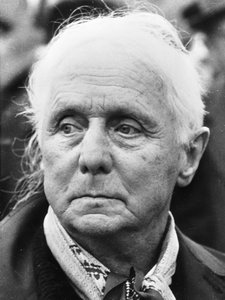
The sculpture "Chéri Bibi," created by German Surrealist artist Max Ernst, presents a deceptively simple visual—a face rendered in metal or bronze—yet it harbors layers of complex symbolism and invites contemplation about the subconscious mind. Captured in this photograph, the piece stands on a pedestal, emphasizing its sculptural form and drawing attention to its subtle details. This artwork exemplifies Ernst’s signature approach: blending meticulous craftsmanship with dreamlike imagery to explore themes of desire, vulnerability, and repressed emotion.The Surrealist Method: Frottage and Beyond
Ernst's artistic process was fundamentally rooted in the Surrealist movement’s rejection of rational thought and embrace of chance encounters between disparate elements. He famously employed *frottage*, a technique involving rubbing paper over textured surfaces—such as bark or stone—to generate spontaneous patterns that served as inspiration for his paintings and sculptures. This method deliberately disrupts conventional artistic conventions, mirroring the Surrealists' aim to liberate creativity from conscious control. “Chéri Bibi” embodies this spirit; its form emerges from an unpredictable process, reflecting Ernst’s fascination with automatism – allowing subconscious impulses to guide artistic creation.Symbolic Resonance: Birds and Vulnerability
Ernst frequently incorporated birds into his artwork, representing freedom, aspiration, and often a yearning for escape—themes central to the Surrealist preoccupation with confronting anxieties about repression and societal constraints. In “Chéri Bibi,” the face’s serene smile contrasts sharply with its closed eyes, creating an arresting visual paradox. This juxtaposition speaks to the difficulty of expressing inner feelings openly and suggests a hidden vulnerability beneath a façade of composure. The sculpture's stillness reinforces this idea, prompting viewers to consider what lies unspoken within the gaze.Historical Context: Dada and Weimar Germany
“Chéri Bibi” emerged during the turbulent years following World War I in Weimar Germany—a period marked by political instability, economic hardship, and a pervasive sense of disillusionment. The Surrealist movement arose as a reaction against the horrors of war and the perceived failures of bourgeois morality. Ernst’s work aligns with Dada's anti-establishment ethos and its rejection of traditional artistic values, prioritizing intuition and emotional expression over logical reasoning. It reflects the broader cultural anxieties of the time—a desire to reclaim psychological autonomy amidst societal upheaval.Emotional Impact: A Portrait of Inner Reflection
Ultimately, “Chéri Bibi” transcends mere visual representation; it invites viewers into a realm of introspection. The sculpture’s enigmatic smile and closed eyes compel us to confront questions about identity, emotion, and the hidden depths of consciousness. Like many Surrealist artworks, it eschews explicit narrative, instead fostering an emotional response rooted in ambiguity and suggestion. Reproductions of this piece offer a powerful opportunity to engage with Ernst's profound exploration of the human psyche—a timeless reminder that art can illuminate aspects of our inner lives that words alone cannot capture.Questions & Answers
What emotion does "Chéri bibi 1" by Max Ernst convey?
"Chéri bibi 1" by Max Ernst conveys a mysterious emotional tone.
How do I discover artworks close to "Chéri bibi 1" by Max Ernst?
The Similars page of "Chéri bibi 1" by Max Ernst presents related artworks.
Is "Chéri bibi 1" by Max Ernst a bright or a dark artwork?
In terms of perceived brightness, "Chéri bibi 1" by Max Ernst is shadow.


 Switch to Print


 For artworks or reproductions larger than 105 cm (approximately 41 inches) on any side, the frame will be shipped as a kit, disassembled. This method ensures safe delivery and prevents damage during transport.


