Money-Back Guarantee · 100 days Free Worldwide Delivery
449,582artworks 30,618artists 4,705museums 32languages
Currency
    Language
      Atelier · Est. 2015 · Paris, France
      AllPaintingsStore
      allpaintingsstore.com
      Preview AR preview Switch to Print Switch to Digital Image Send
      Details Guide Add to favorites Download Similars X-Ray Diaporama Stats

      París-sueño

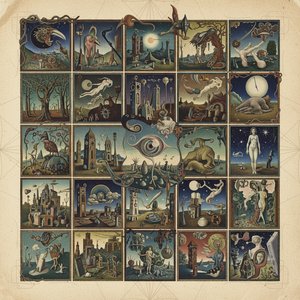
      Discover "París-sueño," Max Ernst's surrealist masterpiece! This oil painting blends dreamlike landscapes with vibrant colors, reflecting Dada’s revolutionary spirit. Explore a peaceful moment captured in art.

      Explore the surreal world of Max Ernst (1891-1976), a Dada & Surrealism pioneer! Discover his innovative frottage, collages & dreamlike paintings featuring birds, landscapes & psychological themes. #MaxErnst #Surrealism #Dada

      The artwork displayed on this page is protected by copyright law, which means we cannot legally create or sell an identical reproduction. This protection is enforced under international agreements such as the Berne Convention and by national laws, including those outlined by the U.S. Copyright Law - Title 17.

      As a respectful and legal alternative, we offer custom, hand-painted artworks inspired by the original. Our skilled and professional artists carefully study the original's style, mood, and artistic essence to create a new, unique piece that evokes the same feeling - while remaining an original creation in its own right.

      This method fully complies with copyright regulations because it does not involve copying or duplicating the protected artwork. Instead, it is a creative reinterpretation - a new painting that is influenced by the original but not identical to it.

      Hand Made Oil Reproduction

      Hand-painted oil on canvas in your size and frame, made to order by our artists. ( Switch to Print Switch to Digital Image)

      Corner sample of the P118B picture frame: moulded polystyrene, 5 cm wide and 3 cm thick
      P118B $10
      Corner sample of the P118H picture frame: moulded polystyrene, 5 cm wide and 3 cm thick
      P118H $10
      Corner sample of the P118W picture frame: moulded polystyrene, 5 cm wide and 3 cm thick
      P118W $10
      Corner sample of the P438Z picture frame: moulded polystyrene, 5.5 cm wide and 3.5 cm thick
      P438Z $10
      Corner sample of the P508JH picture frame: moulded polystyrene, 7 cm wide and 3.5 cm thick
      P508JH $12
      Corner sample of the P508YH picture frame: moulded polystyrene, 7 cm wide and 3.5 cm thick
      P508YH $12
      Corner sample of the P805H picture frame: moulded polystyrene, 5 cm wide and 3.5 cm thick
      P805H $10
      Corner sample of the P805Z picture frame: moulded polystyrene, 5 cm wide and 3.5 cm thick
      P805Z $10
      Corner sample of the P919BZ picture frame: moulded polystyrene, 7 cm wide and 3.5 cm thick
      P919BZ $10
      Corner sample of the P919G picture frame: moulded polystyrene, 7 cm wide and 3.5 cm thick
      P919G $10
      Corner sample of the P919XJ picture frame: moulded polystyrene, 7 cm wide and 3.5 cm thick
      P919XJ $10
      Corner sample of the P959ZH picture frame: moulded polystyrene, 5 cm wide and 3 cm thick
      P959ZH $10
      Corner sample of the P968JZ picture frame: moulded polystyrene, 6 cm wide and 4 cm thick
      P968JZ $12
      Corner sample of the W106C picture frame: solid wood, 5 cm wide and 3 cm thick
      W106C $8
      Corner sample of the W218G picture frame: solid wood, 5 cm wide and 3 cm thick
      W218G $10
      Corner sample of the W218JH picture frame: solid wood, 5 cm wide and 3 cm thick
      W218JH $8
      Corner sample of the W218Y picture frame: solid wood, 5 cm wide and 3 cm thick
      W218Y $10
      Corner sample of the W307PJ picture frame: solid wood, 6 cm wide and 3 cm thick
      W307PJ $10
      Corner sample of the W316G picture frame: solid wood, 6 cm wide and 3 cm thick
      W316G $10
      Corner sample of the W316PJ picture frame: solid wood, 6 cm wide and 3 cm thick
      W316PJ $8
      Corner sample of the W316Y picture frame: solid wood, 6 cm wide and 3 cm thick
      W316Y $10
      Corner sample of the W398PJ picture frame: solid wood, 5 cm wide and 3 cm thick
      W398PJ $8
      Corner sample of the W4111J picture frame: solid wood, 6.5 cm wide and 3.5 cm thick
      W4111J $10
      Corner sample of the W500HY picture frame: solid wood, 7 cm wide and 5 cm thick
      W500HY $15
      Corner sample of the W500JH picture frame: solid wood, 7 cm wide and 5 cm thick
      W500JH $15
      Corner sample of the W692G picture frame: solid wood, 8 cm wide and 4 cm thick
      W692G $12
      Corner sample of the W849H picture frame: solid wood, 5 cm wide and 3 cm thick
      W849H $8
      Corner sample of the W940BG picture frame: solid wood, 7.5 cm wide and 4.5 cm thick
      W940BG $15
      Corner sample of the W953PJ picture frame: solid wood, 6 cm wide and 3.5 cm thick
      W953PJ $8

      Standard
      custom
      CM
      INCH

      Pick from our preset sizes that match the artwork's original proportions.

      width
      height

      You may enter your own dimensions to fit a specific frame or space. If your selected size does not match the original image's proportions, we will either crop the artwork or extend the painting with additional hand-painted elements. A digital mockup will be sent for your approval before production begins.
      Please note that the on-screen preview does not reflect the actual cropping or extension. Only the mockup will accurately show the final composition.
      While custom sizes are available, we recommend selecting a dimension from the predefined list to preserve the original proportions.

      Examples of what can be changed: Replace face with customer photo; Add pet (e.g., replace cat with dog); Include hidden message in background; Change background landscape or elements.
      After order, AllPaintingsStore.com team will email client for instructions and provide a mockup preview

      Worldwide Delivery () in 3/4 weeks instead of standard 5 weeks. (10 October). No compromise on quality.

      Free Worldwide Express Shipping
      High-Quality Linen Canvas
      Full Shipping Insurance
      Customs Tax Refund Guarantee
      True Color Matching Guarantee
      100-Day Return Policy (Defects Only)
      100% Money-Back Guarantee
      Bulk Discount Offer

      Total Price

      $ 258

      París-sueño

      Reproduction Medium

      Reproduction Size

      -

      Total Price

      $ 258

      Quick Facts

      • Artist: Max Ernst
      • Influences:
        • Cubism
        • Expressionism
      • Artistic style: Surrealist, Naturalistic
      • Subject or theme: Peaceful nature
      • Notable elements: Dreamy atmosphere
      • Title: París-sueño

      Art Quiz

      There is only one correct answer for each question.

      Question 1:
      What art movement is ‘París-sueño’ primarily associated with?
      Question 2:
      Which of the following best describes the overall atmosphere depicted in ‘París-sueño’?
      Question 3:
      What is a key characteristic of Max Ernst's artistic style, as demonstrated in ‘París-sueño’?
      Question 4:
      The painting utilizes predominantly what color palette?
      Question 5:
      What technique is Max Ernst most known for employing in his artwork?

      A Dreamscape Emerges: Max Ernst’s *París-Sueño*

      Max Ernst's *París-Sueño*, a captivating oil painting from the heart of the Surrealist movement, isn’t merely a depiction of a landscape; it’s an immersion into a dreamlike state, a visual poem born from the anxieties and intellectual ferment of the early 20th century. Created in 1925, during his pivotal years in Paris, this work represents a significant departure for Ernst, moving beyond the immediate shock of Dadaism towards a more nuanced exploration of the subconscious – a realm he would master throughout his career. The painting immediately draws the viewer into its hazy atmosphere, inviting contemplation and a sense of gentle disorientation. It’s a testament to Ernst's ability to synthesize disparate influences—Cubism’s fragmented forms, Expressionism’s emotional intensity, and the burgeoning ideas of Surrealism – resulting in an utterly unique artistic vision.

      The Language of Color and Texture

      Dominating the canvas are washes of vibrant red, orange, and yellow, radiating warmth and a palpable sense of luminosity. These aren’t simply colors; they're imbued with emotional weight, suggesting both the intensity of a sunset and the underlying heat of an unspoken feeling. The clouds themselves swirl and shift, creating a dynamic interplay of light and shadow that defies precise representation. Crucially, Ernst employs a technique he termed “grattage,” scraping paint across the canvas to reveal the textures beneath – hints of wood grain, perhaps, or the ghost of previous layers. This deliberate disruption of surface creates an intriguing tactile quality, inviting the viewer to almost *feel* the landscape, adding another layer of sensory engagement.

      Roots in Dada and Surrealism: A Journey into the Unconscious

      *París-Sueño* firmly roots itself within the context of both Dada and Surrealism. Emerging from the disillusionment following World War I, Dada sought to dismantle traditional artistic conventions, embracing absurdity and challenging societal norms. Ernst’s early collages exemplify this spirit, juxtaposing unexpected elements in a deliberately unsettling manner. However, *París-Sueño* represents a shift towards Surrealism's focus on exploring the subconscious mind – dreams, desires, and anxieties. The painting echoes the principles of automatism, a key technique championed by André Breton, the movement’s leading theorist. This involved creating art without conscious control, allowing the unconscious to guide the hand and reveal hidden imagery.

      Symbolic Resonance: Birds, Light, and the City

      Despite its dreamlike quality, *París-Sueño* is rich in symbolic resonance. The prominent sun, a recurring motif in Ernst’s work, often represents vitality, but here it seems almost melancholic, casting a warm glow upon the scene. The trees, rendered with a degree of abstraction, could symbolize both growth and confinement – perhaps reflecting the artist's own experiences navigating the complexities of Parisian life. The presence of birds is particularly significant; Ernst frequently depicted them as symbols of freedom and escape, suggesting a yearning for transcendence within the confines of reality. Considering the title, *París-Sueño*, one can interpret the painting as a meditation on the city itself – a place of both beauty and alienation, where dreams and realities intertwine.

      Reproductions of *París-Sueño* offer a remarkable opportunity to bring this evocative artwork into your home or office. AllPaintingsStore’s hand-painted reproductions capture the painting's luminosity, texture, and emotional depth with unparalleled fidelity. Each reproduction is created by skilled artists using traditional oil painting techniques, ensuring that you receive an authentic work of art that will enrich any space. Explore our collection today and experience the magic of Max Ernst’s *París-Sueño* firsthand.

      Questions & Answers

      Where can I buy a print of "París-sueño" by Max Ernst?

      A print of "París-sueño" by Max Ernst can be ordered directly on this page: a fine art print on cotton canvas or archival canvas paper.

      What is the overall mood of "París-sueño" by Max Ernst?

      "París-sueño" by Max Ernst is described as calm in mood. This classification can help match the work to a setting.

      What subject and atmosphere does "París-sueño" by Max Ernst combine?

      "París-sueño" shows sun, trees, dreamscape, surrealism, color, tranquility, landscape, and its recorded mood is calm.

      What print size of "París-sueño" by Max Ernst fits the recommended room?

      In a living room, "París-sueño" is suggested at a large print size.

      Who created "París-sueño"?

      The artist behind "París-sueño" is Max Ernst. The work is catalogued under Max Ernst's name.

      How is "París-sueño" recommended to be printed - what size, what orientation?

      A print of "París-sueño" by Max Ernst is recommended at a large size in portrait orientation.

      Where can I buy a hand-painted reproduction of "París-sueño" by Max Ernst?

      "París-sueño" is available as a hand-painted oil reproduction on linen canvas. The order can be placed on this page, with a choice of sizes.


      Artist Biography

      A Life Immersed in the Surreal

      Max Ernst, born Maximilian Maria Ernst on April 1st, 1891, in Brühl, Germany, was a restless spirit destined to become one of the most pivotal figures in 20th-century art. His journey wasn’t one of conventional artistic training; rather, it was a self-directed exploration fueled by philosophical inquiry, psychological fascination, and a profound disillusionment with societal norms. Ernst's father, a teacher of the deaf and an amateur painter, instilled in him both a sensitivity to the world and a rebellious streak against established authority. This early duality would become a defining characteristic of his artistic vision.

      Ernst’s academic pursuits at the University of Bonn – encompassing philosophy, art history, literature, psychology, and psychiatry – were not merely diversions but foundational elements that deeply informed his later work. He wasn't simply interested in *how* to paint; he was grappling with *why*. This intellectual curiosity led him to encounter the groundbreaking works of Picasso, Van Gogh, and Gauguin at the Sonderbund exhibition in Cologne in 1912, a moment that irrevocably altered his artistic trajectory. The seeds of modernism had been sown.

      Dada’s Disruption and the Birth of Surrealist Visions

      The cataclysm of World War I proved to be a watershed moment for Ernst. His experiences as a soldier on both the Eastern and Western fronts left him profoundly shaken, fostering a deep skepticism towards established order and a yearning for new modes of expression. This disillusionment found fertile ground in the burgeoning Dada movement, which he embraced wholeheartedly after returning to Cologne in 1918. Alongside Hans Arp – a lifelong friend and collaborator – Ernst became a central figure in the Cologne Dada group, rejecting traditional artistic conventions and embracing absurdity, chance, and anti-rationality.

      However, Dada was merely a stepping stone. In the early 1920s, Ernst migrated to Paris and joined the ranks of the Surrealists, led by André Breton. This marked a shift towards exploring the realm of dreams, the unconscious mind, and the irrational. Influenced by the psychoanalytic theories of Sigmund Freud, Ernst sought to unlock the hidden depths of human experience through his art. He wasn’t interested in depicting reality as it appeared but rather in revealing the underlying psychological forces that shaped it.

      Pioneering Techniques: Frottage, Grattage, and Collage

      Ernst's artistic innovation extended beyond subject matter; he was a relentless experimenter with technique. He didn’t simply adopt existing methods—he invented new ones. Perhaps his most famous contribution is frottage, a process of rubbing pencil or charcoal over textured surfaces to create unexpected and evocative images. This technique, born from a moment of boredom while observing wood grain, allowed Ernst to tap into the subconscious and generate forms that defied conscious control. Closely related was grattage, where paint is scraped across canvas revealing underlying layers.

      He also masterfully employed collage, assembling disparate elements – images from magazines, scientific illustrations, photographs – into surreal compositions that challenged conventional notions of representation. These techniques weren’t merely stylistic choices; they were integral to his exploration of the unconscious and his desire to disrupt traditional artistic boundaries. His paintings often feature recurring symbolic imagery: birds (particularly his alter ego Loplop), desolate landscapes, unsettling juxtapositions, and a pervasive sense of mystery.

      A Legacy of Innovation and Influence

      The outbreak of World War II forced Ernst to flee Europe, finding refuge in the United States. He continued to paint and experiment with new techniques throughout his exile, eventually returning to France after the war where he remained active until his death on April 1st, 1976, in Paris. His influence on subsequent generations of artists is immeasurable.

      Max Ernst’s contributions to Dada and Surrealism were nothing short of groundbreaking. He challenged artistic norms, delved into the depths of the subconscious mind, and invented innovative techniques that continue to inspire artists today. He wasn't merely a painter; he was an explorer, a provocateur, and a visionary who expanded the boundaries of art itself. His work remains a testament to the power of imagination, the allure of the irrational, and the enduring quest to understand the complexities of the human psyche.

      • Major Works: The Entire City, Euclides, Of This Men Shall Know Nothing, Forest and Dove
      • Influences: Pablo Picasso, Vincent van Gogh, Paul Gauguin, Sigmund Freud, Giorgio de Chirico
      • Movements: Dada, Surrealism
      Max Ernst

      Max Ernst

      1891 - 1976 , Germany

      Quick Facts

      • Full Name: Max Ernst
      • Nationality: German-American, French
      • Date Of Birth: 1891
      • Date Of Death: 1976
      • Place Of Birth: Brühl, Germany
      • Notable Artworks:
        • Ofrenda funeraria
        • The Equivocal Woman
        • L'Ange du foyer
      • Artistic Movement Or Style: Dada, Surrealism
      • Artists Who Influenced This Artist:
        • Pablo Picasso
        • Vincent van Gogh
        • Paul Gauguin
        • Giorgio de Chirico
      • Artists Or Movements Influenced By This Artist:
        • Surrealism
        • Dada
      Explore artworks organized by themes, styles, and characteristics.