Money-Back Guarantee · 100 days Free Worldwide Delivery
449,564artworks 30,613artists 4,660museums 32languages
Catalogue entry

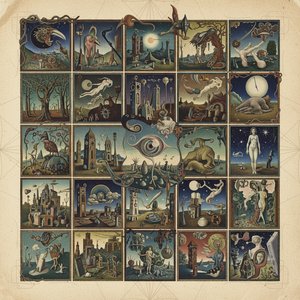
untitled (2948)

Acrylic On Canvas.

Fig. 1. Max Ernst, untitled (2948). Shown as the reproduction you are specifying: , .

§ 1Catalogue data

§ 2Abstract

Collectible Description

Explore Max Ernst's surreal 'untitled (2948)' – a captivating collage blending natural elements and dreamlike imagery, showcasing his pioneering Dada & Surrealist style.

Artist Biography

Explore the surreal world of Max Ernst (1891-1976), a Dada & Surrealism pioneer! Discover his innovative frottage, collages & dreamlike paintings featuring birds, landscapes & psychological themes. #MaxErnst #Surrealism #Dada

§ 3Commentary

A Surrealist Echo: Unpacking the Layers of “Untitled (2948)”

Max Ernst's "Untitled (2948)" isn’t merely a depiction of natural elements; it’s an invitation into a meticulously constructed dreamscape. Born in 1891 and profoundly shaped by his experiences during World War I, Ernst was a master of disrupting the familiar, employing techniques like frottage and collage to excavate the subconscious. This particular work, rendered in stark black and white, exemplifies this approach perfectly – a deliberate fragmentation of reality that speaks volumes about the artist’s anxieties and fascination with the irrational.

The photograph itself possesses an aged quality, hinting at its origins as a reproduction or archival image. Handwritten notations, likely signatures and dates, are subtly integrated into the composition, grounding the surreal elements within a tangible history. A rectangular label, visible in the lower center, further contextualizes the piece, suggesting it was intended for exhibition or perhaps a private collection. The deliberate choice of monochrome amplifies the impact of each element, forcing the viewer to engage with texture and form on a deeper level.

Deconstructing the Composition: A Stage for the Unconscious

The arrangement within the frame feels remarkably staged, yet simultaneously organic. Ernst doesn’t simply present us with a collection of objects; he orchestrates them into a carefully balanced tableau. The curve of the shell, a recurring motif in Ernst's work, provides a dynamic counterpoint to the linear precision of the leaves and bark. This juxtaposition immediately establishes a sense of tension – a harmonious discord that is characteristic of Surrealist aesthetics.

The layering of these elements creates a shallow depth of field, pulling the viewer into the scene without offering easy escape. There’s no dramatic perspective or illusionistic space; instead, Ernst favors a flattened composition, emphasizing the tactile qualities of each surface and inviting close inspection. The deliberate clustering of objects in the center draws our attention to their interplay, suggesting that the entire arrangement is a symbolic puzzle waiting to be solved.

Symbolism Woven into Texture: Echoes of the Dream

The textures themselves are crucial to understanding the work’s emotional resonance. The smooth, polished surface of the shell contrasts sharply with the rough, fibrous texture of the bark and the delicate veins of the leaves. These tactile differences aren't merely descriptive; they represent a symbolic dialogue between the natural world and the artist’s internal landscape. The fragmented nature of the composition – broken shells, scattered leaves – mirrors the fractured state of consciousness often explored in Surrealist art.

Furthermore, the arrangement evokes a sense of displacement and mystery. The objects are presented without context or narrative, prompting viewers to project their own interpretations onto the scene. The combination of familiar natural forms rendered in an unexpected manner taps into primal anxieties about the unknown – a feeling that is powerfully conveyed through Ernst’s masterful manipulation of form and texture.

A Legacy of Innovation: Max Ernst and the Surrealist Movement

Max Ernst's influence on 20th-century art is undeniable. His pioneering techniques, particularly frottage and collage, revolutionized painting and paved the way for subsequent generations of artists. Born in Brühl, Germany, in 1891, Ernst’s early life was marked by a rebellious spirit and a deep engagement with philosophical ideas. He spent time studying at the University of Bonn, where he developed an interest in psychology and art history – influences that would profoundly shape his artistic vision.

His involvement with Dada and Surrealism cemented his place as a key figure in the avant-garde movement. Ernst’s work consistently challenged conventional notions of beauty and representation, exploring themes of memory, desire, and the subconscious. “Untitled (2948)” stands as a testament to his enduring legacy – a captivating example of Surrealist artistry that continues to resonate with viewers today.

Questions & Answers

Is "untitled (2948)" more bright or more dark overall?

"untitled (2948)" is brilliant overall, and its luminance is luminous.

Which reproduction size is suggested for "untitled (2948)" by Max Ernst?

The recommended print size for "untitled (2948)" by Max Ernst is medium.

What is the overall mood of "untitled (2948)" by Max Ernst?

The overall mood of "untitled (2948)" by Max Ernst is mystical. The mood describes the general atmosphere of the work.
§ 4The artist

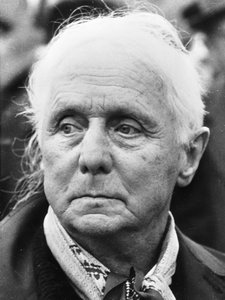
Max Ernst

Max Ernst

1891 - 1976, Germany

Quick facts about Max Ernst

  • Artistic Movement Or Style:
    • Dada
    • Surrealism
  • Artists Or Movements Influenced By This Artist:
    • Karl Otto Gotz
    • Salvador Dali
    • Manuel Cargaleiro
  • Artists Who Influenced This Artist:
    • Pablo Picasso
    • Vincent van Gogh
    • Paul Gauguin
    • Sigmund Freud
    • Giorgio de Chirico
  • Full Name: Maximilian Maria Ernst
  • Nationality: German
  • Notable Artworks:
    • The Entire City
    • Euclides
    • Of This Men Shall Know Nothing
    • Forest and Dove
  • Place Of Birth: Brühl, Germany
  • Date Of Birth: 1891
  • Date Of Death: 1976

Artist Biography

A Life Immersed in the Surreal

Max Ernst, born Maximilian Maria Ernst on April 1st, 1891, in Brühl, Germany, was a restless spirit destined to become one of the most pivotal figures in 20th-century art. His journey wasn’t one of conventional artistic training; rather, it was a self-directed exploration fueled by philosophical inquiry, psychological fascination, and a profound disillusionment with societal norms. Ernst's father, a teacher of the deaf and an amateur painter, instilled in him both a sensitivity to the world and a rebellious streak against established authority. This early duality would become a defining characteristic of his artistic vision.

Ernst’s academic pursuits at the University of Bonn – encompassing philosophy, art history, literature, psychology, and psychiatry – were not merely diversions but foundational elements that deeply informed his later work. He wasn't simply interested in *how* to paint; he was grappling with *why*. This intellectual curiosity led him to encounter the groundbreaking works of Picasso, Van Gogh, and Gauguin at the Sonderbund exhibition in Cologne in 1912, a moment that irrevocably altered his artistic trajectory. The seeds of modernism had been sown.

Dada’s Disruption and the Birth of Surrealist Visions

The cataclysm of World War I proved to be a watershed moment for Ernst. His experiences as a soldier on both the Eastern and Western fronts left him profoundly shaken, fostering a deep skepticism towards established order and a yearning for new modes of expression. This disillusionment found fertile ground in the burgeoning Dada movement, which he embraced wholeheartedly after returning to Cologne in 1918. Alongside Hans Arp – a lifelong friend and collaborator – Ernst became a central figure in the Cologne Dada group, rejecting traditional artistic conventions and embracing absurdity, chance, and anti-rationality.

However, Dada was merely a stepping stone. In the early 1920s, Ernst migrated to Paris and joined the ranks of the Surrealists, led by André Breton. This marked a shift towards exploring the realm of dreams, the unconscious mind, and the irrational. Influenced by the psychoanalytic theories of Sigmund Freud, Ernst sought to unlock the hidden depths of human experience through his art. He wasn’t interested in depicting reality as it appeared but rather in revealing the underlying psychological forces that shaped it.

Pioneering Techniques: Frottage, Grattage, and Collage

Ernst's artistic innovation extended beyond subject matter; he was a relentless experimenter with technique. He didn’t simply adopt existing methods—he invented new ones. Perhaps his most famous contribution is frottage, a process of rubbing pencil or charcoal over textured surfaces to create unexpected and evocative images. This technique, born from a moment of boredom while observing wood grain, allowed Ernst to tap into the subconscious and generate forms that defied conscious control. Closely related was grattage, where paint is scraped across canvas revealing underlying layers.

He also masterfully employed collage, assembling disparate elements – images from magazines, scientific illustrations, photographs – into surreal compositions that challenged conventional notions of representation. These techniques weren’t merely stylistic choices; they were integral to his exploration of the unconscious and his desire to disrupt traditional artistic boundaries. His paintings often feature recurring symbolic imagery: birds (particularly his alter ego Loplop), desolate landscapes, unsettling juxtapositions, and a pervasive sense of mystery.

A Legacy of Innovation and Influence

The outbreak of World War II forced Ernst to flee Europe, finding refuge in the United States. He continued to paint and experiment with new techniques throughout his exile, eventually returning to France after the war where he remained active until his death on April 1st, 1976, in Paris. His influence on subsequent generations of artists is immeasurable.

Max Ernst’s contributions to Dada and Surrealism were nothing short of groundbreaking. He challenged artistic norms, delved into the depths of the subconscious mind, and invented innovative techniques that continue to inspire artists today. He wasn't merely a painter; he was an explorer, a provocateur, and a visionary who expanded the boundaries of art itself. His work remains a testament to the power of imagination, the allure of the irrational, and the enduring quest to understand the complexities of the human psyche.

  • Major Works: The Entire City, Euclides, Of This Men Shall Know Nothing, Forest and Dove
  • Influences: Pablo Picasso, Vincent van Gogh, Paul Gauguin, Sigmund Freud, Giorgio de Chirico
  • Movements: Dada, Surrealism

§ 5Comparanda

§ 6Questions

Quick Facts

  • Artist: Max Ernst
  • Movement: Surrealism
  • Title: untitled (2948)
  • Medium: Photograph
  • Subject: Natural Elements

Art Quiz

There is only one correct answer for each question.

Question 1:
What artistic movement is most closely associated with Max Ernst’s work depicted in this photograph?
Question 2:
The photograph features a drawing or collage. What technique is most prominently displayed in the image, suggesting Ernst’s approach to creating this artwork?
Question 3:
Based on the description, what is one of the key elements that contributes to the surreal atmosphere of this artwork?
Question 4:
Max Ernst was a significant figure in early 20th-century art. What event significantly impacted his life and artistic career during World War I?
Question 5:
The handwritten notations visible in the photograph likely represent:

§ 7Cite this entry

AllPaintingsStore.com, “Max Ernst, untitled (2948)”, https://allpaintingsstore.com/en/art/max-ernst-untitled-2948-9GF59V-en/ArtistReproduction/ (accessed 8 October 2026).

§ 8The reproduction

Hand Made Oil Reproduction

Hand-painted oil on canvas in your size and frame, made to order by our artists. ( Switch to Print Switch to Digital Image)

It is specified on the order sheet in the margin; the present state of that sheet reads as follows.

untitled (2948)

Reproduction Medium

Reproduction Size

-

Elite Senior Artist

More detail, finesse, and extra production time

-

Reproduction Frame

-

-

For artworks or reproductions larger than 105 cm (approximately 41 inches) on any side, the frame will be shipped as a kit, disassembled. This method ensures safe delivery and prevents damage during transport.

Professional assembly required - this is not a DIY product.
The kit must be assembled and the canvas stretched by an experienced professional framer, using wood glue (not supplied), a canvas stretching plier and clamps to hold the bars square while the glue dries. Incorrect assembly or uneven canvas tension can permanently damage the artwork and is not covered by our warranty.

  • All solid wood bars are included, precisely cut to size.

  • Assembled with the screws provided, plus wood glue for the corner joints, which is not supplied and must be sourced by your framer.

  • Professional tools are required and not included: a canvas stretching plier (tensioner) and clamps to hold the bars square while the glue dries.

Important:
The corner joints require wood glue, the bars must be held with clamps until the glue is fully dry, and tightening the canvas on the assembled frame requires a canvas stretching plier. None of these are included in the kit. Please arrange an experienced professional framer before ordering this size.

Nameplate

-

-

Protective Varnish

Glossy Varnish (enhances colors, protects against light/moisture)

-

Customize My Artwork

Examples of what can be changed: Replace face with customer photo; Add pet (e.g., replace cat with dog); Include hidden message in background; Change background landscape or elements.

-

Urgent

Worldwide Delivery () in 3/4 weeks instead of standard 5 weeks. (5 November). No compromise on quality.

-

Express Shipping

Worldwide Delivery () in 5 weeks. (12 November).

Included

Total Price

$ 258

Included with every order

  • Free Worldwide Express Shipping
  • High-Quality Linen Canvas
  • Full Shipping Insurance
  • Customs Tax Refund Guarantee
  • True Color Matching Guarantee
  • 100-Day Return Policy (Defects Only)
  • 100% Money-Back Guarantee
  • Bulk Discount Offer
Order sheet