


 Preview
 Send
Send Share
Share
 Details
 Guide
Guide

 Download
 Similars
 X-Ray
X-Ray Diaporama
 Q&A
Q&A Stats
StatsPine Tree near Aix


 Read More
Giclée / Art Print
Museum-quality giclée or canvas print with fast production and flexible finish options. ( Buy Hand Made Painting Switch to Digital Image)




P118B $10

P118H $10

P118W $10

P438Z $10

P508JH $12

P508YH $12

P805H $10

P805Z $10

P919BZ $10

P919G $10

P919XJ $10

P959ZH $10

P968JZ $12

W106C $8

W218G $10

W218JH $8

W218Y $10

W307PJ $10

W316G $10

W316PJ $8

W316Y $10

W398PJ $8

W4111J $10

W500HY $15

W500JH $15

W692G $12

W849H $8

W940BG $15

W953PJ $8




Pick from our preset sizes that match the artwork's original proportions.

Type the width and the height you need, to fit your frame or your wall. A print can only be cut, never made bigger than the picture, so a size with a different shape loses a part of the image. We send you a digital mockup to approve before we print anything. The picture shown on this page does not show the real cut — only the mockup does.
Worldwide Delivery () in 2 weeks instead of standard 4/5 weeks. (1 November)

Free Worldwide Express Shipping

High-Quality Linen Canvas

Full Shipping Insurance

Customs Tax Refund Guarantee

True Color Matching Guarantee

100-Day Return Policy (Defects Only)

100% Money-Back Guarantee

Bulk Discount Offer
 Glass option is only available in size under 110 CM

Pine Tree near Aix
Giclée / Art Print
Reproduction Size
-


Total Price
$ 65
Paul Cézanne’s Pine Tree Near Aix: A Meditation on Form and Color
Paul Cézanne's "Pine Tree Near Aix," painted circa 1886, stands as a cornerstone of Post-Impressionism—a movement that irrevocably shattered the conventions of Impressionist painting while simultaneously laying the groundwork for Cubism. More than just a depiction of a solitary pine tree against a Provençal hillside, this artwork embodies Cézanne’s profound exploration of geometric abstraction and his unwavering commitment to capturing the essence of nature through meticulously crafted brushstrokes. It's a piece that continues to resonate with viewers today, prompting contemplation on perception and artistic innovation.The Style of Geometric Impressionism
Cézanne rejected the fleeting effects of light and atmosphere championed by Monet and Renoir, opting instead for a radically different approach. He sought to represent objects not as they appear to the eye but as they *are*, distilling them into fundamental forms—cylinders, cones, and spheres—that underpin their visual appearance. This technique is evident in the tree itself; Cézanne doesn’t strive to reproduce its contours with photographic accuracy but rather builds up layers of pigment to suggest solidity and volume. The resulting image possesses a palpable stillness, achieved through deliberate cropping and simplified perspective – techniques that deliberately challenge traditional artistic conventions.Technique: Layered Brushstrokes and Color Harmony
Cézanne's masterful execution is characterized by thick, impasto brushstrokes—heavy applications of paint that create textural surfaces—particularly noticeable in the trunk and branches of the pine tree. These strokes aren’t blended smoothly; rather, they retain their individual marks, revealing Cézanne’s hand and contributing to the painting’s expressive quality. The color palette is dominated by muted greens and blues, reflecting the hues of the landscape but subtly intensified through Cézanne's artistic vision. He employs complementary colors—such as orange against blue—to heighten visual impact and create a harmonious balance within the composition. This careful consideration of color contributes significantly to the painting’s serene mood.Historical Context: Cézanne and the Dawn of Modern Art
“Pine Tree Near Aix” emerged during a period of intense artistic experimentation, coinciding with the burgeoning influence of Symbolism alongside Impressionism. Cézanne's work directly challenged the prevailing aesthetic sensibilities of his time, paving the way for artists like Picasso and Braque to dismantle representational illusion altogether. He was part of a group of painters who sought to express inner emotions and psychological states rather than merely documenting external reality—a shift that signaled the beginning of modern art’s preoccupation with subjective experience. The painting's placement within Cézanne’s broader oeuvre underscores his pioneering role in redefining artistic expression.Symbolism and Emotional Resonance
Beyond its formal innovations, “Pine Tree Near Aix” carries symbolic weight. The pine tree itself is often associated with resilience, longevity, and spiritual aspiration—qualities that resonate deeply within the painting's contemplative atmosphere. Cézanne’s deliberate simplification of form serves not only to capture visual truth but also to invite viewers into a realm of contemplation, prompting reflection on themes of permanence amidst change. The painting evokes feelings of tranquility and solitude, mirroring Cézanne’s own personal quest for artistic authenticity.A Legacy Enduring Inspiration
Today, reproductions of “Pine Tree Near Aix” adorn galleries and private collections worldwide, testament to its enduring appeal. Its influence extends far beyond the realm of fine art, inspiring designers and artists alike who seek to capture the essence of natural beauty with a similarly bold and transformative vision. Explore more about Cézanne’s masterpiece at AllPaintingsStore: https://AllPaintingsStore.com/@/PaulCezanneQuestions & Answers
How do I download the image of "Pine Tree near Aix" by Paul Cézanne?
The image of "Pine Tree near Aix" by Paul Cézanne can be downloaded from the artwork's Download page: a high-resolution digital image download.
At what size is "Pine Tree near Aix" recommended to be printed?
The recommended print size for "Pine Tree near Aix" by Paul Cézanne is large.
Is "Pine Tree near Aix" free of copyright?
The copyright answer for "Pine Tree near Aix" by Paul Cézanne: the work is in the public domain - its copyright has expired. This determines whether reproductions of the image may be freely made.
Related Artworks


Artist Biography
The Architect of Form
Paul Cézanne was born in Aix-en-Provence, France, into a family with deep roots in the local banking industry. His father, Louis-Auguste Cézanne, helped found the Banque Cézanne et Cabassol, providing a level of financial stability that many of his contemporaries lacked. This security allowed Paul to move away from the legal studies his father had planned for him. Though he initially studied law at the University of Aix-en-Provence, he abandoned those studies in 1860 to focus entirely on painting. His early years were spent in the company of friends like Émile Zola, and together they shared a childhood of swimming and fishing along the banks of the Arc River.
The early works of Cézanne often carried the weight of Romanticism, utilizing dark palettes and heavy, expressive brushwork. He was influenced by the dramatic tonal contrasts found in the tradition of Eugène Delacroix. However, his approach began to shift as he moved toward Paris. He sought a way to move beyond the fleeting light captured by the Impressionists. Instead of merely recording a passing moment, he wanted to find the permanent structure within nature. He looked at a mountain or a piece of fruit and saw the underlying geometry—the cones, spheres, and cylinders that form the bones of the world.
A New Way of Seeing
Cézanne developed a technique characterized by small, repetitive, and constructive brushstrokes. He layered these patches of color to build up volume and texture, creating a sense of solidity. This method allowed him to explore spatial relationships without relying on traditional single-point perspective. In many of his compositions, objects appear independent within the space, often presented from multiple viewpoints at once. This rejection of classical perspective rules helped create a new pictorial language.
His subject matter was deeply tied to his surroundings in Provence. The Mont Sainte-Victoire became a recurring presence in his work, appearing in approximately eighty different paintings and watercolors over many years. He also found profound meaning in the simplest objects. His still lifes, featuring items like apples, jars, and cups, were not mere decorations but intense studies of light, shadow, and mass. Through these works, he demonstrated how color modulation could define shape without the need for traditional shading.
- The Bathers (Les Grandes Baigneuses)
- Mont Sainte-Victoire series
- Still Life with Apples and a Pot of Primroses
- Portrait of Émile Zola
- The Card Players
A Lasting Influence
By the time of his death in 1906, Cézanne had fundamentally altered the direction of modern painting. His emphasis on geometric form and multiple perspectives provided a foundation for the Cubist movement. Artists such as Pablo Picasso and Georges Braque drew heavily from his analytical approach to nature. His use of bold, non-naturalistic color also left an impression on the Fauvists, including Henri Matisse. He moved art away from the imitation of reality toward a construction of visual experience based on perception and structure.
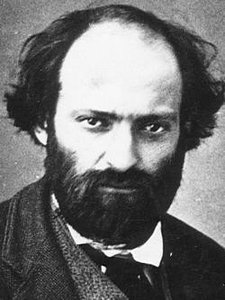
Paul Cézanne
1839 - 1906 , France
Quick Facts
- Artistic Movement Or Style: Post-Impressionism
- Artists Or Movements Influenced By This Artist:
- Cubism
- Fauvism
- Pablo Picasso
- Henri Matisse
- Artists Who Influenced This Artist:
- Paul Gauguin
- Georges Seurat
- Full Name: Paul Cézanne
- Nationality: French
- Notable Artworks:
- The Pond at Jas de Bouffan
- Portrait of Émile Zola
- Mont Sainte-Victoire series
- Bathers
- Place Of Birth: Aix-en-Provence, France
- Date Of Birth: 1839
- Date Of Death: 1906
Related Articles

Beyond Impressionism: Exploring the Emotional Depth and Vibrant Mastery of Post-Impressionist Art
Discover the profound evolution of art beyond Impressionism. Explore the emotional depth, vibrant colors, and revolutionary techniques of Post-Impressionist masters like Van Gogh and Cézanne in this expert guide to art history's most expressive movement.


