Money-Back Guarantee · 100 days Free Worldwide Delivery
449,564artworks 30,613artists 4,660museums 32languages
Catalogue entry

Plaster Cupid

Acrylic On Canvas.

Fig. 1. Paul Cézanne, Plaster Cupid. Shown as the reproduction you are specifying: , .

§ 1Catalogue data

§ 2Abstract

Collectible Description

Artist Biography

Post-Impressionist master Paul Cezanne bridged Impressionism and Cubism with Mont Sainte-Victoire. Explore his revolutionary works today.

§ 3Commentary

A Singular Vision: Cézanne’s Still Life with Plaster Cupid

Paul Cézanne's “Still Life with Plaster Cupid,” painted circa 1894, stands as a cornerstone of Post-Impressionism—a movement that irrevocably challenged the conventions of artistic representation and paved the way for Cubism. Initially dismissed by critics and grappling with personal doubts, Cézanne’s unwavering dedication to his craft ultimately yielded an oeuvre that continues to captivate audiences worldwide. This seemingly simple composition – a bowl of fruit alongside a plaster cupid statue – belies a profound exploration of perception and materiality, reflecting Cézanne's revolutionary approach to capturing the essence of observed reality.
  • Subject Matter: The artwork presents a meticulously rendered still life featuring a variety of fruits—apples, pears, peaches—arranged on a draped cloth. Dominating the right side of the canvas is a plaster cupid statue, its smooth surface contrasting sharply with the textured brushstrokes of Cézanne’s depiction.
  • Style & Technique: Cézanne's distinctive style embodies the spirit of Post-Impressionism, rejecting Impressionistic fleetingness in favor of deliberate simplification and geometric abstraction. He employs a technique known as “impasto”—thickly applied paint—to imbue the surfaces with palpable physicality and depth. The artist’s masterful manipulation of color contributes to an overall tonal harmony that enhances the visual impact of the scene.

Historical Context & Influences

Painted during Cézanne's prolific period, “Still Life with Plaster Cupid” emerged from a milieu increasingly receptive to artistic experimentation. Cézanne’s work drew inspiration from Japanese prints—particularly those employing asymmetrical compositions and flattened perspectives—a trend known as Japonisme that profoundly impacted European artists of the time. Furthermore, Cézanne wrestled with the legacy of Renaissance sculpture, particularly Michelangelo's David, seeking to convey a similar sense of monumental presence within his paintings.
  • Japonisme: Cézanne’s fascination with Japanese aesthetics manifested in his deliberate use of flattened planes and simplified forms, mirroring the stylistic conventions prevalent in Ukiyo-e prints.
  • Renaissance Sculpture: The artist consciously modeled his approach to depicting figures after Michelangelo's David, aiming for a similar expressive quality rooted in solidity and anatomical accuracy.

Symbolism & Emotional Resonance

Beyond its formal qualities, “Still Life with Plaster Cupid” carries symbolic weight. The plaster cupid—a traditional motif representing love and fertility—serves as a counterpoint to the ripened fruit, symbolizing abundance and sensual pleasure. Cézanne’s deliberate fragmentation of form suggests an awareness that visual perception is inherently subjective, reflecting the artist's preoccupation with capturing not merely what is seen but how it feels. The textured surface of the painting evokes a tactile experience, inviting viewers to contemplate the materiality of art itself—a core element of Cézanne’s artistic philosophy.

Legacy & Influence

“Still Life with Plaster Cupid” represents a pivotal moment in Cézanne's artistic evolution and profoundly influenced subsequent generations of artists. Its groundbreaking use of perspective and its expressive handling of color foreshadowed the stylistic innovations of Cubism, spearheaded by Picasso and Braque—a movement that would dismantle traditional notions of representation altogether. Cézanne’s unwavering commitment to exploring the fundamental principles of visual perception continues to inspire artists today, cementing his place as one of the most influential figures in modern art history.

Questions & Answers

Can the image of "Plaster Cupid" by Paul Cézanne be freely reproduced?

The copyright answer for "Plaster Cupid" by Paul Cézanne: the work is in the public domain - its copyright has expired. This determines whether reproductions of the image may be freely made.

What other names is Paul Cézanne known by?

Other names recorded for Paul Cézanne, creator of "Plaster Cupid", include Pau Cesana.

What feeling is "Plaster Cupid" associated with?

The emotional tone recorded for "Plaster Cupid" by Paul Cézanne is reflective. It summarizes the feeling the work expresses.
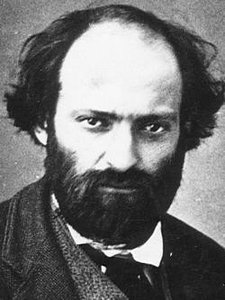
§ 4The artist

Paul Cézanne

Paul Cézanne

1839 - 1906, France

Quick facts about Paul Cézanne

  • Artistic Movement Or Style: Post-Impressionism
  • Artists Or Movements Influenced By This Artist:
    • Cubism
    • Fauvism
    • Pablo Picasso
    • Henri Matisse
  • Artists Who Influenced This Artist:
    • Paul Gauguin
    • Georges Seurat
  • Full Name: Paul Cézanne
  • Nationality: French
  • Notable Artworks:
    • The Pond at Jas de Bouffan
    • Portrait of Émile Zola
    • Mont Sainte-Victoire series
    • Bathers
  • Place Of Birth: Aix-en-Provence, France
  • Date Of Birth: 1839
  • Date Of Death: 1906

Artist Biography

The Architect of Form

Paul Cézanne was born in Aix-en-Provence, France, into a family with deep roots in the local banking industry. His father, Louis-Auguste Cézanne, helped found the Banque Cézanne et Cabassol, providing a level of financial stability that many of his contemporaries lacked. This security allowed Paul to move away from the legal studies his father had planned for him. Though he initially studied law at the University of Aix-en-Provence, he abandoned those studies in 1860 to focus entirely on painting. His early years were spent in the company of friends like Émile Zola, and together they shared a childhood of swimming and fishing along the banks of the Arc River.

The early works of Cézanne often carried the weight of Romanticism, utilizing dark palettes and heavy, expressive brushwork. He was influenced by the dramatic tonal contrasts found in the tradition of Eugène Delacroix. However, his approach began to shift as he moved toward Paris. He sought a way to move beyond the fleeting light captured by the Impressionists. Instead of merely recording a passing moment, he wanted to find the permanent structure within nature. He looked at a mountain or a piece of fruit and saw the underlying geometry—the cones, spheres, and cylinders that form the bones of the world.

A New Way of Seeing

Cézanne developed a technique characterized by small, repetitive, and constructive brushstrokes. He layered these patches of color to build up volume and texture, creating a sense of solidity. This method allowed him to explore spatial relationships without relying on traditional single-point perspective. In many of his compositions, objects appear independent within the space, often presented from multiple viewpoints at once. This rejection of classical perspective rules helped create a new pictorial language.

His subject matter was deeply tied to his surroundings in Provence. The Mont Sainte-Victoire became a recurring presence in his work, appearing in approximately eighty different paintings and watercolors over many years. He also found profound meaning in the simplest objects. His still lifes, featuring items like apples, jars, and cups, were not mere decorations but intense studies of light, shadow, and mass. Through these works, he demonstrated how color modulation could define shape without the need for traditional shading.

  • The Bathers (Les Grandes Baigneuses)
  • Mont Sainte-Victoire series
  • Still Life with Apples and a Pot of Primroses
  • Portrait of Émile Zola
  • The Card Players

A Lasting Influence

By the time of his death in 1906, Cézanne had fundamentally altered the direction of modern painting. His emphasis on geometric form and multiple perspectives provided a foundation for the Cubist movement. Artists such as Pablo Picasso and Georges Braque drew heavily from his analytical approach to nature. His use of bold, non-naturalistic color also left an impression on the Fauvists, including Henri Matisse. He moved art away from the imitation of reality toward a construction of visual experience based on perception and structure.

§ 5Comparanda

§ 6Questions

Quick Facts

  • Subject or theme: Still Life
  • Location: Courtauld Gallery Collection
  • Medium: Oil on paper
  • Influences: Classical Sculpture
  • Movement: Post-Impressionism
  • Artistic style: Innovative spatial perspective

§ 7Cite this entry

AllPaintingsStore.com, “Paul Cézanne, Plaster Cupid”, https://allpaintingsstore.com/en/art/paul-cezanne-plaster-cupid-8EWNZB-en/ArtistReproduction/ (accessed 9 October 2026).

§ 8The reproduction

Hand Made Oil Reproduction

Hand-painted oil on canvas in your size and frame, made to order by our artists. ( Switch to Print Switch to Digital Image)

It is specified on the order sheet in the margin; the present state of that sheet reads as follows.

Plaster Cupid

Reproduction Medium

Reproduction Size

-

Elite Senior Artist

More detail, finesse, and extra production time

-

Reproduction Frame

-

-

For artworks or reproductions larger than 105 cm (approximately 41 inches) on any side, the frame will be shipped as a kit, disassembled. This method ensures safe delivery and prevents damage during transport.

Professional assembly required - this is not a DIY product.
The kit must be assembled and the canvas stretched by an experienced professional framer, using wood glue (not supplied), a canvas stretching plier and clamps to hold the bars square while the glue dries. Incorrect assembly or uneven canvas tension can permanently damage the artwork and is not covered by our warranty.

  • All solid wood bars are included, precisely cut to size.

  • Assembled with the screws provided, plus wood glue for the corner joints, which is not supplied and must be sourced by your framer.

  • Professional tools are required and not included: a canvas stretching plier (tensioner) and clamps to hold the bars square while the glue dries.

Important:
The corner joints require wood glue, the bars must be held with clamps until the glue is fully dry, and tightening the canvas on the assembled frame requires a canvas stretching plier. None of these are included in the kit. Please arrange an experienced professional framer before ordering this size.

Nameplate

-

-

Protective Varnish

Glossy Varnish (enhances colors, protects against light/moisture)

-

Customize My Artwork

Examples of what can be changed: Replace face with customer photo; Add pet (e.g., replace cat with dog); Include hidden message in background; Change background landscape or elements.

-

Urgent

Worldwide Delivery () in 3/4 weeks instead of standard 5 weeks. (6 November). No compromise on quality.

-

Express Shipping

Worldwide Delivery () in 5 weeks. (13 November).

Included

Total Price

$ 258

Included with every order

  • Free Worldwide Express Shipping
  • High-Quality Linen Canvas
  • Full Shipping Insurance
  • Customs Tax Refund Guarantee
  • True Color Matching Guarantee
  • 100-Day Return Policy (Defects Only)
  • 100% Money-Back Guarantee
  • Bulk Discount Offer
Order sheet