


 Preview

 Send
 Share
 Details
 Guide


 Download
 Similars
 X-Ray
 Diaporama
 Q&A
 Stats
Studies

 Read More
Giclée / Art Print
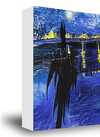
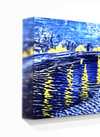
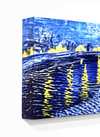
Museum-quality giclée or canvas print with fast production and flexible finish options. ( Buy Hand Made Painting Switch to Digital Image)
P118B $10
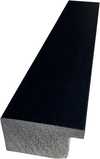
P118H $10
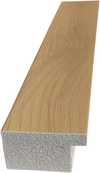
P118W $10
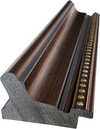
P438Z $10
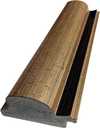
P508JH $12
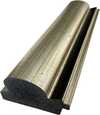
P508YH $12
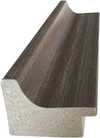
P805H $10
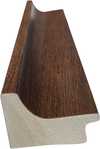
P805Z $10
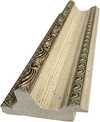
P919BZ $10
P919G $10
P919XJ $10
P959ZH $10
P968JZ $12
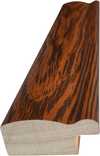
W106C $8
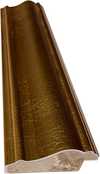
W218G $10
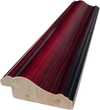
W218JH $8
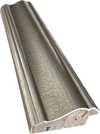
W218Y $10
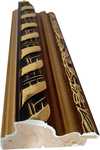
W307PJ $10
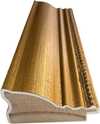
W316G $10
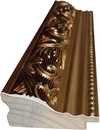
W316PJ $8
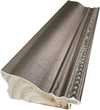
W316Y $10
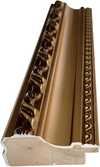
W398PJ $8
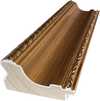
W4111J $10
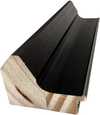
W500HY $15
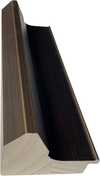
W500JH $15
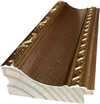
W692G $12
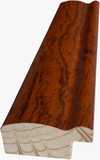
W849H $8
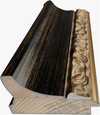
W940BG $15
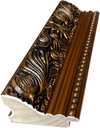
W953PJ $8
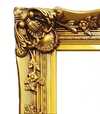
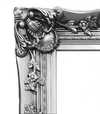
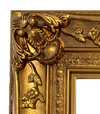
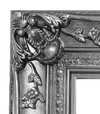
Pick from our preset sizes that match the artwork's original proportions.

Type the width and the height you need, to fit your frame or your wall. A print can only be cut, never made bigger than the picture, so a size with a different shape loses a part of the image. We send you a digital mockup to approve before we print anything. The picture shown on this page does not show the real cut — only the mockup does.
Worldwide Delivery () in 2 weeks instead of standard 4/5 weeks. (18 November)

Free Worldwide Express Shipping

High-Quality Linen Canvas

Full Shipping Insurance

Customs Tax Refund Guarantee

True Color Matching Guarantee

100-Day Return Policy (Defects Only)

100% Money-Back Guarantee

Bulk Discount Offer
 Glass option is only available in size under 110 CM

Studies
Giclée / Art Print
Reproduction Size
-


Total Price
$ 65
The Enigmatic Studies: A Window into Cézanne’s Soul
Paul Cézanne's "Studies," though existing primarily as photographic documentation of the original paintings, offers a remarkably intimate glimpse into the artist’s relentless pursuit of capturing not just what he *saw*, but how it *felt*. These works, often depicting scenes of everyday life – figures interacting in interiors or outdoors – are far more than simple portraits; they represent a profound exploration of form, light, and the very essence of perception. The photograph itself, with its subtle monochrome tones, lends an air of timelessness, inviting us to contemplate Cézanne’s process as if witnessing it unfold before our eyes.
Cézanne's journey was one of quiet revolution within the vibrant landscape of late 19th-century art. Emerging from the Impressionist movement – a period characterized by fleeting moments and atmospheric effects – he deliberately pushed beyond mere representation, seeking to impose a more structured order onto his observations. He wasn’t interested in replicating reality as it appeared momentarily; instead, he aimed to distill its fundamental elements—the geometric shapes, the underlying structure of objects, and the way light interacts with them—into a cohesive visual language. This ambition positioned him at the crucial juncture between Impressionism and Cubism, influencing generations of artists who followed.
The Compositional Dance: Form and Space
What immediately strikes the viewer is Cézanne’s masterful manipulation of space and form. He frequently employed a technique he termed “multiple viewpoints,” rendering a single subject from several perspectives simultaneously within a single painting. This isn't simply an illusionistic trick; it reflects his belief that objects possess inherent geometric forms—cubes, cylinders, cones—that are often obscured by the limitations of our visual perception. In "Studies," this is evident in the way figures seem to emerge from and recede into the background, creating a sense of depth and dynamism that defies traditional perspective. Notice how he uses overlapping planes and simplified shapes to build volume and suggest three-dimensionality, even within a relatively flat surface.
The photograph captures a particularly compelling example: a group of individuals engaged in conversation or observation. Cézanne’s focus isn't on individual likenesses but rather on the *relationships* between them—the spatial arrangement, the subtle gestures, and the implied narratives. The placement of hands, for instance, is meticulously considered, conveying intimacy, tension, or simply a moment of quiet contemplation. The use of muted tones allows these details to emerge with remarkable clarity, highlighting Cézanne’s sensitivity to the nuances of human interaction.
Symbolism and Emotional Resonance
While Cézanne avoided overt symbolism in his work, there's an undeniable emotional depth woven into "Studies." The scenes he depicts—domestic interiors, outdoor gatherings—suggest a longing for connection, a quiet contemplation of life’s rhythms. The figures themselves seem to embody a sense of timelessness and serenity, reflecting Cézanne’s own desire to transcend the fleeting nature of modern experience. It's not about telling a specific story but evoking a feeling – a mood of peaceful observation and quiet reflection.
Consider the way he uses light—or rather, the *absence* of strong color—to create atmosphere. The monochrome photograph emphasizes the interplay of shadows and highlights, drawing attention to the textures of clothing, the contours of faces, and the subtle shifts in tone that define the scene. This restraint allows the viewer to project their own emotions and interpretations onto the work, making it a deeply personal experience.
A Legacy of Innovation
Cézanne’s “Studies” are more than just paintings; they are foundational documents in the history of modern art. His radical approach to form, space, and perspective paved the way for Cubism and other avant-garde movements that would reshape the course of 20th-century art. Reproductions of these works offer a unique opportunity to appreciate Cézanne’s genius—to delve into his process, to understand his vision, and to connect with the enduring power of his artistic legacy. AllPaintingsStore offers meticulously crafted reproductions that faithfully capture the essence of these seminal paintings, allowing you to bring this remarkable work into your own space.
Questions & Answers
What kind of piece is "Studies"?
"Studies" is a wall art piece.
Is there a slideshow for "Studies" by Paul Cézanne?
"Studies" by Paul Cézanne can be viewed as a slideshow on the artwork's Diaporama page.
What print size of "Studies" by Paul Cézanne fits the recommended room?
For a living room, the recommended print size of "Studies" by Paul Cézanne is large.
Related Artworks


Artist Biography
The Early Life of Paul Cézanne
Born on January 19, 1839, at 28 rue de l'Opéra in Aix-en-Provence, Paul Cézanne entered a world of established order. His father, Louis-Auguste Cézanne, was a man of significant local standing, having co-founded the banking firm Banque Cézanne et Cabassol. This financial stability provided a secure backdrop for the family, which included Paul and his two younger sisters, Marie and Rose. The quietude of a provincial upbringing stood in stark contrast to the restless creative impulse that would eventually define his life.
His formal education began at the Saint Joseph school in Aix at the age of ten. He later attended Collège Bourbon, moving through the structured academic paths expected of a young man of his station. By 1859, the weight of family expectation led him to enroll in the law faculty of the University of Aix-en-Provence. He spent two years attempting to master jurisprudence, but the legal texts offered little resonance. In 1860, he made the decisive choice to abandon his law studies, turning his focus entirely toward the pursuit of painting.
Artistic Training and Early Years
The path toward a distinct visual language began in the classrooms of Aix-en-Provence. While his father’s ambitions leaned toward the law, the young artist found his footing under the guidance of Joseph Gibert at the Free Municipal School of Drawing. It was a period of disciplined observation. By 1859, his technical proficiency was evident when he earned second prize in the school's figure studies course. This formal grounding continued at the École de dessin d'Aix-en-Provence, located within the Musée Granet, where he refined his ability to translate three-dimensional forms onto a flat surface.
The move to Paris in 1862 marked a period of both struggle and essential exposure. The rejection from the École des Beaux-Arts was a setback, yet it led him to the Académie Suisse, where he could continue his development away from the rigid constraints of the academy. During these formative years, he found work as a copyist at the Louvre. This position allowed him to study the old masters firsthand, absorbing the weight and structure of classical compositions that would later inform his own approach to the natural world.
Technique and Artistic Style
The early years of his practice were marked by a heavy, expressive brushwork and a preference for dark palettes. During this period, his work leaned toward the dramatic sensibilities of Romanticism and the landscape traditions of the Barbizon school. He moved through these darker, more emotive stages before finding a more disciplined, analytical way of seeing. He sought to uncover the permanent structure hidden within the natural world, looking past the fleeting effects of light to find the underlying geometry of existence. To him, a mountain or a piece of fruit was composed of fundamental shapes: the cone, the sphere, and the cylinder.
This search for structure led to a highly specific, constructive method. He abandoned the traditional use of light and shadow to define volume, opting instead for color modulation. By layering small, repetitive brushstrokes, he built up planes of color that formed complex, tactile fields. This technique allowed him to establish a sense of mass and weight through hue alone. He also moved away from the constraints of classical, single-point perspective. In his compositions, objects often maintain an independent presence within the space, allowing for multiple viewpoints to coexist on a single plane.
- Still Life with Apples and a Pot of Primroses
- The Card Players
- Man with Pipe
The Mont Sainte-Victoire Series
The limestone presence of Mont Sainte-Victoire became a constant in the artist's life, a recurring subject that anchored his evolving vision. He returned to this Provençal landmark throughout his career, producing approximately eighty different paintings and watercolors of the mountain. It was a pursuit of structure, a way to translate the rugged, grey-white mass into a language of color and geometry. He did not merely observe the peak; he sought to understand its internal order.
His perspective shifted as he moved through the landscape, utilizing three primary vantage points to capture the mountain's changing character. He worked from the heights of Bellevue, the depths of the Bibemus quarry, and the hill of Les Lauves. These varied positions allowed him to explore how light and atmosphere altered the mountain's perceived weight and volume. Through these different angles, the mountain became a vessel for his experiments with spatial relationships and the construction of form.
Key Works and Masterpieces
The early years of his career were marked by a preoccupation with dramatic, often violent themes. Between 1867 and 1870, he produced The Murder, a work characterized by a turbulent body of water and a nightmarish atmosphere. This period of exploration into emotional and physical intensity stood in stark contrast to the structural clarity that would define his later years. As his focus shifted toward the permanence of form, his subjects became more grounded in the quietude of daily life and the geometry of the natural world.
By the 1890s, his brushwork had become a tool for building volume through color. In 1893, he painted The Card Players, a composition that emphasized the weight and presence of its subjects. This analytical approach continued into his final period in the early 1890s with Man Smoking a Pipe. During this time, he also turned his attention to the domestic, as seen in Still Life with Apples and a Pot of Primroses from about 1890, where he used color to define shape without traditional shading. His late works often sought a sense of stability, such as in Château Noir, which he completed in 1903-04.
His final years saw a continued effort to reconcile the human figure with the landscape. The Bathers, first exhibited in 1906, remains a significant example of this pursuit. The work, which he worked on for seven years, remains unfinished at the time of his death. It reflects a deliberate departure from fleeting impressions, favoring instead a dense, rhythmic arrangement of forms.
Circle and Artistic Connections
The social landscape of Cézanne’s youth was anchored by a trio of inseparable friends: Émile Zola, Louis Marguery, and Baptistin Baille. Together, they navigated the intellectual currents of their time, debating art and literature in the shared spaces of their upbringing. While his early years were marked by a certain isolation from the mainstream, his artistic path eventually intersected with the most significant shifts in French painting. He found a vital mentor in the Impressionist Camille Pissarro, whose influence helped guide his transition from the dark, heavy palettes of his youth toward a more structured exploration of light and color.
His relationship with the broader art world was often a slow and difficult process of recognition. For many years, he worked in relative obscurity, a period that saw him move alongside contemporaries such as Paul Gauguin and Vincent van Gogh. It was not until 1895 that the art dealer Ambroise Vollard organized his first solo exhibition in Paris, a moment that finally brought his rigorous, analytical approach to a wider audience. This recognition arrived late in a life defined by a stubborn, solitary devotion to the underlying geometry of the natural world.
Legacy and Lasting Influence
The shift Cézanne initiated moved art away from the imitation of reality toward a construction of visual experience based on perception and structure. By emphasizing geometric form, he provided the essential foundation for the Cubist movement. His analytical approach to nature allowed later artists to dismantle the traditional subject. Pablo Picasso and Georges Braque drew heavily from this method, finding in his work a way to organize space through volume rather than mere light.
His influence extended into the realm of color as well. The use of bold, non-naturalistic color left a profound impression on the Fauvists, including Henri Matisse. Both Picasso and Matisse recognized the weight of his contribution, with the former famously referring to him as the father of us all. He did not merely paint the world; he reconstructed it through a rigorous, structural lens that changed how subsequent generations perceived the relationship between object and space.
Where to See His Works Today
The physical presence of his vision remains scattered across several major institutions, allowing the viewer to trace his evolution from the dark, expressive brushwork of his youth to the structured clarity of his later years. In New York, the Metropolitan Museum of Art holds a significant collection of 21 works, providing a substantial look at his development. Nearby, the Museum of Modern Art in New York City contains 6 works, including his 1904 painting, Chateau Noir. These collections offer a way to observe how he moved away from the fleeting light of his contemporaries toward a more permanent, geometric understanding of the natural world.
In Europe, the Musée d'Orsay in Paris maintains 19 of his paintings, offering a deep connection to the French tradition he both embraced and transformed. London’s Courtauld Gallery holds 9 works, while the National Gallery of Art in Washington possesses 11. These institutions house various stages of his career, from his early studies of light and shadow to his final, intense explorations of form. To see his work in these settings is to witness the deliberate, rhythmic layering of color that defined his approach to the landscape and the still life.
- The Card Players, 1893
- The Large Bathers, 1900
- Mont Sainte-Victoire Seen from Les Lauves, 1904
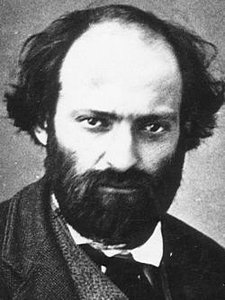
Paul Cézanne
1839 - 1906 , France
Quick Facts
- Artistic Movement Or Style: Post-Impressionism
- Artists Or Movements Influenced By This Artist:
- Cubism
- Pablo Picasso
- Georges Braque
- Fauvists
- Henri Matisse
- Artists Who Influenced This Artist: ['Eugène Delacroix']
- Full Name: Paul Cézanne
- Nationality: French
- Notable Artworks:
- The Bathers
- Mont Sainte-Victoire series
- Still Life with Apples and a Pot of Primroses
- Portrait of Émile Zola
- The Card Players
- Place Of Birth: Aix-en-Provence, France
- Date Of Birth: 1839
- Date Of Death: 1906
Related Articles

Mastering Form: The 25 Greatest Artworks by Paul Cézanne
Explore 25 iconic Paul Cézanne masterpieces and his Post-Impressionist legacy. Discover the full collection online at AllPaintingsStore.com.

From Cézanne to Cubism: The Structural Revolution That Redefined Modern Art
Explore the profound transition from Cézanne’s structural Post-Impressionism to the fragmented brilliance of Cubism. An expert deep dive into the geometric revolution that redefined modern art through the eyes of masters like Picasso and Braque.


