Money-Back Guarantee · 100 days Free Worldwide Delivery
449,587artworks 30,613artists 4,660museums 32languages
Currency
    Language
      Atelier · Est. 2015 · Paris, France
      AllPaintingsStore
      allpaintingsstore.com
      Catalogue entry

      untitled (2944)

      Acrylic On Canvas.

      Fig. 1. Paul Cézanne, untitled (2944). Shown as the reproduction you are specifying: , .

      § 1Catalogue data

      § 2Abstract

      Collectible Description

      Paul Cézanne’s ‘Untitled (2944)’ captures a young boy with an enigmatic gaze, set against a serene backdrop of potted plants – a quintessential example of his bridging Impressionism and Cubism.

      Artist Biography

      Post-Impressionist master Paul Cezanne bridged Impressionism and Cubism with Mont Sainte-Victoire. Explore his revolutionary works today.

      § 3Commentary

      A Moment of Quietude: Paul Cézanne’s “Untitled (2944)”

      Paul Cézanne's "Untitled (2944)," a seemingly simple portrait of a young boy, is far more than a snapshot of childhood. It represents a pivotal moment in the artist’s lifelong quest to redefine how we perceive and represent reality – a journey that ultimately laid the groundwork for modern art. Painted around 1896-1898, during a period of intense experimentation and self-discovery, this work embodies Cézanne's revolutionary approach to form, color, and space, moving decisively away from the constraints of academic tradition.

      The subject himself is presented with remarkable directness. A young boy, likely a relative or acquaintance of the artist, stands before a plain wooden chair, his gaze fixed on the viewer. His posture is relaxed yet attentive, hinting at either a thoughtful contemplation or perhaps a gentle amusement. The subtle suggestion of a smile or frown – difficult to definitively discern – adds an element of ambiguity and invites the viewer to project their own emotions onto the scene. Noticeably absent are any elaborate details; Cézanne deliberately stripped away extraneous elements, focusing instead on capturing the essence of the individual within his immediate environment.

      The Language of Form: Cézanne’s Geometric Vision

      Cézanne's genius lay not in replicating visual reality with photographic accuracy, but in distilling it into its fundamental geometric forms. In "Untitled (2944)," this is immediately apparent. The chair, the potted plants, and even the boy himself are rendered as interlocking planes of color and shape – cubes, cylinders, cones – arranged within a shallow, ambiguous space. This fragmentation of form, a hallmark of Cézanne’s style, anticipates the Cubist movement that would emerge decades later. He wasn't interested in creating an illusion of depth; instead, he sought to represent the underlying structure of objects, as if revealing their essential geometry.

      The artist’s brushwork is deliberately visible and tactile. Short, broken strokes – often applied with a dry brush – build up layers of color, creating a sense of texture and volume. These marks aren't blended smoothly; rather, they retain their individual character, contributing to the painting’s dynamic energy. Cézanne employed a technique he called “alla prima,” working directly onto the canvas without extensive underpainting, allowing for spontaneity and immediacy in his application of color.

      Color and Light: A Harmonious Palette

      The palette of "Untitled (2944)" is remarkably restrained – primarily consisting of muted earth tones: ochres, browns, greens, and blues. However, Cézanne masterfully manipulated these colors to create a sense of luminosity and depth. He used complementary color relationships—such as the juxtaposition of blue and orange—to intensify the hues and generate visual interest. The light source is ambiguous, seemingly originating from an unseen direction, casting soft shadows that subtly define the forms. Cézanne’s use of color wasn't about mimicking nature; it was about conveying a particular mood and atmosphere – one of quiet contemplation and serene beauty.

      Symbolism and Emotional Resonance

      While seemingly straightforward, "Untitled (2944)" carries a subtle symbolic weight. The boy represents innocence and vulnerability, while the chair symbolizes stability and grounding. The potted plants, often associated with growth and vitality, add another layer of meaning to the composition. The background figure, partially obscured, could be interpreted as a reminder of the artist’s own family and his connection to the natural world. More profoundly, the painting speaks to Cézanne's desire to capture not just the outward appearance of things, but also their inner essence – a quest that resonates deeply with our own human experience.

      Reproductions of “Untitled (2944)” offer a remarkable opportunity to bring this pivotal work into your home or office. AllPaintingsStore’s hand-painted reproductions faithfully capture the nuances of Cézanne's brushwork and color palette, allowing you to appreciate the depth and complexity of this iconic painting in stunning detail. Consider how this piece can contribute to a space defined by thoughtful reflection and understated elegance – a testament to the enduring legacy of Paul Cézanne.

      Questions & Answers

      Is there a slideshow for "untitled (2944)" by Paul Cézanne?

      The diaporama of "untitled (2944)" can be watched on the artwork's Diaporama page.

      Where should a reproduction of "untitled (2944)" by Paul Cézanne be hung?

      Format (portrait) and recommended space (living room) are the two placement facts recorded for "untitled (2944)" by Paul Cézanne.

      At what size is "untitled (2944)" suggested for a living room?

      In a living room, "untitled (2944)" is suggested at a medium print size.
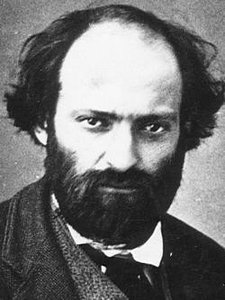
      § 4The artist

      Paul Cézanne

      Paul Cézanne

      1839 - 1906, France

      Quick facts about Paul Cézanne

      • Artistic Movement Or Style: Post-Impressionism
      • Artists Or Movements Influenced By This Artist:
        • Cubism
        • Fauvism
        • Pablo Picasso
        • Henri Matisse
      • Artists Who Influenced This Artist:
        • Paul Gauguin
        • Georges Seurat
      • Full Name: Paul Cézanne
      • Nationality: French
      • Notable Artworks:
        • The Pond at Jas de Bouffan
        • Portrait of Émile Zola
        • Mont Sainte-Victoire series
        • Bathers
      • Place Of Birth: Aix-en-Provence, France
      • Date Of Birth: 1839
      • Date Of Death: 1906

      Artist Biography

      The Architect of Form

      Paul Cézanne was born in Aix-en-Provence, France, into a family with deep roots in the local banking industry. His father, Louis-Auguste Cézanne, helped found the Banque Cézanne et Cabassol, providing a level of financial stability that many of his contemporaries lacked. This security allowed Paul to move away from the legal studies his father had planned for him. Though he initially studied law at the University of Aix-en-Provence, he abandoned those studies in 1860 to focus entirely on painting. His early years were spent in the company of friends like Émile Zola, and together they shared a childhood of swimming and fishing along the banks of the Arc River.

      The early works of Cézanne often carried the weight of Romanticism, utilizing dark palettes and heavy, expressive brushwork. He was influenced by the dramatic tonal contrasts found in the tradition of Eugène Delacroix. However, his approach began to shift as he moved toward Paris. He sought a way to move beyond the fleeting light captured by the Impressionists. Instead of merely recording a passing moment, he wanted to find the permanent structure within nature. He looked at a mountain or a piece of fruit and saw the underlying geometry—the cones, spheres, and cylinders that form the bones of the world.

      A New Way of Seeing

      Cézanne developed a technique characterized by small, repetitive, and constructive brushstrokes. He layered these patches of color to build up volume and texture, creating a sense of solidity. This method allowed him to explore spatial relationships without relying on traditional single-point perspective. In many of his compositions, objects appear independent within the space, often presented from multiple viewpoints at once. This rejection of classical perspective rules helped create a new pictorial language.

      His subject matter was deeply tied to his surroundings in Provence. The Mont Sainte-Victoire became a recurring presence in his work, appearing in approximately eighty different paintings and watercolors over many years. He also found profound meaning in the simplest objects. His still lifes, featuring items like apples, jars, and cups, were not mere decorations but intense studies of light, shadow, and mass. Through these works, he demonstrated how color modulation could define shape without the need for traditional shading.

      • The Bathers (Les Grandes Baigneuses)
      • Mont Sainte-Victoire series
      • Still Life with Apples and a Pot of Primroses
      • Portrait of Émile Zola
      • The Card Players

      A Lasting Influence

      By the time of his death in 1906, Cézanne had fundamentally altered the direction of modern painting. His emphasis on geometric form and multiple perspectives provided a foundation for the Cubist movement. Artists such as Pablo Picasso and Georges Braque drew heavily from his analytical approach to nature. His use of bold, non-naturalistic color also left an impression on the Fauvists, including Henri Matisse. He moved art away from the imitation of reality toward a construction of visual experience based on perception and structure.

      § 5Comparanda

      § 6Questions

      Quick Facts

      • Artist: Paul Cézanne
      • Artistic style: Geometric forms
      • Medium: Painting
      • Subject or theme: Portrait, serenity

      Art Quiz

      There is only one correct answer for each question.

      Question 1:
      Based on the image description, what is the primary focus of the young boy in this painting?
      Question 2:
      Paul Cézanne is most closely associated with which artistic movement?
      Question 3:
      The presence of the two potted plants in the background suggests what about Cézanne's artistic interests?
      Question 4:
      Considering Cézanne's influence on later art movements, which statement best describes his contribution?
      Question 5:
      What does the seemingly calm and serene atmosphere of the painting likely reflect about Cézanne's artistic intent?

      § 7Cite this entry

      AllPaintingsStore.com, “Paul Cézanne, untitled (2944)”, https://allpaintingsstore.com/en/art/paul-cezanne-untitled-2944-9GF6RL-en/ArtistReproduction/ (accessed 2 October 2026).

      § 8The reproduction

      Hand Made Oil Reproduction

      Hand-painted oil on canvas in your size and frame, made to order by our artists. ( Switch to Print Switch to Digital Image)

      It is specified on the order sheet in the margin; the present state of that sheet reads as follows.

      untitled (2944)

      Reproduction Medium

      Reproduction Size

      -

      Elite Senior Artist

      More detail, finesse, and extra production time

      -

      Reproduction Frame

      -

      -

      For artworks or reproductions larger than 105 cm (approximately 41 inches) on any side, the frame will be shipped as a kit, disassembled. This method ensures safe delivery and prevents damage during transport.

      Professional assembly required - this is not a DIY product.
      The kit must be assembled and the canvas stretched by an experienced professional framer, using wood glue (not supplied), a canvas stretching plier and clamps to hold the bars square while the glue dries. Incorrect assembly or uneven canvas tension can permanently damage the artwork and is not covered by our warranty.

      • All solid wood bars are included, precisely cut to size.

      • Assembled with the screws provided, plus wood glue for the corner joints, which is not supplied and must be sourced by your framer.

      • Professional tools are required and not included: a canvas stretching plier (tensioner) and clamps to hold the bars square while the glue dries.

      Important:
      The corner joints require wood glue, the bars must be held with clamps until the glue is fully dry, and tightening the canvas on the assembled frame requires a canvas stretching plier. None of these are included in the kit. Please arrange an experienced professional framer before ordering this size.

      Nameplate

      -

      -

      Protective Varnish

      Glossy Varnish (enhances colors, protects against light/moisture)

      -

      Customize My Artwork

      Examples of what can be changed: Replace face with customer photo; Add pet (e.g., replace cat with dog); Include hidden message in background; Change background landscape or elements.

      -

      Urgent

      Worldwide Delivery () in 3/4 weeks instead of standard 5 weeks. (31 October). No compromise on quality.

      -

      Express Shipping

      Worldwide Delivery () in 5 weeks. (7 November).

      Included

      Total Price

      $ 258

      Included with every order

      • Free Worldwide Express Shipping
      • High-Quality Linen Canvas
      • Full Shipping Insurance
      • Customs Tax Refund Guarantee
      • True Color Matching Guarantee
      • 100-Day Return Policy (Defects Only)
      • 100% Money-Back Guarantee
      • Bulk Discount Offer
      Order sheet