


 Preview
 Send
Send Share
Share
 Details
 Guide
Guide

 Download
 Similars
 X-Ray
X-Ray Diaporama
 Stats
StatsLetter Ghost
 Oil On Canvas
- WallArt
- Expressionism
 1937
1937 33.0 x 49.0 cm
 Read More
Hand Made Oil Reproduction
Hand-painted oil on canvas in your size and frame, made to order by our artists. ( Switch to Print Switch to Digital Image)




P118B $10

P118H $10

P118W $10

P438Z $10

P508JH $12

P508YH $12

P805H $10

P805Z $10

P919BZ $10

P919G $10

P919XJ $10

P959ZH $10

P968JZ $12

W106C $8

W218G $10

W218JH $8

W218Y $10

W307PJ $10

W316G $10

W316PJ $8

W316Y $10

W398PJ $8

W4111J $10

W500HY $15

W500JH $15

W692G $12

W849H $8

W940BG $15

W953PJ $8




Pick from our preset sizes that match the artwork's original proportions.

Type the width and the height you need, to fit your frame or your wall. This is hand-painted, so for a size with a different shape the artist can paint a bit more around the picture, or cut a bit — you choose. We send you a digital mockup to approve before the painting starts. The picture shown on this page does not show the real result — only the mockup does.
After order, AllPaintingsStore.com team will email client for instructions and provide a mockup preview
Worldwide Delivery () in 3/4 weeks instead of standard 5 weeks. (27 October). No compromise on quality.

Free Worldwide Express Shipping

High-Quality Linen Canvas

Full Shipping Insurance

Customs Tax Refund Guarantee

True Color Matching Guarantee

100-Day Return Policy (Defects Only)

100% Money-Back Guarantee

Bulk Discount Offer
 Glass option is only available in size under 110 CM

Letter Ghost
Reproduction Medium
Reproduction Size
-


Total Price
$ 283
A Window into the Unconscious: Decoding Paul Klee’s “Letter Ghost”
Paul Klee's "Letter Ghost," painted in 1937, is more than just a painting; it’s an evocative exploration of perception, emotion, and the hidden realms of the human psyche. Measuring a modest 33 x 49 cm, this work packs a powerful punch, embodying the core tenets of Expressionism while subtly hinting at Klee's broader artistic influences – Cubism and Surrealism. The artwork’s enduring appeal lies in its ambiguity; it invites contemplation rather than offering easy answers.Visual Language & Technique
The composition centers around two stylized faces, rendered with a striking simplicity. These aren’t portraits in the traditional sense, but rather *archetypes* of human expression. Large, circular eyes gaze in opposing directions, immediately establishing a sense of internal conflict and fractured perspective. The downturned mouths suggest melancholy or even suppressed anger. Klee's technique is masterful – he employs thick, expressive brushstrokes and layered washes of color (primarily pale yellow-ochre, purple, and grey) to create a textured surface that feels both tactile and dreamlike. This impasto application adds depth and physicality, drawing the viewer into the painting’s emotional landscape. The overall effect is one of raw emotion conveyed through deliberately simplified forms.Symbolism & Interpretation
The title itself, “Letter Ghost,” is intriguing. What letter does this ghost represent? Is it a forgotten message, a repressed memory, or perhaps the lingering presence of an unseen force? The square-shaped object with a hole in the middle – a recurring motif in Klee’s work – can be interpreted as a window, a portal, or even an eye itself. It suggests a glimpse beyond the surface, into the subconscious mind. The duality represented by the opposing gazes speaks to the inherent contradictions within human nature—our capacity for both joy and sorrow, hope and despair. Klee often imbued his work with personal symbolism, making definitive interpretations elusive.Historical Context: Modernism & Klee’s Place Within It
“Letter Ghost” emerged during a period of profound social and political upheaval in Europe. The rise of totalitarian regimes cast a long shadow over artistic expression, prompting artists to explore new ways of representing the human condition. As a product of the Modernist movement, the painting rejects traditional representational norms in favor of subjective experience and experimentation. Klee’s time at the Bauhaus school – alongside Wassily Kandinsky – was pivotal in shaping his artistic philosophy. He wasn't merely interested in *what* he painted, but *how* he painted it, meticulously studying color theory and its psychological effects. His writings on form and design remain influential today.Emotional Resonance & Contemporary Relevance
Despite being created over eight decades ago, “Letter Ghost” continues to resonate with contemporary audiences. Its exploration of inner turmoil, fractured identity, and the search for meaning feels remarkably relevant in our increasingly complex world. The painting’s ambiguity allows viewers to project their own emotions and experiences onto it, fostering a deeply personal connection. It's a work that rewards repeated viewing, revealing new layers of meaning with each encounter.Further Exploration
- Artist: Paul Klee (1879-1940), Swiss-German painter known for his unique blend of Expressionism, Cubism, and Surrealism.
- Key Themes: Perception, emotion, duality, the subconscious, color theory.
- Notable Works: "View of Kairouan," “Im Bachschen Stil (In the Style of Bach),” and his extensive theoretical writings ("Paul Klee Notebooks").
- Museum Collections: Zentrum Paul Klee in Bern, Switzerland; Museum City Gallery in Lenbachhaus, Munich, Germany.
- Reproduction Quality: AllPaintingsStore.com offers meticulously crafted handmade oil painting reproductions of “Letter Ghost,” allowing you to experience the artwork’s beauty and emotional depth in your own space.
Questions & Answers
What subjects appear in "Letter Ghost" by Paul Klee?
The themes present in "Letter Ghost" by Paul Klee include abstract faces, emotional art, dual perspective, symbolic imagery, monochromatic palette, geometric forms, melancholy mood, expressionist style. Together they summarize the artwork's subject matter.
Can I see "Letter Ghost" by Paul Klee under different lights?
The X-Ray page of "Letter Ghost" by Paul Klee is an interactive viewer that lets you slide through eleven optical layers of the artwork's image, including an X-ray style view.
What does "Letter Ghost" share with the rest of Paul Klee's output?
Within Paul Klee's output, "Letter Ghost" sits in the Expressionism style, alongside the themes of expressionist roots, cubist & surreal hints, human perception doubt, inner turmoil shown, swiss modernity's mark, reflects 30s anxiety, early klee experiment, color theory focus.
Related Artworks


Artist Biography
A Life of Line and Lyricism
Born in Münchenbuchsee, Switzerland, on December 18, 1879, Paul Klee entered a world shaped by the rhythms of music. His father, Hans Wilhelm Klee, was a German music teacher, and his mother, Ida Marie, was a Swiss singer. This early immersion in sound provided a foundation for a visual language that often mirrored musical arrangement. While he initially pursued the violin with great talent, eventually deciding that modern music lacked the creative pull he craved, he turned his focus toward the Academy of Fine Arts in Munich. His studies there between 1898 and 1901 were marked by an early mastery of drawing, though he famously struggled with color during those first cold winters.
The transition from a draftsman to an abstract thinker was not immediate. Klee’s early years involved exploring the boundaries of Symbolism and Art Nouveau, often working in black and white or through experimental techniques like needle drawing on blackened glass. A significant shift occurred in 1914 during a visit to Tunisia. The intense light of North Africa allowed him to detach color from physical description, using it instead as an independent force. This period provided the necessary push toward abstraction, moving his work away from mere representation and toward a more personal, symbolic vocabulary.
The Bauhaus Years and Political Shadows
Klee’s career reached a period of intense theoretical and creative activity during his time at the Bauhaus. From 1920 to 1930, he joined the faculty of this influential school of design and architecture, working alongside figures like Wassily Kandinsky. It was here that much of his prolific output occurred, particularly small-scale watercolors and drawings on paper. His teaching allowed him to explore the relationship between color and form with scientific precision, a subject he documented extensively in his notebooks. These writings, which examined the mechanics of design, are now regarded as essential texts for understanding modern composition.
The stability of this era was abruptly interrupted by the rise of National Socialism. In 1933, Klee was dismissed from his position at the Academy of Fine Arts in Düsseldorf because the Nazi regime classified his work as “degenerate.” Forced to return to his native Bern, his later years were marked by a shift in tone. As political turmoil grew and his own health declined, his lines became heavier, turning into black bars, and his forms grew more generalized. The whimsicality of his earlier years gave way to a more somber, melancholic perspective, reflecting the gravity of the era.
A Lasting Visual Language
The breadth of Klee’s output is immense, totaling some 10,000 works that range from delicate sketches to larger, more structured compositions. His ability to blend influences from Cubism, Expressionism, and Surrealism resulted in a style that felt both childlike and deeply intellectual. He utilized a variety of media, including:
- Zinc-plate etchings
- Watercolor on gauze and paper
- Lithographs
- Charcoal and pencil drawings
His work remains a study in balance, where titles often provided the necessary context for his often cryptic imagery. Whether through the use of simple stick figures or complex, colorful grids, he sought to express the inner world of ideas rather than the surface of reality. He died on June 29, 1940, in Muralto, Switzerland, leaving behind a body of work that bridged the gap between the figurative and the abstract.
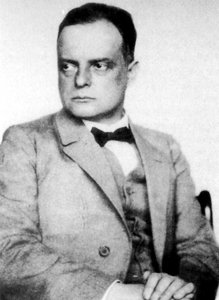
Paul Klee
1879 - 1940 , Switzerland
Quick Facts
- Artistic Movement Or Style:
- Expressionism
- Cubism
- Surrealism
- Artists Who Influenced This Artist:
- Pablo Picasso
- Georges Braque
- Robert Delaunay
- Vincent van Gogh
- Paul Cézanne
- Full Name: Paul Klee
- Nationality: German and Swiss
- Notable Artworks:
- Hammamet with Its Mosque
- Ships in the Dark
- Walpurgis Night
- The Protector
- Place Of Birth: Münchenbuchsee, Switzerland
- Date Of Birth: 1879
- Date Of Death: 1940
Related Articles
Paul Klee: A Poetics of Form and Color – Exploring the Inner Landscape of a Modern Master
Explore the captivating world of Paul Klee! Discover his innovative art, Bauhaus influence, & unique symbolic language. Expert analysis & high-quality reproductions at AllPaintingsStore.

Geometric Abstraction's 10 Defining Masterpieces | Art for Your Home - AllPaintingsStore
Explore 10 defining masterpieces of Geometric Abstraction! Discover Kandinsky, Mondrian & Malevich’s iconic works. Find museum-quality art reproductions and curated decor ideas to elevate your home at AllPaintingsStore.com.

Kandinsky's Masterpieces: 25 Paintings That Define Abstract Art | AllPaintingsStore
Journey through Wassily Kandinsky's 25 most iconic abstract paintings. Explore his revolutionary use of color, form & spiritual expressionism. Find museum-quality Kandinsky reproductions and elevate your home decor with AllPaintingsStore.com. Discover all masterpieces on AllPaintingsStore.com!

Abstract Expressionism's 10 Defining Masterpieces |
Explore 10 defining Abstract Expressionism masterpieces by Pollock, Rothko & de Kooning. Discover the stories behind these iconic paintings and find museum-quality art reproductions to elevate your home decor on .

Paul Klee's Masterpieces: Explore 25 Iconic Paintings & Prints | AllPaintingsStore
Journey through Paul Klee's 25 most iconic paintings & prints. Explore his abstract style, Bauhaus influence, and vibrant color palettes. Find museum-quality art reproductions & decor ideas at AllPaintingsStore.com. Discover all masterpieces online.


