Money-Back Guarantee · 100 days Free Worldwide Delivery
449,581artworks 30,617artists 4,705museums 32languages
Currency
    Language
      Atelier · Est. 2015 · Paris, France
      AllPaintingsStore
      allpaintingsstore.com
      Preview AR preview Switch to Print Switch to Digital Image Send
      Details Guide Add to favorites Download Similars X-Ray Diaporama Stats

      Flag

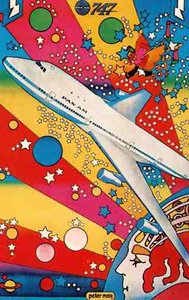
      Discover Peter Max’s ‘Flag’ (1954): a vibrant Pop Art reimagining of American identity! Bold colors, dynamic style & historical significance – perfect for collectors & interiors.

      Explore the vibrant world of Peter Max (1937-2024), celebrated for his iconic Pop Art, psychedelic imagery & bold use of color. A defining figure of the 1960s counterculture movement.

      The artwork displayed on this page is protected by copyright law, which means we cannot legally create or sell an identical reproduction. This protection is enforced under international agreements such as the Berne Convention and by national laws, including those outlined by the U.S. Copyright Law - Title 17.

      As a respectful and legal alternative, we offer custom, hand-painted artworks inspired by the original. Our skilled and professional artists carefully study the original's style, mood, and artistic essence to create a new, unique piece that evokes the same feeling - while remaining an original creation in its own right.

      This method fully complies with copyright regulations because it does not involve copying or duplicating the protected artwork. Instead, it is a creative reinterpretation - a new painting that is influenced by the original but not identical to it.

      Hand Made Oil Reproduction

      Hand-painted oil on canvas in your size and frame, made to order by our artists. ( Switch to Print Switch to Digital Image)

      Corner sample of the P118B picture frame: moulded polystyrene, 5 cm wide and 3 cm thick
      P118B $10
      Corner sample of the P118H picture frame: moulded polystyrene, 5 cm wide and 3 cm thick
      P118H $10
      Corner sample of the P118W picture frame: moulded polystyrene, 5 cm wide and 3 cm thick
      P118W $10
      Corner sample of the P438Z picture frame: moulded polystyrene, 5.5 cm wide and 3.5 cm thick
      P438Z $10
      Corner sample of the P508JH picture frame: moulded polystyrene, 7 cm wide and 3.5 cm thick
      P508JH $12
      Corner sample of the P508YH picture frame: moulded polystyrene, 7 cm wide and 3.5 cm thick
      P508YH $12
      Corner sample of the P805H picture frame: moulded polystyrene, 5 cm wide and 3.5 cm thick
      P805H $10
      Corner sample of the P805Z picture frame: moulded polystyrene, 5 cm wide and 3.5 cm thick
      P805Z $10
      Corner sample of the P919BZ picture frame: moulded polystyrene, 7 cm wide and 3.5 cm thick
      P919BZ $10
      Corner sample of the P919G picture frame: moulded polystyrene, 7 cm wide and 3.5 cm thick
      P919G $10
      Corner sample of the P919XJ picture frame: moulded polystyrene, 7 cm wide and 3.5 cm thick
      P919XJ $10
      Corner sample of the P959ZH picture frame: moulded polystyrene, 5 cm wide and 3 cm thick
      P959ZH $10
      Corner sample of the P968JZ picture frame: moulded polystyrene, 6 cm wide and 4 cm thick
      P968JZ $12
      Corner sample of the W106C picture frame: solid wood, 5 cm wide and 3 cm thick
      W106C $8
      Corner sample of the W218G picture frame: solid wood, 5 cm wide and 3 cm thick
      W218G $10
      Corner sample of the W218JH picture frame: solid wood, 5 cm wide and 3 cm thick
      W218JH $8
      Corner sample of the W218Y picture frame: solid wood, 5 cm wide and 3 cm thick
      W218Y $10
      Corner sample of the W307PJ picture frame: solid wood, 6 cm wide and 3 cm thick
      W307PJ $10
      Corner sample of the W316G picture frame: solid wood, 6 cm wide and 3 cm thick
      W316G $10
      Corner sample of the W316PJ picture frame: solid wood, 6 cm wide and 3 cm thick
      W316PJ $8
      Corner sample of the W316Y picture frame: solid wood, 6 cm wide and 3 cm thick
      W316Y $10
      Corner sample of the W398PJ picture frame: solid wood, 5 cm wide and 3 cm thick
      W398PJ $8
      Corner sample of the W4111J picture frame: solid wood, 6.5 cm wide and 3.5 cm thick
      W4111J $10
      Corner sample of the W500HY picture frame: solid wood, 7 cm wide and 5 cm thick
      W500HY $15
      Corner sample of the W500JH picture frame: solid wood, 7 cm wide and 5 cm thick
      W500JH $15
      Corner sample of the W692G picture frame: solid wood, 8 cm wide and 4 cm thick
      W692G $12
      Corner sample of the W849H picture frame: solid wood, 5 cm wide and 3 cm thick
      W849H $8
      Corner sample of the W940BG picture frame: solid wood, 7.5 cm wide and 4.5 cm thick
      W940BG $15
      Corner sample of the W953PJ picture frame: solid wood, 6 cm wide and 3.5 cm thick
      W953PJ $8

      Standard
      custom
      CM
      INCH

      Pick from our preset sizes that match the artwork's original proportions.

      width
      height

      You may enter your own dimensions to fit a specific frame or space. If your selected size does not match the original image's proportions, we will either crop the artwork or extend the painting with additional hand-painted elements. A digital mockup will be sent for your approval before production begins.
      Please note that the on-screen preview does not reflect the actual cropping or extension. Only the mockup will accurately show the final composition.
      While custom sizes are available, we recommend selecting a dimension from the predefined list to preserve the original proportions.

      Examples of what can be changed: Replace face with customer photo; Add pet (e.g., replace cat with dog); Include hidden message in background; Change background landscape or elements.
      After order, AllPaintingsStore.com team will email client for instructions and provide a mockup preview

      Worldwide Delivery () in 3/4 weeks instead of standard 5 weeks. (13 October). No compromise on quality.

      Free Worldwide Express Shipping
      High-Quality Linen Canvas
      Full Shipping Insurance
      Customs Tax Refund Guarantee
      True Color Matching Guarantee
      100-Day Return Policy (Defects Only)
      100% Money-Back Guarantee
      Bulk Discount Offer

      Total Price

      $ 258

      Flag

      Reproduction Medium

      Reproduction Size

      -

      Total Price

      $ 258

      Quick Facts

      • style:
        • Pop Art
        • Abstract Expressionism
      • title: Flag
      • subject: American flag
      • influences: Psychedelic art

      Art Quiz

      There is only one correct answer for each question.

      Question 1:
      Peter Max's *Flag* (1954) is notable for its departure from traditional depictions of the American flag through what key artistic choice?
      Question 2:
      The year 1954, when *Flag* was created, was marked by significant global events. Which of the following occurred in 1954 and is relevant to understanding the artwork's potential context?
      Question 3:
      Which artistic movements heavily influenced Peter Max’s style as seen in *Flag*?
      Question 4:
      The image description notes the lines in *Flag* are described as…?
      Question 5:
      How does the artist's use of color in *Flag* contribute to its overall effect?

      A Burst of Optimism & Disquiet: Peter Max’s *Flag* (1954)

      Peter Max's Flag, painted in 1954, is far more than a simple representation of the Stars and Stripes. It’s a dynamic visual statement – a youthful reimagining of American identity at a moment of profound global transition. This artwork doesn’t just depict patriotism; it *interprets* it, offering a bold and enduring commentary that continues to captivate viewers.

      Deconstructing the Icon: Style & Technique

      Flag showcases Max's early mastery of blending the burgeoning energy of Pop Art with the expressive freedom of Abstract Expressionism. The composition deliberately distorts traditional flag elements – stars swell to monumental size, stripes undulate with a fluid rhythm, and the overall image feels delightfully off-balance, injecting a sense of restless vitality. This isn’t a static symbol; it moves, breathes, and pulsates with life.

      Technically, Max employs thick, gestural brushstrokes and layered paint application, creating a rich tactile surface that invites close inspection. The use of acrylic or oil paints – likely a combination given his evolving style – contributes to the artwork’s luminosity and depth. Lines aren't crisp; they bleed and blend, suggesting fluidity and constant evolution—a powerful metaphor for the ever-changing concept of national identity.

      Beyond Red, White & Blue: A Revolutionary Palette

      Perhaps the most striking aspect of Flag is its unconventional color palette. Max boldly abandons traditional patriotic hues in favor of a near-neon spectrum—purples, greens, oranges, and intensely saturated reds and blues dominate the canvas. This chromatic choice isn’t arbitrary; it's a deliberate disruption of expectations designed to provoke thought. The colors don’t simply *sit* on the flag; they seem to emanate from within, giving the artwork an almost psychedelic glow.

      1954: A World in Flux

      The year 1954 was a pivotal moment globally. While America enjoyed post-war prosperity, it was also deeply embroiled in Cold War anxieties and covert operations – most notably the CIA-backed coup d'état in Guatemala. Coupled with growing concerns about communism and the burgeoning Civil Rights Movement within the US, this created an atmosphere of social and political tension.

      In this context, Max’s Flag can be interpreted as both a celebration *and* a questioning of American ideals. The exaggerated form suggests a nation grappling with its identity, while the vibrant colors hint at the dynamism and potential for change that characterized the era. It's a visual representation of hope tempered by uncertainty.

      Emotional Resonance & Collecting Considerations

      Flag evokes feelings of energy, optimism, and perhaps even playful rebellion. It’s a piece that demands attention and sparks conversation. Its bold aesthetic makes it an ideal statement piece for modern interiors.

      • For the Collector: A significant work from a pivotal moment in Max's career, representing his early exploration of themes he would continue to develop throughout his life. A key example of his transition towards his signature style.
      • For the Interior Designer: Perfect for adding a pop of color and a touch of mid-century modern flair to living rooms, offices, or commercial spaces. The artwork’s dynamic energy will enliven any environment.
      • Display Recommendations: Pair with minimalist furniture and neutral wall colors to allow the artwork's vibrancy to truly shine. Consider ample lighting to accentuate the rich textures and luminous hues. A white or light gray backdrop will maximize its impact.

      Own a piece of artistic innovation that captures the spirit of an era. Peter Max’s Flag is more than just a painting; it’s a visual embodiment of American identity in flux, a timeless conversation starter, and a captivating addition to any collection.

      Explore more works by Peter Max and discover how his vibrant, expressive style can transform your space.

      Questions & Answers

      How harmonious are the colors of "Flag" by Peter Max?

      The colors of "Flag" by Peter Max show a discordant palette harmony. Harmony describes how the colors relate to each other.

      What atmosphere would a reproduction of "Flag" by Peter Max bring to a room?

      The playful atmosphere of "Flag" by Peter Max matches its recommended space: a living room.

      Where do the visitors of "Flag" by Peter Max come from?

      The Stats page of "Flag" by Peter Max presents public visit statistics: monthly visits of this artwork, a comparison with the artist's most viewed works, and where its visitors come from.

      How does "Flag" by Peter Max connect Pop Art to the artist's home country?

      "Flag" connects the Pop Art movement with Germany through its creator's birthplace.

      How do I discover artworks close to "Flag" by Peter Max?

      Artworks similar to "Flag" by Peter Max are gathered on the artwork's Similars page.

      How do I download the image of "Flag" by Peter Max?

      "Flag" by Peter Max can be downloaded from the artwork's Download page, as a high-resolution digital image download.

      Is "Flag" more bright or more dark overall?

      "Flag" is brilliant overall, and its luminance is bright balance.

      How strong is the contrast in "Flag" by Peter Max?

      "Flag" by Peter Max shows a statement contrast between its light and dark areas.


      Artist Biography

      A Life Painted in Cosmic Hues: The World of Peter Max

      Peter Max, born Peter Max Finkelstein in Berlin, Germany, in 1937, is more than just an artist; he’s a vibrant embodiment of the 1960s counterculture and a master of translating optimism into color. His story begins amidst the looming shadows of Nazi Germany, a period that would profoundly shape his worldview. Fleeing persecution, Max's family embarked on a remarkable journey to Shanghai, China, in 1938, seeking refuge from the escalating horrors in Europe. This early displacement wasn’t merely a geographical shift; it was an immersion into a world brimming with exotic sights, sounds, and philosophies. The vibrant colors of Chinese culture, the serene beauty of Buddhist traditions, and the intricate artistry of calligraphy left an indelible mark on young Peter, subtly influencing the kaleidoscopic palette and spiritual undertones that would later define his artistic style. These formative years instilled in him a deep appreciation for diverse cultures and a sensitivity to the human condition—themes that resonate throughout his oeuvre.

      From Shanghai to Stardom: Artistic Development and Breakthrough

      The family’s journey continued after World War II, leading them to Haifa, Israel, in 1948. Here, Max began formal art training under Professor Hünik, a Viennese Expressionist who nurtured his burgeoning talent and instilled an appreciation for expressive techniques. A brief sojourn in Paris further broadened his artistic horizons before the family finally settled in Brooklyn, New York, in 1953. It was at Lafayette High School that he encountered future actor Paul Sorvino, but it was within the walls of the Art Students League of New York and later the School of Visual Arts that Max honed his skills, mastering anatomy, figure drawing, and composition under the guidance of Frank J. Reilly. Before achieving widespread recognition for his signature style, Max co-founded “The Daly & Max Studio” in 1962 with Tom Daly and Don Rubbo, creating advertising art and illustrations incorporating antique photographic images—a practical application of his artistic abilities that provided a foundation for his future success. However, it was the late 1960s that witnessed the true blossoming of Peter Max’s unique vision. He developed a style characterized by vibrant colors, psychedelic imagery, and cosmic themes, heavily influenced by astronomy and a burgeoning fascination with space exploration. This aesthetic perfectly captured the spirit of the era, and his breakthrough came in 1968 with the iconic “un cola” advertising campaign for 7-Up, catapulting his art into mainstream popularity and solidifying his status as a cultural icon.

      A Symphony of Color: Style, Themes, and Major Works

      Peter Max is celebrated for seamlessly blending elements of pop art with psychedelic aesthetics, creating a visual language that resonated deeply with the counterculture movement. His work isn’t simply *about* color; it *is* color—a dazzling explosion of bold, saturated hues and energetic compositions. He frequently employed the entire visible spectrum in his paintings, creating an immersive experience for the viewer. Recurring themes within his art include celestial imagery – stars, planets, moons – symbols of peace, vibrant floral motifs, and portraits of influential figures, all rendered with a distinctive sense of optimism and joy. Notable works such as “Cosmic Dancer,” “People Stop the War,” and the “Statue of Liberty Series” exemplify his ability to capture both the beauty of the world and the yearning for a more peaceful future. Beyond painting, Max demonstrated versatility through serigraphs, lithographs, sculptures, posters, and merchandise, making his art accessible to a wider audience. He wasn’t content to confine his creativity to galleries; he wanted to bring color and positivity into everyday life. His ability to translate complex emotions and ideas into universally appealing imagery is a testament to his artistic genius.

      A Lasting Legacy: Cultural Impact and Continued Relevance

      Peter Max became a defining figure in the visual arts and culture of the 1960s, embodying the spirit of optimism, peace, and artistic experimentation. His work significantly contributed to the development and popularization of both pop art and psychedelic art movements, influencing countless artists and designers who followed. He wasn’t just creating art; he was creating a mood, an atmosphere—a visual representation of hope during a turbulent time. Max's commercial success and accessibility further democratized art, making it available to people from all walks of life through posters, prints, and merchandise. Even in his later years, continuing to create until his death on September 7, 2024, at the age of 86, he remained a prolific artist, exploring new themes while staying true to his signature style. He painted portraits of U.S. presidents and other prominent figures, demonstrating his artistic versatility and continued recognition. Serving as the official artist for major events like the Grammy Awards, World Cup, Super Bowl, and Olympic Games cemented his status as a cultural icon. Peter Max’s legacy extends far beyond the canvas; it's woven into the fabric of American culture. His vibrant style continues to inspire artists today, and his work remains popular among collectors worldwide—a testament to the enduring power of color, optimism, and artistic vision.
      Peter Max

      Peter Max

      1937 - 2004 , Germany

      Quick Facts

      • Full Name: Peter Max Finkelstein
      • Nationality: German-American
      • Date Of Birth: 1937
      • Date Of Death: 2004
      • Place Of Birth: Berlin, Germany
      • Notable Artworks:
        • Cosmic Dancer
        • People Stop the War
        • Statue of Liberty Series
        • Flag
        • Girl
        • Peace sign
      • Artistic Movement Or Style: Pop Art, Psychedelic art
      • Artists Who Influenced This Artist:
        • Frank J. Reilly
        • Professor Hünik
      • Artists Or Movements Influenced By This Artist:
        • Pop Art
        • Psychedelic art
      Explore artworks organized by themes, styles, and characteristics.