
Money-Back Guarantee · 100 days Free Worldwide Delivery
612,383artworks 52,886artists 5,406museums 32languages

Top list · Abstract Expressionism

Famous Abstract Expressionism Paintings: The Top 100

1929 – 1976

Jackson Pollock's Number 1, 1949 (1950), Willem de Kooning's Woman I (1950–1952), Jackson Pollock's Autumn Rhythm. Number 30, 1950 (1947–1950), Paul Klee's To Parnassus (1932, Kunstmuseum Bern) and Jasper Johns's Map (1961, Museum of Modern Art (MoMA)): these are the most famous Abstract Expressionism paintings. Below, all 100 of them — painted from 1929 to 1976 by 36 artists — with their date, their size and the museum that keeps them.

Number 1, 1949 by Jackson Pollock, 1950 — famous Abstract Expressionism painting
No. 1 · Jackson PollockNumber 1, 19491950
100paintings
36painters listed · Paul Klee – Clyfford Still
24museums, 8 cities
3held at the MOMA - Museum of Modern Art

Top 100

Famous Abstract Expressionism paintings, No. 1 to No. 100

Artist, date, original size, museum and the price of a reproduction for every painting.

  1. Number 1, 1949 by Jackson Pollock, 1950
    1

    Jackson PollockAbstract Expressionism

    Number 1, 1949

    240 × 120 cm1950Paint on canvas

    Rejecting traditional easel painting, Pollock laid his canvases directly on the floor, allowing him to approach the work from all sides. Emerging in post-World War II America, Abstract Expressionism reflected a cultural shift towards individualism and existential questioning. Pollock’s work, in particular, broke free from European artistic traditions, establishing New York as a new center for avant-garde art.

    Detailssplattersall-over compositionlayering of paint

    Oil painting from $187 Print — from $44

    Jackson Pollock reproductions

  2. Woman I by Willem de Kooning, 1950–1952
    2

    Willem de KooningAbstract Expressionism

    Woman I

    147 × 192 cm1950–1952Oil on canvas

    De Kooning employed vigorous brushstrokes, layering thick impasto – visible texture created by thickly applied paint – to build up the surface. “Woman I” remains one of the most significant and influential paintings of the 20th century.

    Detailsenergetic brushworkvibrant color palettedistorted form

    Details

  3. Autumn Rhythm. Number 30, 1950 by Jackson Pollock, 1947–1950
    3

    1947–1950Oil and enamel paint on canvas (likely)

    Created during Pollock’s most celebrated “drip period” (1947-1950), this artwork exemplifies his revolutionary technique. The painting’s creation coincided with documented sessions by photographer Hans Namuth, offering invaluable insight into Pollock’s working process.

    Detailstextural depthdripped linesall-over composition

    Oil painting from $187 Print — from $44

    Jackson Pollock reproductions

  4. To Parnassus by Paul Klee, 1932, Kunstmuseum Bern
    4

    Paul KleeAbstract Expressionism

    To Parnassus

    126 × 100 cm1932TemperaKunstmuseum Bern

    Central to the composition is a luminous orange circle, reminiscent of a sun or moon, symbolizing energy, enlightenment, and the passage of time.

    Detailsgeometric shapessun/moonmountain/pyramid

    Oil painting from $187 Print — from $44

    Paul Klee reproductions

  5. Map by Jasper Johns, 1961, Museum of Modern Art (MoMA)
    5

    Jasper JohnsAbstract Expressionism

    Map

    1961Oil on canvasMuseum of Modern Art (MoMA), New York City

    While often associated with Pop Art due to its use of recognizable imagery, Map exists in a fascinating liminal space between movements. The act of painting over the map also suggests an attempt to redefine or reimagine America itself.

    Detailsvibrant colorsfragmented map outlines

    Details

  6. No.1 by Mark Rothko
    6

    Mark RothkoAbstract Expressionism

    No.1

    Oil on canvas

    The artwork's rich palette of warm tones —deep reds, oranges, and yellows—blends seamlessly with cooler shades of green, blue, and white. This harmonious fusion creates a gradient effect that adds depth and dimension to the composition.

    Detailsdynamic compositionbold, vibrant colorsfluid shapes

    Details

  7. Park Rosenberg by Willem de Kooning, 1957
    7

    Willem de KooningAbstract Expressionism

    Park Rosenberg

    1957Oil on canvas

    The painting Parc Rosenberg, created in 1957, presents a visual study of color and form through a deliberate reduction in complexity. In the background, a person is visible, though their specific features remain indiscernible.

    Details

  8. One. Number 31, 1950 by Jackson Pollock, 1950, The Museum of Modern Art
    8

    Jackson PollockAbstract Expressionism

    One. Number 31, 1950

    1950Oil & enamel paintThe Museum of Modern Art

    Created during a period of intense experimentation in his East Hampton studio, the painting reflects Pollock’s desire to tap into the subconscious mind.

    Detailsdrip technique

    Oil painting from $187 Print — from $44

    Jackson Pollock reproductions

  9. False Start by Jasper Johns, 1959
    9

    Jasper JohnsAbstract Expressionism

    False Start

    137 × 170 cm1959Oil on canvas

    The artwork is divided into sections filled with overlapping layers of paint, creating a sense of depth and complexity. Johns ' technique involves thick impasto brushstrokes, with paint applied in a manner that emphasizes the physical act of painting itself.

    Detailsexplosive, frenetic patches of colorbold colors and dynamic brushstrokesstenciled color labels with mismatched names

    Details

  10. Mahoning by Franz Kline, 1956, Whitney Museum of American Art
    10

    Franz KlineAbstract Expressionism

    Mahoning

    203 × 254 cm1956Oil on canvasWhitney Museum of American Art, New York

    The work eschews traditional representation to instead offer a raw, kinetic energy that vibrates with the pulse of mid-century urban life. The brilliance of Kline’s technique lies in his ability to orchestrate what might initially appear as spontaneous disorder.

    Details

  11. Three Studies of Lucian Freud by Francis Bacon, 1969
    11

    1969Oil on canvas

    The subject is seated within a geometric framework, evoking a sense of confinement and introspection. The work reflects the artistic rivalry and deep friendship between Bacon and Freud, who were introduced in 1945 by artist Graham Sutherland.

    Detailsgeometric cage-like structure enclosing the figureexaggerated facial features and melancholic expressionbright color palette compared to typical Bacon works

    Details

  12. Vir Heroicus Sublimis by Barnett Newman, 1950
    12

    Barnett NewmanAbstract Expressionism

    Vir Heroicus Sublimis

    242 × 513 cm1950Oil paint on canvas

    The presence of this massive canvas remains anchored in New York City. To experience the work in person, one must travel to the Museum of Modern Art in New York City.

    Details

  13. Three by Mark Rothko, 1951
    13

    Mark RothkoAbstract Expressionism

    Three

    1951

    Born Markus Yakovlevich Rothkowitz in Latvia, Rothko (1903-1970) immigrated to the United States as a child. “Three” emerged during a period of significant artistic upheaval in New York City.

    Detailsblack) on a dark backgroundthree rectangular blocks of color (deep redmaroon

    Details

  14. False Start by Jasper Johns, 1959
    14

    Jasper JohnsAbstract Expressionism

    False Start

    1959Oil on canvas

    Created in 1959, this mixed-media assemblage moves beyond a static representation of temperature by incorporating a live measuring tool. This piece belongs to the Neo- Dada movement, a period that bridged Abstract Expressionism with early Pop Art and Minimalism.

    Detailsbold Colorsdynamic Brushstrokesvertical Division

    Details

  15. Convergence by Jackson Pollock
    15

    Jackson PollockAbstract Expressionism

    Convergence

    Oil on canvas

    The painting employs a vibrant yet subtly muted color palette dominated by black, white, yellow, orange, blue, and red. Viewers often interpret Convergence as a reflection of inner states, raw emotion, or simply an exploration of pure form and color.

    Detailsvibrant color paletteall-over compositiondrip technique

    Oil painting from $187 Print — from $44

    Jackson Pollock reproductions

  16. Abstract Painting 805-4 by Gerhard Richter
    16

    Oil on canvas

    Subtle hints of blue, green, and white add contrast and visual interest, enhancing the overall vibrancy. Gerhard Richter's mastery of texture is evident in this piece.

    Detailslayered paintorganic linesbold colors

    Details

  17. Red and Orange by Mark Rothko
    17

    Mark RothkoAbstract Expressionism

    Red and Orange

    Oil on canvas

    It's a piece designed not to be ‘looked at,’ but felt. Unlike the gestural brushstrokes favored by Pollock or the fragmented figures of de Kooning, Rothko’s paintings are defined by their smooth, almost meditative surfaces.

    Detailslayered paintbold colors

    Details

  18. PH-247 by Clyfford Still, 1951
    18

    Clyfford StillAbstract Expressionism

    PH-247

    1951Oil on canvas

    In this work, Clyfford Still confronts the viewer with a massive scale, measuring 117 inches in height and 192 inches in width. The rights to this work belong to the City and County of Denver.

    Details

  19. The Liver is the Cock's Comb by Arshile Gorky, 1944, Buffalo AKG Art Museum
    19

    186 × 249 cm1944Oil on canvasBuffalo AKG Art Museum

    These colors aren’t blended smoothly but applied in broad, flat areas, creating visual tension and enhancing the painting's energetic quality. Created during World War II, this artwork reflects the anxieties and uncertainties of the era.

    Oil painting from $187 Print — from $44

    Arshile Gorky reproductions

  20. Number 1A by Jackson Pollock
    20

    Jackson PollockAbstract Expressionism

    Number 1A

    Oil on canvas

    Jackson Pollock's "Number 1A" is a quintessential example of Abstract Expressionism, a movement that redefined American art in the mid-20th century. The artwork presents an abstract composition characterized by chaotic, energetic brushstrokes and a dense accumulation of lines and textures.

    Detailsearthy color palettechaotic brushstrokesdense accumulation of lines

    Oil painting from $187 Print — from $44

    Jackson Pollock reproductions

  21. Liberation by Marc Chagall, 1952
    21

    Marc ChagallAbstract Expressionism

    Liberation

    168 × 88 cm1952Oil on canvas

    This unique synthesis defines Chagall’s signature style, setting him apart as a truly original voice in modern art. Even the musicians playing instruments contribute to the celebratory atmosphere while hinting at communal joy. Created in the aftermath of World War II, this artwork can be interpreted as a hopeful expression of renewal and resilience within the Jewish community.

    Detailsscroll/Torahred Orbmusicians

    Details

  22. Excavation by Willem de Kooning, 1950, Art Institute of Chicago
    22

    Willem de KooningAbstract Expressionism

    Excavation

    205.7 × 254.6 cm1950Oil on canvasArt Institute of Chicago

    De Kooning boldly rejects conventional artistic boundaries in Excavation. While resolutely abstract, Excavation isn’t devoid of suggestive power. The overall impression is one of dynamic tension—a struggle between order and chaos, construction and destruction.

    Details

  23. Music, Pink and Blue No. 2 by Georgia O'Keeffe
    23

    Oil on canvas

    The painting exemplifies O'Keeffe's signature abstract expressionism, characterized by organic forms that seem to dance across the canvas. This piece predates her famous flower paintings and New Mexico landscapes, offering a glimpse into the evolution of her artistic vision.

    Detailsharmonious blend of cool and warm colorscentral blue oval shaperhythmic flow across the canvas

    Details

  24. AUTUMN by Mark Rothko
    24

    Mark RothkoAbstract Expressionism

    AUTUMN

    Mark Rothko's ‘Autumn’ is not a depiction of the season in any traditional sense; it is, rather, an exploration of emotional resonance through the simplest of forms.

    Details

  25. The Gold of the Azure by Joan Miró, 1967, Fundació Joan Miró
    25

    Joan MiróAbstract Expressionism

    The Gold of the Azure

    205 × 173 cm1967Oil on canvasFundació Joan Miró, Barcelona

    Created in 1967, this monumental oil on canvas measuring 205 x 173 cm resides at the Fundació Joan Miró in Barcelona, Spain—a location that underscores its significance within the artist’s legacy and the broader canon of modern art.

    Details

  26. In Black and White No. by Robert Motherwell
    26

    Oil on canvas

    Born in Aberdeen, United States, in 1915, Motherwell developed a visual language centered on the interaction of form and void. Robert Motherwell continued to develop his specific aesthetic until his death in 1991.

    Details

  27. Blue and Gray by Mark Rothko, 1970, National Gallery of Art
    27

    Mark RothkoAbstract Expressionism

    Blue and Gray

    203 × 176 cm1970National Gallery of Art, Washington

    Mark Rothko, one of the 20th century's most influential figures in art, is inextricably linked with his monumental color field paintings. At its core, ‘Blue and Gray’ is defined by its stark simplicity and deliberate ambiguity.

    Detailscolor fielddichotomy

    Details

  28. Fire evening by Paul Klee, 1929
    28

    Paul KleeAbstract Expressionism

    Fire evening

    37 × 36 cm1929Oil on cardboard

    It eschews realistic representation, instead focusing on the interplay of geometric shapes – primarily rectangles – arranged in a dynamic, layered composition. The overall effect is one of controlled energy and subtle tension.

    Oil painting from $187 Print — from $44

    Paul Klee reproductions

  29. No. 5, 1948 by Jackson Pollock, 1948
    29

    Jackson PollockAbstract Expressionism

    No. 5, 1948

    243 × 121 cm1948Synthetic resin paints on fiberboard panel

    While devoid of recognizable imagery, No. 5, 1948 is rich in symbolic potential. Some see echoes of Native American sand paintings, reflecting Pollock’s early exposure to Indigenous art forms.

    Oil painting from $187 Print — from $44

    Jackson Pollock reproductions

  30. Self-Portrait I by Joan Miró
    30

    Joan MiróAbstract Expressionism

    Self-Portrait I

    The limited yet vivid color palette —featuring pinks, oranges, purples, and golds—enhances the visual impact, creating a dynamic contrast against the neutral background. Miró’s pioneering approach to abstract art challenged traditional aesthetics, emphasizing spontaneity and personal expression.

    Detailsvibrant Accentssymbolic Detailslayered Composition

    Details

  31. Women Singing II by Willem de Kooning, 1966
    31

    Willem de KooningAbstract Expressionism

    Women Singing II

    1966Oil on canvas

    This 1966 work by Willem de Kooning captures a moment of harmonious vocalizing, where the figures emerge from a thicket of pigment. This early focus on the human presence shifts into a more intense, visceral language during the early 1950s.

    Details

  32. No. 5 No. 22 by Mark Rothko, 1949–1950, Museum of Modern Art (MoMA)
    32

    Mark RothkoAbstract Expressionism

    No. 5 No. 22

    1949–1950Oil on canvasMuseum of Modern Art (MoMA), New York

    What sets No. 5/ No. 22 apart is Rothko’s unique application of paint. Created in the aftermath of World War II, No. 5/ No. 22 reflects a broader cultural mood of anxiety and existential questioning.

    Detailsrectangular color fieldsgouged texture with white lines

    Details

  33. Woman at Table in Strong Light by Richard Diebenkorn
    33

    Oil paints on canvas

    Woman at Table in Strong Light is a painting by Richard Diebenkorn. He remained a significant figure in American painting until his death in 1993. The work centers on a single figure seated at a table.

    Details

  34. Pacific by Gabor Peterdi, 1971
    34

    Gabor PeterdiAbstract Expressionism

    Pacific

    75 × 101 cm1971Drypoint print

    The resulting image is a study in tonal range, achieved through various shades of gray. This work reflects the principles of abstract expressionism, prioritizing the physical act of mark-making to convey energy.

    Details

  35. Number 6 by Jackson Pollock, 1949
    35

    Jackson PollockAbstract Expressionism

    Number 6

    112 × 137 cm1949Oil on canvas

    Emerging in post-World War II America, this style rejected traditional representational art, instead prioritizing spontaneous gesture and emotional expression. What truly sets Number 6 apart is Pollock’s groundbreaking “drip” or "pouring" technique.

    Oil painting from $187 Print — from $44

    Jackson Pollock reproductions

  36. Abstract painting by Mark Rothko
    36

    Mark RothkoAbstract Expressionism

    Abstract painting

    Oil on canvas

    While seemingly simple – a large canvas dominated by deep gray – this piece is a powerful exploration of color, form, and emotional resonance. It’s not about what is depicted, but rather how the viewer feels in its presence.

    Detailsgrayscale tonefull-field application of paintlack of texture

    Details

  37. Number 3 by Jackson Pollock, 1948, MOCA
    37

    Jackson PollockAbstract Expressionism

    Number 3

    77 × 57 cm1948Enamel & oilMOCA, Los Angeles

    “Number 3” gained considerable acclaim upon its debut at the Museum of Modern Art (MoMA) retrospective exhibition in New York City in 1956—a recognition that underscored Pollock’s impact on the art world and solidified his status as a visionary artist.

    Oil painting from $187 Print — from $44

    Jackson Pollock reproductions

  38. The Visit by Willem de Kooning, 1966, Tate Gallery
    38

    Willem de KooningAbstract Expressionism

    The Visit

    1966Oil paint on canvasTate Gallery

    Executed in 1966-7, The Visit emerged during a period of intense artistic experimentation following World War II. The purchase of The Visit by Tate Gallery in 1969 solidified its place within the institution's collection—a pivotal moment in British art history.

    Details

  39. PH-1007 by Clyfford Still, 1976
    39

    Clyfford StillAbstract Expressionism

    PH-1007

    1976Oil on canvas

    PH-1007 is an oil on canvas painted by Clyfford Still. The work emerged in 1976, a period of late-career intensity for the artist. It exists today within the Clyfford Still Museum in Denver, CO.

    Details

  40. Four Darks in Red by Mark Rothko, 1958
    40

    Mark RothkoAbstract Expressionism

    Four Darks in Red

    1958

    Emerging in post-World War II America, Abstract Expressionism represented a radical departure from representational art. The choice of red and black is far from arbitrary. Mark Rothko's impact on modern art is undeniable.

    Detailsrectangular blocks of colorblurred lozenge shapes

    Details

  41. White Light by Jackson Pollock, 1954, MOMA - Museum of Modern Art
    41

    Jackson PollockAbstract Expressionism

    White Light

    122 × 97 cm1954Oil on canvasMOMA - Museum of Modern Art, New York City

    Created with thick impasto layers, this piece showcases the artist’s physical engagement with the canvas. These contrasting hues create a lively visual rhythm, evoking feelings of tension, excitement, and unrest. While non-representational, the artwork’s vigorous gestures and layered textures symbolize the complexity of human emotion —inner turmoil, exuberance, and the chaos of modern life.

    Detailsvibrant color palettedensechaotic composition

    Oil painting from $187 Print — from $44

    Jackson Pollock reproductions

  42. Pierrot by William Baziotes, 1947
    42

    William BaziotesAbstract Expressionism

    Pierrot

    107 × 92 cm1947Oil paint on canvas

    The canvas titled Pierrot is a work by the American painter William Baziotes. In this work, Baziotes strips the traditional character of the commedia dell’arte down to its skeletal essence. In 1947, he produced The Falcon.

    Details

  43. Small Burst by Adolph Gottlieb, 1961
    43

    Adolph GottliebAbstract Expressionism

    Small Burst

    97 × 64 cm1961Oil paint on canvas

    A pale beige void holds the weight of a silent collision. In the upper reaches, a crimson circle sits with heavy, quiet gravity. This approach defines the Blast Series, where the canvas captures the moment of release.

    Details

  44. No. 10 by Mark Rothko, 1950, Tate Gallery
    44

    Mark RothkoAbstract Expressionism

    No. 10

    141 × 81 cm1950Oil on canvasTate Gallery

    This decision aligns with the broader trajectory of Abstract Expressionism —a movement that sought to liberate painting from constraints imposed by Western European tradition. As documented in Wikipedia, Rothko’s work has been subjected to extensive scholarly debate and interpretation.

    Details

  45. Numbers in Color by Jasper Johns
    45

    Jasper JohnsAbstract Expressionism

    Numbers in Color

    Likely oil paints on canvas

    The artwork presents a dense field populated by repeated numbers encased within irregularly shaped, overlapping squares. The style leans heavily into Abstract Expressionism’s emphasis on non-representational imagery, yet hints at Cubist fragmentation through the deconstruction of space and form.

    Detailsrepetition of numbers within square blocksredblue color scheme

    Details

  46. Ancient Sound, Abstract on Black by Paul Klee, Kunstmuseum Bern
    46

    Oil on cardboardKunstmuseum Bern

    Ancient Sound, Abstract on Black (1924) is a remarkable example of Klee's exploration of abstraction. Abstract expressionism emerged in the United States in the aftermath of World War II and gained mainstream acceptance in the 1950s.

    Oil painting from $187 Print — from $44

    Paul Klee reproductions

  47. Seated Woman by Willem de Kooning, 1940
    47

    Willem de KooningAbstract Expressionism

    Seated Woman

    1940Oil on canvas

    The painting utilizes oil paints on canvas, a standard medium for Abstract Expressionists. However, De Kooning pushed the boundaries of technique by employing aggressive brushstrokes and layering paint extensively to achieve unparalleled textural depth.

    Details

  48. Black, White, and Gray by Franz Kline, 1959, Metropolitan Museum of Art
    48

    Franz KlineAbstract Expressionism

    Black, White, and Gray

    268 × 198 cm1959Oil paint on canvasMetropolitan Museum of Art, New York

    Employing thick brushstrokes applied with confidence, Kline achieved a palpable sense of physicality. Critics compared his paintings to calligraphy, recognizing Kline’s astute awareness of artistic traditions beyond Western painting.

    Details

  49. Desert Landscape by William Baziotes, 1951
    49

    William BaziotesAbstract Expressionism

    Desert Landscape

    64 × 109 cm1951Oil on canvas

    In Desert Landscape, William Baziotes moves away from the literal to find the essence of a terrain. The subject matter remains abstractly suggestive, offering the feeling of a wasteland without the burden of detail.

    Details

  50. PH-160 by Clyfford Still, 1957
    50

    Clyfford StillAbstract Expressionism

    PH-160

    1957Oil on canvas

    Created in 1957, PH-160 by Clyfford Still exists as a field of pure color. The blue carries a weight that anchors the composition, while the yellow provides a sharp, sudden light.

    Details

  51. Untitled (Seagram Mural) by Mark Rothko, 1953, Guggenheim Museum Bilbao
    51

    Mark RothkoAbstract Expressionism

    Untitled (Seagram Mural)

    442 × 299 cm1953Oil on canvasGuggenheim Museum Bilbao

    This sense of instability followed his family when they emigrated to the United States in 1913, eventually settling in Portland, Oregon. This specific canvas, created around 1953, resides within the permanent collection of the Guggenheim Museum Bilbao.

    Details

  52. Dark by Gerhard Richter, 1968
    52

    Gerhard RichterAbstract Expressionism

    Dark

    1968Painting

    This biographical context is crucial to understanding the painting’s emotional resonance. This technique subtly suggests the fallibility of memory, the way in which experiences can be distorted or obscured over time.

    Detailsbold brushstrokescolor & texture

    Details

  53. PH-223 by Clyfford Still, 1956
    53

    Clyfford StillAbstract Expressionism

    PH-223

    1956Oil on canvas

    Created in 1956, this oil on canvas composition operates through a language of fractured planes and intense chromatic tension. The work avoids representational forms, opting instead for a structural arrangement of blue and white fields.

    Details

  54. A Tree in Naples by Willem de Kooning, 1960
    54

    Willem de KooningAbstract Expressionism

    A Tree in Naples

    1960Oil on canvas

    De Kooning described his inspiration: "Just coming around roads, some place, and having the sensation of a piece of it, a piece of nature, like a fence, something on the road.

    Details

  55. Beasts of the Sea by Henri Matisse, 1950
    55

    Henri MatisseAbstract Expressionism

    Beasts of the Sea

    296 × 154 cm1950Paper collage on canvas

    The title, translating to “The Beasts of the Sea,” hints at an aquatic theme, though Matisse eschews literal representation. Following surgery in 1947, Matisse was largely confined to a wheelchair.

    Oil painting from $187 Print — from $44

    Henri Matisse reproductions

  56. The Islands by Agnes Martin, 1961
    56

    Agnes MartinAbstract Expressionism

    The Islands

    1961Oil on canvas

    The Islands by Agnes Martin is a minimalist abstract composition centered around a large, slightly off-center square. Within the boundaries of this square, a denser arrangement of smaller, vertically oriented marks or dots creates an internal grid pattern.

    Details

  57. Curious to How Plants Grow by Paul Klee, 1937–1940
    57

    Paul KleeAbstract Expressionism

    Curious to How Plants Grow

    1937–1940Watercolor and gouache

    At first glance, the painting presents a deceptively simple scene – a stylized depiction of plant growth. The circles within “Curious to How Plants Grow” are laden with symbolic significance.

    Oil painting from $187 Print — from $44

    Paul Klee reproductions

  58. Door to the River by Willem de Kooning, 1960, Whitney Museum
    58

    Willem de KooningAbstract Expressionism

    Door to the River

    1960Oil on canvasWhitney Museum, NY

    The brushwork isn’t precise; it’s raw, spontaneous, and imbued with an almost palpable sense of urgency. The painting's creation coincided with a period of significant artistic ferment, following the dominance of Abstract Expressionism and preceding the rise of Postmodern art.

    Detailsexpressive brushwork

    Details

  59. Mariner's Incantation by Adolph Gottlieb, 1945
    59

    Adolph GottliebAbstract Expressionism

    Mariner's Incantation

    1945Oil paint on canvas

    Created about 1945, this piece belongs to a period in which the artist explored abstraction and symbolic representation. Adolph Gottlieb was born in New York City, United States, in 1903 and died in 1974.

    Details

  60. Mural by Jackson Pollock, 1943, University of Iowa Museum
    60

    Jackson PollockAbstract Expressionism

    Mural

    247 × 605 cm1943Oil on canvasUniversity of Iowa Museum

    Drip Painting Redefined – Pollock's signature “drip painting” technique is on full display here. Pollock’s work, alongside that of artists like Willem de Kooning and Mark Rothko, helped establish New York as the global center of modern art.

    Detailsdrip paintingstampede

    Oil painting from $187 Print — from $44

    Jackson Pollock reproductions

  61. Untitled (Peonias series) by Cy Twombly, 1970, Galleria Civica di Arte Moderna e Contemporanea Torino
    61

    Cy TwomblyAbstract Expressionism

    Untitled (Peonias series)

    241 × 200 cm1970Oil based house paint and wax crayonGalleria Civica di Arte Moderna e Contemporanea Torino, Turin

    The work is rooted in abstract expressionism, utilizing a specific vocabulary of gestural marks that emerged from Twombly's evolving aesthetic. In 2012, it was sold at a Sotheby’s auction in New York for $17.4 million. The artist's evolution is marked by distinct stylistic shifts, moving from the gestural energy of Cold Stream (1966) toward the more graphic, restrained language of the "blackboard" period.

    Details

  62. No. 10 (Brown Black Sienna on Dark Wine by Mark Rothko, 1958
    62

    1958Oil on canvas

    The composition is defined by its verticality, where large, rectangular fields of color appear to hover and vibrate against a dark, atmospheric background. In an era of increasing fragmentation, this painting offers a rare moment of unity and spiritual resonance.

    Details

  63. Saint by Jackson Pollock, MoMA
    63

    Jackson PollockAbstract Expressionism

    Saint

    Oil on canvasMoMA

    This innovative method allowed for a dynamic interplay of lines and colors, creating a mesmerizing visual effect. Today, his works can be found in prestigious museums and galleries worldwide, including The Museum of Modern Art (MoMA).

    Oil painting from $187 Print — from $44

    Jackson Pollock reproductions

  64. Untitled 146 by Mark Rothko
    64

    Mark RothkoAmerican Abstract Expressionism

    Untitled 146

    Canvas

    His family, led by his father Jacob, eventually emigrated to the United States in 1913. White Center, dating from about 1950, offers a different approach to the interaction of light and pigment.

    Details

  65. Number 23, 1951 by Jackson Pollock, 1951, Chrysler Museum of Art
    65

    Jackson PollockAbstract Expressionism

    Number 23, 1951

    148 × 119 cm1951Enamel on canvasChrysler Museum of Art, Norfolk

    The period coincided with a renewed interest in surrealism, fueled by his exposure to the works of artists like Joan Miró and Max Ernst. The recurring presence of faces within “Number 23” is particularly intriguing.

    Detailsdrip techniquefigures

    Oil painting from $237 Print — from $44

    Jackson Pollock reproductions

  66. Wallace Bournes by Gerhard Richter
    66

    Gerhard RichterAbstract Expressionism

    Wallace Bournes

    Oil painting

    Artists like Richter deliberately eschewed traditional compositional rules, prioritizing gesture and color to convey feelings rather than depicting recognizable subjects. A German visual artist known for his diverse body of work.

    Details

  67. PH-235 by Clyfford Still, 1944
    67

    Clyfford StillAbstract Expressionism

    PH-235

    1944Oil paint

    The artist, who was born in 1904 in Grandin, United States, developed a visual language that moved away from the depiction of recognizable imagery in favor of exploring the fundamental properties of the medium.

    Details

  68. Untitled (verso: Untitled) by Willem de Kooning, 1949, Art Institute of Chicago
    68

    203 × 178 cm1949Oil on canvasArt Institute of Chicago

    This creates an immersive experience, making the artwork feel as though it is still in a state of becoming.

    Details

  69. Three Flowers by Paul Klee, 1937–1940
    69

    Paul KleeAbstract Expressionism

    Three Flowers

    1937–1940Painting

    Characteristic of Klee’s oeuvre, “Three Flowers” exemplifies his distinctive style—a blend of geometric abstraction and lyrical expressionism. Klee's decision to relocate to Murnau in 1937 coincided with a resurgence of interest in Germanic folklore and mythology.

    Oil painting from $187 Print — from $44

    Paul Klee reproductions

  70. Merritt Parkway by Willem de Kooning, 1959
    70

    Willem de KooningAbstract Expressionism

    Merritt Parkway

    179 × 203 cm1959Oil on canvas

    It's deliberately unsettling, mirroring the anxieties and uncertainties prevalent in postwar America. Abstract Expressionism arose as a reaction against the formalism of European Modernism, rejecting intellectual abstraction for visceral emotional expression.

    Details

  71. Storm Cloud by William McTaggart
    71

    William McTaggartAbstract Expressionism

    Storm Cloud

    Oil on paper (presumed)

    However, McTaggart's unique style retains a distinctly Scottish sensibility – a deep connection to the dramatic landscapes of his homeland. William McTaggart (1835-1910) was a leading figure in Scottish painting, renowned for his emotive depictions of rural life and landscapes.

    Detailsdramatic color paletteemotional intensityturbulent brushstrokes

    Oil painting from $187 Print — from $44

    William McTaggart reproductions

  72. Untitled 142 by Mark Rothko, National Gallery of Art
    72

    Mark RothkoAbstract Expressionism

    Untitled 142

    Oil on canvasNational Gallery of Art, Washington

    Untitled 142, painted in 1968, exemplifies Rothko's mature style and his exploration of emotional depth through color. Untitled. 1969-70 | MoMA Mark Rothko - An Overview of Rothko's Abstract Expressionism … ‘Untitled‘, Mark Rothko, 1969 | Tate

    Details

  73. Number 1 by Jackson Pollock, 1948, MOMA - Museum of Modern Art
    73

    Jackson PollockAbstract Expressionism

    Number 1

    1948Oil & enamel paintMOMA - Museum of Modern Art, New York City

    The painting’s genesis lies within Pollock’s revolutionary “drip” technique – a method he meticulously developed over years. At first glance, “Number 1” appears to be an explosion of color and form – a swirling vortex of seemingly random marks.

    Detailsdrip techniqueblack lines

    Oil painting from $187 Print — from $44

    Jackson Pollock reproductions

  74. Castle with Setting Sun by Paul Klee, 1937–1940
    74

    Paul KleeAbstract Expressionism

    Castle with Setting Sun

    1937–1940

    Painted sometime between 1937 and 1940, during his prolific period in Murnau, Bavaria—a location deeply imbued with the spirit of Expressionism —this artwork exemplifies Klee's signature approach to abstraction, prioritizing feeling over precise representation.

    Oil painting from $187 Print — from $44

    Paul Klee reproductions

  75. Marilyn Monroe by Willem de Kooning, 1954
    75

    Willem de KooningAbstract Expressionism

    Marilyn Monroe

    1954Oil on canvas

    It's a powerful statement about the complexities of identity and the human condition. De Kooning’s engagement with Marilyn Monroe reflects a broader trend in post-war art – the incorporation of popular imagery and themes into high art.

    Detailswhites)gestural brushstrokesimpasto texture

    Details

  76. Entrance to Subway by Mark Rothko, 1938
    76

    Mark RothkoAbstract Expressionism

    Entrance to Subway

    1938Oil on canvas

    Painted in 1938 during a period of intense social and political upheaval – a time when the anxieties of war were beginning to surface – this large-scale oil painting captures not just a physical space but also an emotional landscape.

    Detailsbold colorsgeometric forms

    Details

  77. Heroic Fiddling by Paul Klee, 1938, MOMA - Museum of Modern Art
    77

    Paul KleeAbstract Expressionism

    Heroic Fiddling

    1938Pigmented paste on newspaperMOMA - Museum of Modern Art, New York City

    Paul Klee, a Swiss-born German painter (1879-1940), was celebrated for his unique blend of expressionism, cubism, and surrealism. Born on December 18, 1879, in Munchenbuchsee, Switzerland, Paul Klee was the second child of two musical parents.

    Oil painting from $187 Print — from $44

    Paul Klee reproductions

  78. Seated woman 2,1940 by Willem de Kooning, 1940
    78

    Willem de KooningAbstract Expressionism

    Seated woman 2,1940

    1940Oil on canvas

    Created during the early, anxious years of World War II, the painting breathes the atmosphere of global upheaval. While it avoids explicit narrative, the woman’s posture acts as a metaphor for resilience amidst adversity.

    Details

  79. Amorpha. Fugue in Two Colors 2 by František Kupka
    79

    Details

  80. Arabs - The Death of Raimundus Lullus by Salvador Dalí, 1963, Reynolds Morse Foundation
    80

    1963Oil on canvasReynolds Morse Foundation

    The style prioritizes gesture and spontaneity—a deliberate rejection of academic conventions—resulting in a dynamic composition dominated by swirling shapes and textures. The title itself hints at a deliberate departure from straightforward storytelling.

    Details

  81. Elaine de Kooning Self Portrait by Elaine de Kooning, 1946
    81

    76 × 58 cm1946Oil on canvas

    In this 1946 oil on canvas, titled Elaine de Kooning Self Portrait, the artist is depicted within a domestic setting. The composition places the subject centrally, framed by the domestic elements of the room.

    Details

  82. Number 17 by Ad Reinhardt, 1953, Whitney Museum of American Art
    82

    Ad ReinhardtAbstract Expressionism

    Number 17

    198 × 198 cm1953Oil & temperaWhitney Museum of American Art, New York

    The technical mastery behind this piece lies in Reinhardt’s meticulous application of tempera on linen. To understand “Number 17,” one must understand Reinhardt’s radical philosophical mission.

    Detailsblue backgroundyellow squares

    Details

  83. Aquatic Garden by Hans Hofmann, 1960
    83

    Hans HofmannAbstract Expressionism

    Aquatic Garden

    244 × 122 cm1960

    Details

  84. River Bathers by Grace Hartigan, 1953
    84

    Grace HartiganAbstract Expressionism

    River Bathers

    176 × 226 cm1953Oil on canvas

    Grace Hartigan painted River Bathers in 1953. This large oil on canvas measures 176 x 226 cm. It was gifted to the institution, arriving in the collection through an anonymous donation in 1954.

    Details

  85. Thamyris by Norman Bluhm, 1972
    85

    Norman BluhmAbstract Expressionism

    Thamyris

    206 × 291 cm1972Oil paint on canvas

    In 1962, the work Mathematics emerges, capturing a specific moment in his development. The piece Eudocia from 1967 offers a glimpse into his evolving visual language, followed closely by Acheron in 1971.

    Details

  86. Last Piece by Philip Guston, 1958
    86

    Philip GustonAbstract Expressionism

    Last Piece

    1958

    Last Piece is not Guston's last Abstract Expressionist painting, but it represents a transition away from the shimmering forms of the early 1950s towards the recognizable motifs of his later, more figurative works.

    Details

  87. Lobos Sandstone, Slit, and Shadow by Minor White, 1949
    87

    27 × 34 cm1949Photographic film

    Lobos Sandstone, Slit, and Shadow is a photograph by Minor White. Created about 1949, the work captures a geological formation of sandstone. Through the lens of Minor White, the sandstone becomes a landscape of light and void.

    Details

  88. Those who Fire, Those Who Run by Larry Rivers
    88

    Mixed media (drawing, painting, collage)

    Those who Fire, Those Who Run is an artwork by the American artist Larry Rivers. Born in 1923 in The Bronx, United States of America, Rivers developed a practice that bridged the gap between Abstract Expressionism and Pop Art.

    Details

  89. Somewhere There Is a Mountain Called Parnassus by Isami Doi, 1952
    89

    5 × 8 cm1952Painting

    In this 1952 work, a group of at least thirteen figures occupies a shared space, their bodies caught in various states of action. The composition is dense, pulling the eye through a landscape where human presence and animal motion intersect.

    Details

  90. New Jersey 5 by Aaron Siskind, 1950
    90

    Aaron SiskindAbstract Expressionism

    New Jersey 5

    21 × 34 cm1950Photograph

    To understand the trajectory of Siskind's vision, one might look toward Bronx I, created in 1950. Later, between 1972 and the 1980s, he developed the Homage to Franz Kline series.

    Details

  91. Antigone by Mark Rothko, 1960, National Gallery of Art
    91

    Mark RothkoAbstract Expressionism

    Antigone

    1960Oil on canvasNational Gallery of Art

    These aren’t simply colors; they are vessels for feeling, radiating an almost palpable sense of sorrow and unresolved conflict. As documented by art critic Arthur Danto, who wrote extensively about Rothko’s work, “Antigone” reveals the artist's deliberate process.

    Detailsnude figurescolor field

    Details

  92. Abstraction by Willem de Kooning, 1950
    92

    Willem de KooningAbstract Expressionism

    Abstraction

    46 × 37 cm1950Oil and metallic paint

    A heavy, sun-drenched yellow dominates the canvas, a thick field of light that feels more like heat than color. Figures emerge from the brushwork—limbs and torsos caught in a frantic, fragmented dance.

    Details

  93. Berkeley No. 20 by Richard Diebenkorn
    93

    Richard DiebenkornAbstract Expressionism

    Berkeley No. 20

    Details

  94. Blue and red vertical planes by František Kupka
    94

    Details

  95. Night in the Hotel by Salvador Dalí, 1965, Dalí Theatre-Museum
    95

    Salvador DalíAbstract Expressionism

    Night in the Hotel

    1965Oil on canvasDalí Theatre-Museum

    “Night in the Hotel” is not about literal representation; it’s about conveying a specific mood, a feeling—a sense of disorientation and unease. Furthermore, the title “Night in the Hotel” is deliberately ambiguous.

    Detailsdripping black figures

    Details

  96. Tulips and Oysters on Black Background by Henri Matisse
    96

    Oil paints on canvas

    This striking still life presents a fascinating anomaly within Henri Matisse's prolific oeuvre. Born in 1869, Henri Matisse initially trained in traditional academic painting. However, Tulips and Oysters on Black Background suggests an artist continually experimenting and pushing boundaries.

    Oil painting from $187 Print — from $44

    Henri Matisse reproductions

  97. Willem de Kooning by Elaine de Kooning, 1952
    97

    Elaine de KooningAbstract Expressionism

    Willem de Kooning

    1952Oil on canvas

    The Bacchus series began in 1976, drawing from the twisting, dynamic forms of classical sculpture. Between 1985 and 1988, she produced the Cave Walls series, a collection of works that looked back toward the primal origins of mark-making.

    Details

  98. 3. Third Station by Barnett Newman, 1960
    98

    Barnett NewmanAbstract Expressionism

    3. Third Station

    1960Oil on canvas

    "3. The dimensions of the artwork are 78 x 58 inches, and it is currently housed in a private collection. As part of the Abstract Expressionism movement, "3.

    Details

  99. Wall Painting III by Robert Motherwell, 1952
    99

    Robert MotherwellAbstract Expressionism

    Wall Painting III

    122 × 183 cm1952

    Black and yellow dominate the surface, creating a visual tension between shadow and light. The composition relies on these two primary tones to establish its presence. A large flower shape anchors the center of the canvas.

    Details

  100. Store poster by Claes Oldenburg
    100

    Claes OldenburgAbstract Expressionism

    Store poster

    Likely ink, watercolor, or mixed media on paper

    The layered application of color and line creates a textured, layered effect, emphasizing spontaneity and emotional intensity over precise realism.

    Detailsgestural styleenergetic line workvibrant color palette

    Details

Index

Famous Abstract Expressionism paintings by sub-movement

Locations

Where the famous Abstract Expressionism paintings are

100 paintings: 4 in New York City, 3 at the MOMA - Museum of Modern Art.

Artists

Most represented Abstract Expressionism painters

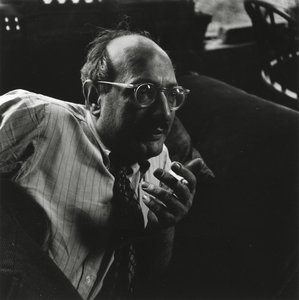
Portrait of Mark Rothko

Mark Rothko

1903–1970 · Latvia · 15

American Abstract Expressionist known for luminous, layered color field paintings of soft edges and large, rectangular blocks of color.

6. No.1, 13. Three, 17. Red and Orange, 24. AUTUMN, 27. Blue and Gray, 32. No. 5 No. 22, 36. Abstract painting, 40. Four Darks in Red, 44. No. 10, 51. Untitled (Seagram Mural), 62. No. 10 (Brown Black Sienna on Dark Wine, 64. Untitled 146, 72. Untitled 142, 76. Entrance to Subway, 91. Antigone

Portrait of Jackson Pollock

Jackson Pollock

1912–1956 · United States · 13

American Abstract Expressionist known for rhythmic drip techniques and all-over compositions, using sticks and knives to fling liquid paint.

1. Number 1, 1949, 3. Autumn Rhythm. Number 30, 1950, 8. One. Number 31, 1950, 15. Convergence, 20. Number 1A, 29. No. 5, 1948, 35. Number 6, 37. Number 3, 41. White Light, 60. Mural, 63. Saint, 65. Number 23, 1951, 73. Number 1

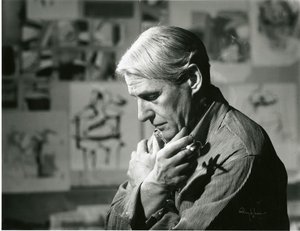
Portrait of Willem de Kooning

Willem de Kooning

1904–1997 · Netherlands · 13

Dutch-American Abstract Expressionist known for visceral, gestural depictions of the human form and thick, textured impasto layers.

2. Woman I, 7. Park Rosenberg, 22. Excavation, 31. Women Singing II, 38. The Visit, 47. Seated Woman, 54. A Tree in Naples, 58. Door to the River, 68. Untitled (verso: Untitled), 70. Merritt Parkway, 75. Marilyn Monroe, 78. Seated woman 2,1940, 92. Abstraction

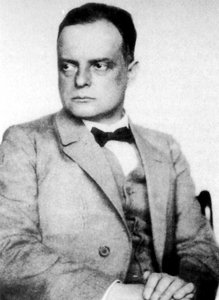
Portrait of Paul Klee

Paul Klee

1879–1940 · Switzerland · 7

Swiss-German Bauhaus artist of rhythmic abstraction, delicate watercolors, and musical forms, known for his scientific approach to color theory.

4. To Parnassus, 28. Fire evening, 46. Ancient Sound, Abstract on Black, 57. Curious to How Plants Grow, 69. Three Flowers, 74. Castle with Setting Sun, 77. Heroic Fiddling

Portrait of Clyfford Still

Clyfford Still

1904–1980 · United States · 5

American Abstract Expressionist known for monumental color fields and jagged, textured planes of paint applied with a palette knife.

18. PH-247, 39. PH-1007, 50. PH-160, 53. PH-223, 67. PH-235

Portrait of Jasper Johns

Jasper Johns

· United States · 4

American Neo-Dadaist using encaustic wax to transform familiar flags, targets, and maps into textured explorations of visual perception.

5. Map, 9. False Start, 14. False Start, 45. Numbers in Color

Portrait of Gerhard Richter

Gerhard Richter

· Germany · 3

German visual artist known for blurring photorealistic portraits and creating abstract works using a signature squeegee technique.

16. Abstract Painting 805-4, 52. Dark, 66. Wallace Bournes

+29more painters represented Top Abstract Expressionism Artists Ranked list

FAQ

Famous Abstract Expressionism paintings — FAQ

Point at a question for the answer.

Can I buy a reproduction of a Abstract Expressionism painting?

24 of these 100 paintings are available hand-painted in oil, from $187, and 24 as a canvas print, from $44.

What materials did Abstract Expressionism painters use?

Of the 100 paintings, 70 are in oil, 2 in tempera or tempera and oil, and 0 are frescoes painted on the wall. 1 are on wooden panels and 64 on canvas.

How is this ranking made?

Each painting is ranked by how widely it is known: the number of Wikipedia language editions with an article on it (Wikidata sitelinks), its place in our catalogue's manual ranking and the visits its page receives. The same painting catalogued several times counts once, and details, copies and studies are left out.

Order

24 paintings available as oil reproductions

24 of the 100 are in stock as hand-painted oil reproductions, from $187. Trade and volume orders welcome.

Number 1, 1949 by Jackson PollockWoman I by Willem de KooningAutumn Rhythm. Number 30, 1950 by Jackson PollockTo Parnassus by Paul KleeMap by Jasper Johns

Shop Abstract Expressionism paintings

Ranking method

Which paintings: all Abstract Expressionism paintings in our catalogue. In which order: the best-known first — counted by Wikipedia articles in different languages, our own ranking and page visits. Each painting once; no details, copies or studies.

Other movements

Paintings by period