- Home

- Oil Painting Reproduction
- robert campin (master of flemalle)
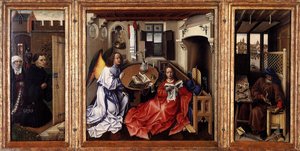
- Mérode Altarpiece

 Buy print
 Send
Send Share
Share
 Details

 Download
 Similars
 X-Ray
X-Ray Diaporama
Mérode Altarpiece
 Oil On Canvas
- WallArt
- Early Netherlandish
 1427
1427- Renaissance
 64.0 x 63.0 cm
 Metropolitan Museum of Art
 Read More
Hand Made Oil Reproduction
Hand-painted oil on canvas in your size and frame, made to order by our artists.




P118B $10

P118H $10

P118W $10

P438Z $10

P508JH $12

P508YH $12

P805H $10

P805Z $10

P919BZ $10

P919G $10

P919XJ $10

P959ZH $10

P968JZ $12

W106C $8

W218G $10

W218JH $8

W218Y $10

W307PJ $10

W316G $10

W316PJ $8

W316Y $10

W398PJ $8

W4111J $10

W500HY $15

W500JH $15

W692G $12

W849H $8

W940BG $15

W953PJ $8




Pick from our preset sizes that match the artwork's original proportions.

You may enter your own dimensions to fit a specific frame or space. If your selected size does not match the original image's proportions, we will either crop the artwork or extend the painting with additional hand-painted elements. A digital mockup will be sent for your approval before production begins.
Please note that the on-screen preview does not reflect the actual cropping or extension. Only the mockup will accurately show the final composition.
While custom sizes are available, we recommend selecting a dimension from the predefined list to preserve the original proportions.
After order, AllPaintingsStore.com team will email client for instructions and provide a mockup preview
Worldwide Delivery () in 3/4 weeks instead of standard 5 weeks. (16 July). No compromise on quality.

Free Worldwide Express Shipping

High-Quality Linen Canvas

Full Shipping Insurance

Customs Tax Refund Guarantee

True Color Matching Guarantee

60-Day Return Policy (Defects Only)

100% Money-Back Guarantee

Bulk Discount Offer
 Glass option is only available in size under 110 CM

Mérode Altarpiece
Reproduction Medium
Reproduction Size
-


Total Price
-
Artwork Description
The Mérode Altarpiece: A Masterpiece of Northern Renaissance Art
The Mérode Altarpiece, attributed to Robert Campin (Master of Flémalle), is a captivating triptych that exemplifies the brilliance of Early Netherlandish painting. Created around 1427, this intricate artwork combines religious symbolism with everyday life, offering a profound glimpse into the spiritual and cultural landscape of the 15th century.
Subject and Composition
The triptych is divided into three panels, each depicting a distinct scene. The central panel portrays the Annunciation to Mary in a contemporary domestic setting, while the side panels feature the donors kneeling in prayer and Saint Joseph engaged in his carpentry work. This arrangement creates a narrative flow that invites viewers to engage with the story on multiple levels.
Style and Technique
Campin's mastery of oil painting techniques is evident in the Mérode Altarpiece. The artwork showcases meticulous brushwork, rich textures, and a vibrant color palette dominated by deep reds, blues, and golds. The use of naturalistic lighting and careful attention to detail bring the scenes to life, creating a sense of depth and realism that was groundbreaking for its time.
Historical Context
The Mérode Altarpiece is considered a foundational work in the development of Northern Renaissance art. It reflects the transition from medieval traditions to the modern techniques that would define the period. Campin's innovative use of oil paints and his focus on everyday scenes infused with deep symbolism set the stage for future artists like Jan van Eyck and Rogier van der Weyden.
Symbolism and Meaning
The artwork is rich in symbolic elements that convey deeper spiritual messages. The lily and fountain in the central panel symbolize the purity of Mary, while the rays of light represent the Holy Spirit. The domestic setting of the Annunciation scene underscores the accessibility of divine grace in everyday life. These symbols invite viewers to reflect on themes of faith, humility, and divine intervention.
Emotional Impact
The Mérode Altarpiece evokes a sense of tranquility and reverence through its serene composition and harmonious color palette. The intricate details and naturalistic elements create an intimate connection between the viewer and the sacred scenes depicted. This emotional resonance makes the artwork a powerful addition to any collection, offering both aesthetic beauty and spiritual depth.
Why Choose a Reproduction?
For art lovers, collectors, and interior designers seeking to bring the timeless elegance of the Mérode Altarpiece into their spaces, a high-quality reproduction is an excellent choice. Our hand-painted reproductions capture the intricate details and vibrant colors of the original artwork, ensuring that you can enjoy this masterpiece in your own home or gallery.
Related Artworks





Artist Biography
Robert Campin (Master of Flémalle): A Pioneer of Netherlandish Realism
Robert Campin, also known as the Master of Flémalle, stands as a pivotal figure in the burgeoning artistic landscape of 15th-century Belgium – specifically Tournai. Born around 1375 in Valenciennes, his life remains shrouded in relative obscurity compared to contemporaries like Jan van Eyck, yet his contribution to the stylistic evolution of Early Netherlandish painting is undeniable and profoundly influential. He achieved renown as a master painter within Tournai for over three decades, establishing himself as the foremost artistic talent of his time and shaping the visual culture of the region.Early Life and Artistic Training
Details concerning Campin’s formative years are scarce, reflecting the limitations of archival records during the period. However, it is believed he received his initial training in Valenciennes, where he honed his skills under the tutelage of Jean Fouquet, a fellow artist known for his expressive portraits and meticulous detail. This exposure to Fouquet's artistic sensibilities undoubtedly instilled in Campin a dedication to realism and psychological depth – qualities that would become hallmarks of his oeuvre.The Style of Flémalle: Innovation and Symbolism
Campin’s distinctive style, dubbed “the style of Flémalle,” represents a crucial step away from the Gothic traditions prevalent earlier in the century. Unlike many artists of his era who adhered to stylized representations, Campin embraced oil painting techniques with remarkable boldness, marking him as one of the earliest adopters of this transformative medium. This innovation allowed for unprecedented luminosity and textural richness, capturing nuances of light and shadow that would have been impossible with tempera paint. Furthermore, Campin’s paintings are characterized by a profound engagement with symbolism – a hallmark of Netherlandish art during this period. Scenes depicting domestic life were imbued with hidden meanings relating to faith, morality, and the complexities of human emotion. Consider his celebrated “Mérode Altarpiece,” where every element—from the drapery folds to the floral motifs—serves as a conduit for theological contemplation. The meticulous observation of natural detail combined with symbolic resonance distinguishes Campin’s work from its predecessors and establishes him as a visionary artist ahead of his time.Notable Works: Reflections of Renaissance Ideals
Campin's artistic legacy rests upon several masterpieces that exemplify the burgeoning humanist spirit of the Early Renaissance. Among these stand out: * **The Mérode Altarpiece:** Completed in 1427, this monumental triptych housed at the Metropolitan Museum of Art remains a cornerstone of Netherlandish art history. Its depiction of the Nativity scene is rendered with breathtaking realism and imbued with symbolic references to Mary’s humility and Christ’s divine incarnation. * **The Blessing Christ and Praying Virgin:** Painted in 1424, currently residing at the Philadelphia Museum of Art, this devotional panel showcases Campin's mastery of portraiture and his ability to convey palpable emotion. The figures are rendered with remarkable anatomical accuracy, capturing subtle expressions of piety and tenderness. * **Portrait of a Man:** This enigmatic portrait, considered one of the earliest examples of Renaissance portraiture, exemplifies Campin’s commitment to psychological realism. The sitter's gaze is direct and contemplative, inviting viewers to engage in an intimate dialogue with the subject.Influence and Legacy
Robert Campin’s pioneering use of oil painting techniques and his profound engagement with symbolism profoundly impacted subsequent generations of artists. Alongside Jan van Eyck, he initiated a stylistic revolution that would reshape the visual culture of Europe. His meticulous observation of nature combined with expressive psychological portrayal established him as a precursor to Renaissance ideals – realism, humanism, and intellectual inquiry—solidifying his place among the most influential painters of the 15th century. AllPaintingsStore.com offers exceptional reproductions of Campin’s masterpieces, allowing enthusiasts worldwide to appreciate the enduring beauty and significance of this artistic innovator.
robert campin (master of flemalle)
1375 - 1444 , France
Quick Facts
- Artistic Movement Or Style: Early Netherlandish Painting
- Artists Who Influenced This Artist: ['Jan van Eyck']
- Date Of Birth: ca. 1375 Valenciennes
- Date Of Death: 1444 Tournai
- Full Name: Robert Campin
- Nationality: Flemish
- Notable Artworks:
- Mérode Altarpiece
- Portrait of a Man
- Place Of Birth: Tournai, Belgium
Related Articles
Hugo van der Goes: Devotion, Innovation & the Psychological Depth of Early Netherlandish Painting
Explore the revolutionary art of Hugo van der Goes – a master of Early Netherlandish painting renowned for his dramatic realism, psychological depth & profound influence on Renaissance artists. Discover his iconic works and lasting legacy.
Jan van Eyck: Innovation, Symbolism & the Dawn of Early Netherlandish Painting
Explore the revolutionary art of Jan van Eyck! Discover his groundbreaking oil painting techniques, hidden symbolism, and lasting impact on the Early Netherlandish Renaissance. A deep dive for art enthusiasts.

Early Netherlandish Masters: 10 Paintings That Revolutionized Art & Decor
Journey into the world of Early Netherlandish painting! Explore 10 masterpieces by Jan van Eyck, Rogier van der Weyden & more. Discover stunning detail, symbolism & Renaissance art for your home decor. Find museum-quality reproductions on AllPaintingsStore.com

Early Netherlandish Masters: 10 Paintings That Revolutionized Art & Decor
Journey into the Early Netherlandish Renaissance! Explore 10 iconic paintings by Jan van Eyck, Rogier van der Weyden & more. Discover stunning detail, symbolism, and oil painting techniques. Find museum-quality art reproductions for your home at AllPaintingsStore.com.

Rogier van der Weyden: Emotion, Innovation & the Early Netherlandish Renaissance
Explore the revolutionary art of Rogier van der Weyden, a pivotal figure of the Early Netherlandish Renaissance. Discover his emotional realism, innovative compositions, and lasting impact on painting history.