Money-Back Guarantee · 100 days Free Worldwide Delivery
449,564artworks 30,613artists 4,658museums 32languages
Catalogue entry

Forest scene

1980. Painting.

Fig. 1. Roy Lichtenstein, Forest scene, 1980. Shown as the reproduction you are specifying: , .

§ 1Catalogue data

§ 2Abstract

Collectible Description

Experience the bold vibrancy of Roy Lichtenstein’s iconic Pop Art style! This captivating forest scene portrays horses and figures amidst lush greenery, reflecting a playful reimagining of nature through Lichtenstein's signature Ben-Day dots – explore this masterpiece and bring art home.

Artist Biography

Roy Lichtenstein (1923-1997): Pioneering Pop Artist famed for Ben-Day dots, comic strip inspiration & bold commentary on consumer culture. Explore 'Whaam!' & more.

§ 3Commentary

A Bold Encounter with Nature: The Pop Art Vision of Roy Lichtenstein

In the vast landscape of twentieth-century art, few works capture the tension between commercial aesthetics and natural majesty quite like Roy Lichtenstein’s “Forest Scene.” Created in 1980, this masterpiece serves as a striking testament to the transformative power of Pop Art—a movement that deliberately rejected academic conventions to embrace the vibrant, often overlooked imagery of popular culture. Rather than offering a traditional, romanticized view of the woods, Lichtenstein presents an audacious reimagining of the natural world through his signature visual language. It is not merely a depiction of trees and wildlife; it is a profound intellectual engagement with the way we consume images in a modern, media-saturated age.

The painting invites the viewer into a meticulously constructed reality where the organic meets the industrial. Within this stylized woodland, horses roam through a landscape defined by bold outlines and flat planes of color. The composition is masterfully balanced, featuring figures—a man near the center and others positioned toward the periphery—that interact with the environment in a way that feels both staged and cinematic. This deliberate arrangement creates a sense of stability and rhythm, guiding the eye across the canvas through a symphony of blue, red, and white. For the collector or interior designer, this piece offers a sophisticated focal point, bringing a structured yet energetic presence to any contemporary space.

The Mechanics of Modernity: Technique and Aesthetic

To understand the emotional resonance of “Forest Scene,” one must look closely at Lichtenstein’s revolutionary technique. Heavily influenced by the Ben-Day printing processes found in comic strips and commercial advertising, the artist utilized bold black outlines and a palette of primary hues to flatten perspective. This method deliberately eschews traditional shading and blending, opting instead for a graphic clarity that prioritizes visual impact over photographic accuracy. The use of halftone dots and solid blocks of color creates an illusion of depth without sacrificing the essential flatness characteristic of the Pop Art movement.

This technique serves a deeper symbolic purpose. By reducing the complexity of a forest to its most basic geometric and chromatic components, Lichtenstein strips away the sentimentality often associated with landscape painting. The result is a work that feels incredibly modern and crisp. The juxtaposition of vibrant reds against cool blues creates a visual vibration that captures the viewer's attention instantly. For those seeking to decorate a high-end interior, this artwork provides a perfect blend of nostalgic pop culture references and avant-garde sophistication, making it an ideal choice for spaces that celebrate bold, decisive design.

A Legacy of Innovation

Lichtenstein’s journey from his formal training at the Art Students League to becoming a global icon of the Pop movement is etched into every stroke of this 1980 work. His ability to transform commonplace motifs—the simple shapes of bushes, grass, and animals—into compelling artistic statements allows “Forest Scene” to transcend its subject matter. It stands as a bridge between the high art of the gallery and the low art of the printing press, challenging us to find beauty in the simplified, the mass-produced, and the graphic.

Owning a reproduction of such a significant work is an opportunity to invite a piece of art history into one's home. It is more than a decoration; it is a conversation starter that explores themes of perception, media, and the enduring allure of the natural world reimagined through a human-made lens. Whether placed in a minimalist gallery setting or a vibrant living space, “Forest Scene” continues to pulse with the energy of its era, offering an eternal sense of discovery for the discerning art lover.

Questions & Answers

Which period of Roy Lichtenstein's career does "Forest scene" belong to?

Within Roy Lichtenstein's career, "Forest scene" falls in the Mature. The phase helps compare it with the artist's other works.

What is the luminance of "Forest scene" by Roy Lichtenstein?

The luminance recorded for "Forest scene" by Roy Lichtenstein is bright balance.

Can the image of "Forest scene" by Roy Lichtenstein be freely reproduced?

Regarding copyright, "Forest scene" is still protected by copyright.
§ 4The artist

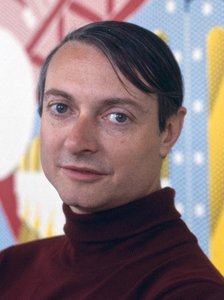
Roy Lichtenstein

Roy Lichtenstein

1923 - 1997, United States of America

Quick facts about Roy Lichtenstein

  • Artistic Movement Or Style: Pop Art
  • Artists Or Movements Influenced By This Artist:
    • Pop Art
    • Graphic designers
    • Illustrators
  • Artists Who Influenced This Artist:
    • Reginald Marsh
    • Allan Kaprow
    • Picasso
    • Monet
    • Matisse
  • Full Name: Roy Fox Lichtenstein
  • Nationality: American
  • Notable Artworks:
    • Whaam!
    • Drowning Girl
    • Oh, Jeff…I Love You, Too…But…
    • Masterpiece
    • Look Mickey
  • Place Of Birth: Manhattan, United States of America
  • Date Of Birth: 1923
  • Date Of Death: 1997

Artist Biography

The Genesis of a Pop Visionary

Roy Fox Lichtenstein, born in the vibrant metropolis of New York City on October 27, 1923, indelibly altered the landscape of twentieth-century art. Emerging as a pivotal figure within the Pop Art movement, Lichtenstein didn’t simply reflect his era; he actively interrogated it, transforming commonplace imagery into compelling artistic statements. His upbringing in an upper-middle-class Jewish family fostered both a cultural awareness and an early artistic inclination. Childhood exposure to museums and concerts, coupled with a deep appreciation for jazz music, laid the groundwork for a creative spirit that would challenge conventional notions of fine art. Though initially drawn to realistic drawing and painting during his formative years, Lichtenstein’s formal training commenced at the Art Students League in 1939 under Reginald Marsh, followed by studies at Ohio State University – interrupted briefly by wartime service in the Army. These experiences provided a robust technical foundation that would later be brilliantly re-contextualized through the lens of mass culture and commercial aesthetics. The seeds of his signature style weren’t sown within the hallowed halls of artistic tradition but rather in the often-overlooked world of everyday imagery, particularly comic books and advertising.

From Abstraction to Appropriation: A Pivotal Shift

Lichtenstein's early work demonstrated a clear engagement with Abstract Expressionism, mirroring the dominant aesthetic trends of the post-war period. However, this phase proved transitional, a stepping stone towards his revolutionary style. A crucial moment arrived during his tenure at Rutgers University where he encountered Allan Kaprow, whose influence reignited Lichtenstein’s interest in proto-pop imagery. This encounter sparked a critical shift in his artistic trajectory, leading him to question the established boundaries between “high” and “low” art. He began looking beyond the subjective expression of Abstract Expressionism towards the objective language of popular culture – specifically, comic books and advertising. The year 1961 marked a turning point with *Look Mickey*, a work that boldly appropriated characters from Disney comics, signaling the beginning of his signature style. This wasn’t mere imitation; it was an act of artistic re-evaluation, elevating commonplace imagery to the status of fine art. He didn't simply copy comic strips; he meticulously recreated them using techniques mimicking commercial printing processes, a deliberate blurring of the lines between original artwork and mass production. This appropriation wasn’t about celebrating consumerism uncritically but rather examining its pervasive influence on American society and challenging traditional artistic hierarchies.

The Language of Ben-Day Dots and Bold Lines

Lichtenstein's artistic vocabulary is instantly recognizable: bold, primary colors, thick black outlines, and most famously, Ben-Day dots – a technique borrowed directly from the mechanical reproduction of comic books. These dots weren’t merely decorative; they were integral to his conceptual framework, representing the very process of mass production and challenging the traditional emphasis on the artist's hand. His paintings often enlarged details from comic strips to monumental scale, forcing viewers to confront the aesthetic qualities of an art form typically dismissed as trivial. Works like *Whaam!* (1963), *Drowning Girl* (1963), and *Oh, Jeff…I Love You, Too…But…* (1964) became iconic representations of Pop Art, capturing the anxieties and desires of a rapidly changing consumer culture. These weren’t simply depictions of comic book scenes; they were commentaries on themes of war, romance, and societal expectations, filtered through the visual language of mass media. He aimed to strip away any pretense of artistic subjectivity, presenting his work as objective reflections of American society – a mirror held up to its own manufactured reality. The deliberate flatness and lack of painterly gesture further emphasized this detachment, mimicking the impersonal nature of commercial printing.

Legacy and Lasting Impact

Roy Lichtenstein’s influence extends far beyond the realm of painting. His innovative use of commercial techniques and appropriation paved the way for new generations of artists exploring themes of consumerism, media saturation, and cultural identity. The sale of *Masterpiece* in 2017 for $165 million solidified his position as one of the most commercially successful American artists of all time, but his legacy is not solely defined by monetary value. He challenged traditional notions of artistic authorship and originality, forcing a re-evaluation of what constitutes “art” itself. His work continues to inspire graphic designers, illustrators, and visual artists across various disciplines.
  • Major Achievements: Pioneered Pop Art style; achieved international recognition with groundbreaking exhibitions.
  • Notable Works: *Whaam!*, *Drowning Girl*, *Oh, Jeff…I Love You, Too…But…*, *Masterpiece*.
  • Teaching Career: Influenced aspiring artists at SUNY Oswego and Rutgers University.
Lichtenstein passed away on September 29, 1997, leaving behind a body of work that remains as relevant and provocative today as it was during the height of the Pop Art movement. His art serves as a powerful reminder of the pervasive influence of mass media and its ability to shape our perceptions of reality. He didn’t just reflect his time; he actively interrogated it, leaving an indelible mark on the history of 20th-century art and continuing to inspire critical dialogue about the relationship between art, culture, and commerce. His legacy is a testament to the power of appropriation, the beauty of the commonplace, and the enduring impact of a truly visionary artist.

§ 5Comparanda

§ 6Questions

Quick Facts

  • Subject or theme: Horses and landscape
  • Movement: Pop Art
  • Title: Forest scene
  • Year: 1980
  • Location: Private Collection

§ 7Cite this entry

AllPaintingsStore.com, “Roy Lichtenstein, Forest scene (1980)”, https://allpaintingsstore.com/en/art/roy-lichtenstein-forest-scene-6WHLQX-en/ArtistReproduction/ (accessed 11 October 2026).

§ 8The reproduction

Hand Made Oil Reproduction

Hand-painted oil on canvas in your size and frame, made to order by our artists. ( Switch to Print Switch to Digital Image)

It is specified on the order sheet in the margin; the present state of that sheet reads as follows.

Forest scene

Reproduction Medium

Reproduction Size

-

Elite Senior Artist

More detail, finesse, and extra production time

-

Reproduction Frame

-

-

For artworks or reproductions larger than 105 cm (approximately 41 inches) on any side, the frame will be shipped as a kit, disassembled. This method ensures safe delivery and prevents damage during transport.

Professional assembly required - this is not a DIY product.
The kit must be assembled and the canvas stretched by an experienced professional framer, using wood glue (not supplied), a canvas stretching plier and clamps to hold the bars square while the glue dries. Incorrect assembly or uneven canvas tension can permanently damage the artwork and is not covered by our warranty.

  • All solid wood bars are included, precisely cut to size.

  • Assembled with the screws provided, plus wood glue for the corner joints, which is not supplied and must be sourced by your framer.

  • Professional tools are required and not included: a canvas stretching plier (tensioner) and clamps to hold the bars square while the glue dries.

Important:
The corner joints require wood glue, the bars must be held with clamps until the glue is fully dry, and tightening the canvas on the assembled frame requires a canvas stretching plier. None of these are included in the kit. Please arrange an experienced professional framer before ordering this size.

Nameplate

-

-

Protective Varnish

Glossy Varnish (enhances colors, protects against light/moisture)

-

Customize My Artwork

Examples of what can be changed: Replace face with customer photo; Add pet (e.g., replace cat with dog); Include hidden message in background; Change background landscape or elements.

-

Urgent

Worldwide Delivery () in 3/4 weeks instead of standard 5 weeks. (8 November). No compromise on quality.

-

Express Shipping

Worldwide Delivery () in 5 weeks. (15 November).

Included

Total Price

$ 258

Included with every order

  • Free Worldwide Express Shipping
  • High-Quality Linen Canvas
  • Full Shipping Insurance
  • Customs Tax Refund Guarantee
  • True Color Matching Guarantee
  • 100-Day Return Policy (Defects Only)
  • 100% Money-Back Guarantee
  • Bulk Discount Offer
Order sheet