


 Preview
 Send
Send Share
Share
 Details
 Guide
Guide

 Download
 Similars
 X-Ray
X-Ray Diaporama
 Q&A
Q&A Stats
StatsThe Babylonian, Libyan

 Read More
Giclée / Art Print
Museum-quality giclée or canvas print with fast production and flexible finish options. ( Buy Hand Made Painting Switch to Digital Image)




P118B $10

P118H $10

P118W $10

P438Z $10

P508JH $12

P508YH $12

P805H $10

P805Z $10

P919BZ $10

P919G $10

P919XJ $10

P959ZH $10

P968JZ $12

W106C $8

W218G $10

W218JH $8

W218Y $10

W307PJ $10

W316G $10

W316PJ $8

W316Y $10

W398PJ $8

W4111J $10

W500HY $15

W500JH $15

W692G $12

W849H $8

W940BG $15

W953PJ $8




Pick from our preset sizes that match the artwork's original proportions.

Type the width and the height you need, to fit your frame or your wall. A print can only be cut, never made bigger than the picture, so a size with a different shape loses a part of the image. We send you a digital mockup to approve before we print anything. The picture shown on this page does not show the real cut — only the mockup does.
Worldwide Delivery () in 2 weeks instead of standard 4/5 weeks. (31 October)

Free Worldwide Express Shipping

High-Quality Linen Canvas

Full Shipping Insurance

Customs Tax Refund Guarantee

True Color Matching Guarantee

100-Day Return Policy (Defects Only)

100% Money-Back Guarantee

Bulk Discount Offer
 Glass option is only available in size under 110 CM

The Babylonian, Libyan
Giclée / Art Print
Reproduction Size
-


Total Price
$ 65
A Renaissance Enigma: Decoding Botticelli’s ‘The Babylonian, Libyan’
This captivating painting by Sandro Botticelli presents a fascinating tableau of five elegantly dressed women posed before a series of classical columns. While the precise narrative remains open to interpretation – a hallmark of Botticelli's more enigmatic works – *The Babylonian, Libyan* offers a compelling glimpse into Renaissance ideals of beauty, mythology, and perhaps even philosophical contemplation.Subject & Composition
The composition is deliberately arranged, yet feels dynamic rather than static. Each woman occupies her own space, engaged in distinct actions or states of being. From the figure seemingly caught mid-dance with arms raised, to another delicately holding a cup – possibly indulging in wine or water – Botticelli imbues each character with individuality. The positioning against and alongside the columns creates depth and frames the figures, drawing the viewer’s eye across the canvas. The varying heights of the columns themselves add visual interest and subtly disrupt any sense of rigid formality.Style & Technique
Botticelli's signature style is immediately recognizable here: a graceful linearity that defines both form and drapery. He masterfully employs flowing lines to depict the women’s bodies and clothing, creating an ethereal quality. The delicate modeling of faces and hands reveals his skill in capturing human anatomy and expression. While details regarding the painting technique are limited due to its unknown size and current condition, it is likely executed with tempera on panel – a common medium for Botticelli during this period. The emphasis on contour over dramatic chiaroscuro (light-dark contrast) aligns with the Early Renaissance aesthetic.Historical Context & Symbolism
The title, *The Babylonian, Libyan*, is intriguing and suggests a possible connection to ancient mythology or geographical locations. It’s speculated that Botticelli may have been referencing figures from classical literature or allegorical representations of different cultures. The inclusion of columns – architectural elements strongly associated with antiquity – further reinforces this link to the classical world. During the Renaissance, there was a renewed interest in Greek and Roman art and philosophy. Botticelli’s patrons, including the Medici family, were avid collectors of antiquities, influencing his artistic choices. The women themselves could represent virtues, goddesses, or even personifications of different regions.Emotional Impact & Interpretation
The painting evokes a sense of quiet contemplation and refined elegance. While not overtly dramatic, there’s an underlying current of mystery and intrigue. The gazes of the women – some directed outwards, others inward – invite viewers to project their own interpretations onto the scene. The overall mood is one of serene beauty, tempered by a subtle sense of melancholy or longing. It's a work that rewards close observation and encourages ongoing dialogue about its meaning.For Collectors & Designers
*The Babylonian, Libyan* represents a sophisticated addition to any art collection. Its refined aesthetic and historical significance make it a compelling investment. For interior designers, this painting offers a timeless elegance that complements both traditional and contemporary spaces.- Its muted color palette lends itself well to various décor schemes.
- The classical motifs resonate with sophisticated design sensibilities.
- A high-quality reproduction would serve as a focal point in a living room, study, or bedroom.
Questions & Answers
What color intensity does "The Babylonian, Libyan" by Sandro Botticelli have?
The colors in "The Babylonian, Libyan" by Sandro Botticelli have a balanced intensity.
Is Sandro Botticelli, creator of "The Babylonian, Libyan", known under other names?
Sandro Botticelli appears under the alternate names Alessandro di Mariano Filipepi.
What is the perceived brightness of "The Babylonian, Libyan" by Sandro Botticelli?
Overall, "The Babylonian, Libyan" is recorded as balanced. Perceived brightness describes how light or dark the work appears.
Related Artworks


Artist Biography
Early Life and Florentine Beginnings
Sandro Botticelli, born Alessandro di Mariano di Vanni Filipepi around 1445 in Florence, Italy, emerged during a period of extraordinary cultural ferment—the Early Renaissance. His life was deeply rooted in the city’s artistic and social fabric; he never strayed far from his neighborhood of Ognissanti, a testament to both familial ties and the vibrant creative ecosystem that nurtured him. His father, Mariano Filipepi, initially a goldsmith and later a tanner, provided an early exposure to craftsmanship and meticulous detail—qualities that would profoundly influence Botticelli’s artistic approach. Though initial reports suggested training as a goldsmith, he soon found his calling under the tutelage of Fra Filippo Lippi, a leading painter of the time. This apprenticeship proved pivotal, immersing him in the techniques and aesthetics of the Florentine school while also connecting him to influential patrons like the Medici family.
A Style Defined by Grace and Myth
Botticelli’s artistic style is instantly recognizable for its lyrical beauty, characterized by elegant linearity, flowing contours, and a delicate use of color. He masterfully bridged the gap between the late Gothic traditions and the burgeoning Renaissance aesthetic, absorbing influences from masters like Fra Angelico and Paolo Uccello yet forging a uniquely personal vision. His figures possess an ethereal quality, often depicted with elongated proportions and graceful poses that convey both serenity and a subtle melancholy. A defining feature of his work is the frequent incorporation of classical mythology—a reflection of the humanist interests sweeping through Renaissance Florence. He didn’t merely illustrate these ancient tales; he imbued them with new layers of meaning, exploring themes of love, beauty, and spiritual longing.
Botticelli's technique was innovative for its time. He often employed a silverpoint drawing method underpainting his canvases, contributing to the luminosity and delicate detail seen in his finished works. His use of tempera paint allowed for precise rendering and vibrant colors, while his later experiments with oil paints broadened his expressive possibilities.
Iconic Masterpieces and Artistic Development
Botticelli’s legacy rests upon a handful of iconic paintings that continue to captivate audiences centuries later. The Birth of Venus, completed around 1486, stands as perhaps his most celebrated work—an allegorical depiction of the goddess emerging from a seashell, embodying Renaissance ideals of beauty and harmony. Its graceful composition, delicate color palette, and evocative symbolism have made it an enduring symbol of the era. Equally renowned is Primavera, created around 1482, a complex and enigmatic painting celebrating spring and love, populated with symbolic figures drawn from classical mythology. These works showcase Botticelli’s mastery of composition, his ability to create atmospheric depth, and his profound understanding of human emotion.
His artistic journey unfolded in distinct phases. The early 1470s saw him focusing on religious subjects, honing his technical skills and establishing a reputation for skillful execution. The 1480s marked the peak of his creative powers, with the creation of his most famous mythological paintings. However, the late 1490s witnessed a shift in his style, influenced by the fervent preaching of Girolamo Savonarola—a Dominican friar who condemned what he saw as the decadence and moral corruption of Florence. This period resulted in more austere and emotionally charged works, reflecting a growing spiritual intensity.
Legacy and Rediscovery
Following his death in 1510, Botticelli’s reputation gradually faded into obscurity. For nearly three centuries, his work was largely forgotten, overshadowed by the achievements of High Renaissance masters like Leonardo da Vinci and Michelangelo. However, a remarkable rediscovery occurred in the late 19th century with the rise of the Pre-Raphaelite Brotherhood—a group of English artists who rejected academic conventions and sought inspiration in the art of the early Italian Renaissance. They were captivated by Botticelli’s linear grace, vibrant colors, and poetic sensibility, recognizing him as a kindred spirit.
This renewed appreciation sparked a widespread reassessment of his work, establishing him as one of the most important artists of the Early Renaissance. Today, Botticelli is celebrated for his unique artistic vision, his masterful technique, and his enduring ability to evoke beauty, emotion, and spiritual contemplation. His influence can be seen in subsequent generations of artists who have sought to capture the same sense of grace and elegance in their own work. He remains a symbol of Florentine artistic achievement and a testament to the power of Renaissance humanism.
Major Works
- The Birth of Venus (c. 1486): An iconic depiction embodying Renaissance ideals of beauty.
- Primavera (c. 1482): A complex allegorical painting celebrating spring and love.
- Adoration of the Magi (1475-1476): Demonstrates early mastery of composition and perspective.
- Mystic Nativity (1501): Reflects a shift towards spiritual themes in his later career.
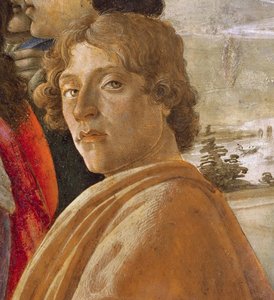
Sandro Botticelli
1445 - 1510 , Italy
Quick Facts
- Artistic Movement Or Style: Early Renaissance
- Artists Or Movements Influenced By This Artist: ['Pre-Raphaelite Brotherhood']
- Artists Who Influenced This Artist:
- Fra Filippo Lippi
- Fra Angelico
- Paolo Uccello
- Full Name: Alessandro di Mariano Filipepi
- Notable Artworks:
- The Birth of Venus
- Primavera
- Adoration of the Magi
- Mystic Nativity
- Place Of Birth: Florence, Italy
- Date Of Birth: 1445
- Date Of Death: 1510
Related Articles

The Enduring Muse: Women as Subject & Symbol in Art History
Explore the rich history of women in art – from iconic muses to groundbreaking artists. Discover feminist movements, global perspectives & reclaim female narratives with AllPaintingsStore.

The Enduring Muse: Women as Subject & Symbol in Art History
Explore the rich history of women in art – from archetypal representations to contemporary voices challenging norms. Discover iconic artists & movements, and learn about reclaiming female narratives through painting and beyond.
Portrayals of Power & Perception: A Historical Survey of Women in Art
Explore the rich history of women in art – from iconic muses to groundbreaking artists. Discover feminist movements & reclaim female narratives with AllPaintingsStore. Expert insights for discerning collectors.

25 Masterpieces by Sandro Botticelli: The Ultimate Guide to the Renaissance Icon
Explore 25 iconic Sandro Botticelli masterpieces of the Renaissance. Discover the full collection online at AllPaintingsStore.com.
Early Renaissance Masters: 10 Paintings That Changed Art History |
Journey through the Early Renaissance! Explore 10 iconic paintings by Botticelli, Leonardo da Vinci & Michelangelo. Discover their stories, techniques & lasting impact. Find museum-quality art reproductions and elevate your home decor with .


