- Home

- Oil Painting Reproduction
- walter william ouless
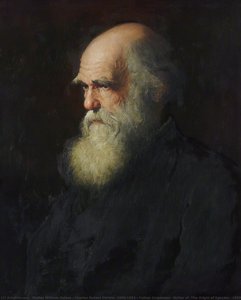
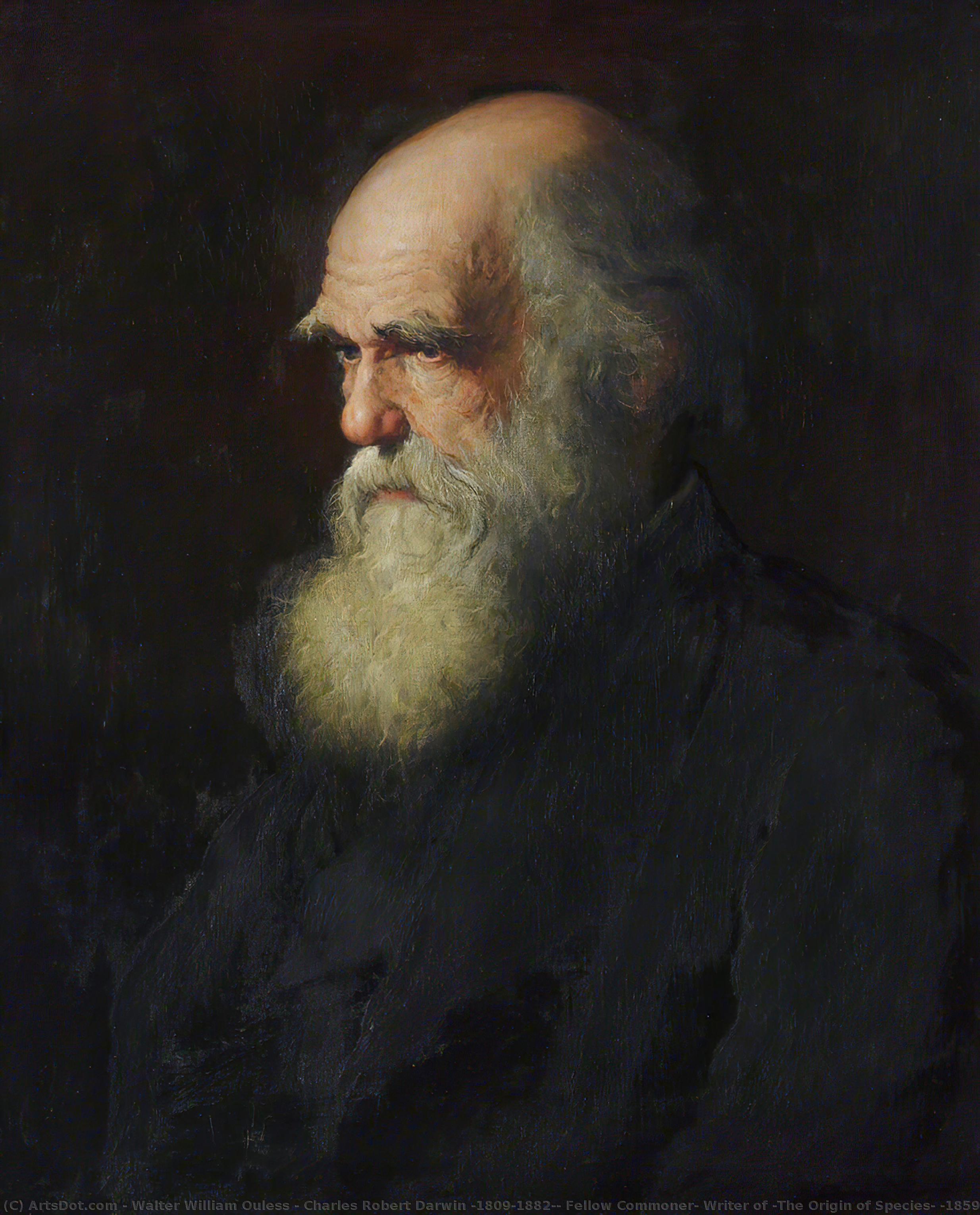
- Charles Robert Darwin (1809–1882), Fellow Commoner, Writer of 'The Origin of Species' (1859) and 'The Descent of Man' (1871)
 Buy print
 Send
Send Share
Share
 Details

 Download
 Similars
 X-Ray
X-Ray Diaporama
Charles Robert Darwin (1809–1882), Fellow Commoner, Writer of 'The Origin of Species' (1859) and 'The Descent of Man' (1871)
 Oil On Canvas
- WallArt
- Academic Realism
 1883
1883 65.0 x 55.0 cm
 Christ's College
 Read More
Hand Made Oil Reproduction
Hand-painted oil on canvas in your size and frame, made to order by our artists.




P118B $10

P118H $10

P118W $10

P438Z $10

P508JH $12

P508YH $12

P805H $10

P805Z $10

P919BZ $10

P919G $10

P919XJ $10

P959ZH $10

P968JZ $12

W106C $8

W218G $10

W218JH $8

W218Y $10

W307PJ $10

W316G $10

W316PJ $8

W316Y $10

W398PJ $8

W4111J $10

W500HY $15

W500JH $15

W692G $12

W849H $8

W940BG $15

W953PJ $8




Pick from our preset sizes that match the artwork's original proportions.

You may enter your own dimensions to fit a specific frame or space. If your selected size does not match the original image's proportions, we will either crop the artwork or extend the painting with additional hand-painted elements. A digital mockup will be sent for your approval before production begins.
Please note that the on-screen preview does not reflect the actual cropping or extension. Only the mockup will accurately show the final composition.
While custom sizes are available, we recommend selecting a dimension from the predefined list to preserve the original proportions.
After order, AllPaintingsStore.com team will email client for instructions and provide a mockup preview
Worldwide Delivery () in 3/4 weeks instead of standard 5 weeks. (16 July). No compromise on quality.

Free Worldwide Express Shipping

High-Quality Linen Canvas

Full Shipping Insurance

Customs Tax Refund Guarantee

True Color Matching Guarantee

60-Day Return Policy (Defects Only)

100% Money-Back Guarantee

Bulk Discount Offer
 Glass option is only available in size under 110 CM

Charles Robert Darwin (1809–1882), Fellow Commoner, Writer of 'The Origin of Species' (1859) and 'The Descent of Man' (1871)
Reproduction Medium
Reproduction Size
-


Total Price
-
Artwork Description
A Portrait of Scientific Genius: Walter William Ouless’s Representation of Charles Darwin
Walter William Ouless's depiction of Charles Robert Darwin stands as a testament to the Victorian fascination with scientific inquiry and the burgeoning movement towards capturing intellectual portraits. Executed in 1883, this oil on canvas – measuring precisely 65 x 55 cm – resides at Christ’s College (Cambridge, United Kingdom), offering viewers an intimate glimpse into a pivotal figure of the nineteenth century. The painting transcends mere likeness; it embodies Ouless's commitment to academic realism and his masterful manipulation of chiaroscuro lighting to convey Darwin’s profound seriousness and contemplative spirit.The Artist’s Vision: Gauguin’s Influence
Though Walter William Ouless himself wasn’t as globally celebrated as Paul Gauguin, he nonetheless operated within a milieu profoundly impacted by Gauguin's revolutionary approach to art – an artist who similarly sought refuge from societal conventions in pursuit of artistic authenticity. Like Gauguin, Ouless prioritized capturing the essence of his subject’s inner life rather than simply presenting a superficial exterior. This dedication to psychological depth is evident in the gaze of Darwin himself, which radiates intelligence and unwavering focus.Subject Matter: Darwin – The Architect of Evolutionary Thought
Charles Robert Darwin, born in Shrewsbury in 1809, irrevocably altered our understanding of biology with his groundbreaking theories on natural selection and descent with modification. His magnum opus, ‘The Origin of Species,’ published in 1859, challenged prevailing dogma and established him as the father of modern evolutionary science. Ouless’s portrait skillfully captures this intellectual stature, portraying Darwin not merely as a scientist but as a man wrestling with complex ideas – a figure consumed by observation and driven by an unyielding desire to comprehend the natural world.Technique and Style: Mastering Chiaroscuro
Ouless's technique exemplifies the stylistic conventions of his time—a deliberate embrace of academic realism characterized by meticulous anatomical accuracy and painstaking detail. The artist skillfully employs chiaroscuro lighting, a dramatic interplay between light and shadow, to sculpt Darwin’s form and imbue the canvas with palpable depth. Shadows drape across his face and clothing, highlighting wrinkles and emphasizing the contours of his features, creating an atmosphere of solemn contemplation. Brushstrokes are layered and textured, contributing to a rich surface finish that reflects the artist's meticulous attention to craftsmanship.Symbolism and Emotional Resonance
Beyond its technical prowess, the portrait carries significant symbolic weight. The dark background serves as a visual anchor, drawing attention to Darwin’s face and reinforcing his intellectual dominance. Furthermore, Ouless’s portrayal speaks to the broader anxieties of Victorian society regarding scientific progress – capturing not only Darwin's physical appearance but also his unwavering conviction in the power of reason and observation. Ultimately, this artwork invites contemplation on the legacy of Darwinian thought and its enduring influence on our understanding of life itself.Related Artworks



Artist Biography
Paul Gauguin: A Savage Martyr of Art
Paul Gauguin, born in Paris in 1848 and tragically dying in the Marquesas Islands in 1903, remains one of the most enigmatic and influential figures in modern art. More than just a painter, he cultivated a complex persona – a “wolfish wild man” juxtaposed with a sensitive martyr dedicated to capturing the essence of primal experience. His life was a relentless pursuit of escape, a rejection of bourgeois society, and an unwavering commitment to forging a new path for artistic expression. Gauguin’s journey took him from the bustling streets of Paris to the remote islands of Tahiti and eventually to the volcanic shores of Hiva Oa, each location profoundly shaping his art and his identity.Early Life and Artistic Beginnings
Gauguin's early years were marked by a restless spirit and a nomadic upbringing. Descended from Peruvian nobility through his mother’s side, he spent his childhood in Lima, Peru, before returning to France with his family at the age of seven. This peripatetic existence instilled within him a deep-seated need for travel and adventure – a yearning that would define much of his life. He initially pursued a career as a stockbroker, but found little satisfaction in the rigid structure of commerce. His artistic inclinations began to blossom through the influence of Camille Pissarro, whom he met via his patron, Gustave Arosa, a wealthy Spanish financier with an impressive collection of modern French paintings. Gauguin’s early work reflected the Impressionist style, particularly the loose brushwork and vibrant colors championed by Pissarro. However, he quickly began to experiment, absorbing elements from Paul Cézanne's constructive approach to form – notably his use of parallel lines and simplified shapes – while simultaneously injecting a distinctly personal vision into his paintings. He purchased several Cézanne works, studying their techniques with meticulous attention, yet always striving to move beyond mere imitation, seeking instead to express the inner world of emotion and symbolism.Tahitian Exile and the Birth of a New Style
In 1891, Gauguin embarked on what would become his most significant artistic endeavor: an extended sojourn in Tahiti. He sought refuge from the perceived corruption and artificiality of European society, envisioning a return to a simpler, more authentic way of life. This decision was not simply an escape; it was a deliberate attempt to establish himself as a leader of the Parisian avant-garde – a bold assertion that he could create art divorced from the constraints of academic tradition. Tahiti provided him with a wealth of inspiration: the lush landscapes, the vibrant colors of the local culture, and the exotic rituals of the native population all found their way onto his canvases. His paintings during this period—such as *First Communion* (1880) and *Vision After the Sermon* (1887)—marked a radical departure from Impressionism, characterized by bold outlines, flattened perspectives, and intensely symbolic imagery. The influence of Japanese woodblock prints – Ukiyo-e – is particularly evident in his use of simplified forms, decorative patterns, and vibrant color combinations.Symbolism, Synthesis, and the Quest for Primitivism
Gauguin’s artistic style evolved dramatically throughout his career, reflecting his ongoing exploration of spiritual and emotional themes. He embraced Symbolism, a movement that sought to express ideas through evocative imagery rather than literal representation. He also developed a unique approach known as “Synthetism,” which combined elements of Impressionism, Post-Impressionism, and Primitivism. Gauguin was deeply fascinated by the art of ancient civilizations – particularly Polynesian cultures – believing they possessed a direct connection to the spiritual realm. He sought to capture this primal essence in his work, rejecting the conventions of Western art and embracing a more intuitive and expressive approach. His paintings often depict scenes of everyday life—fishing, dancing, and religious ceremonies—but imbued with a sense of mystery and symbolism. The iconic *Vision of the Sermon* (1887), created during his time in Brittany alongside Émile Bernard, exemplifies this synthesis, utilizing bold colors and simplified forms to convey a profound spiritual experience.Legacy and Lasting Influence
Paul Gauguin’s life and work were marked by both extraordinary creativity and personal tragedy. His struggles with poverty, illness (including syphilis), and the loss of his daughter profoundly impacted his final years. Despite these hardships, he continued to paint relentlessly until his death in 1903. His art initially met with mixed reactions, but over time, its radical innovations and expressive power gained widespread recognition. Gauguin’s influence on subsequent generations of artists is undeniable. He paved the way for Fauvism, Expressionism, and other avant-garde movements by challenging traditional notions of representation and prioritizing emotional expression above all else. His bold use of color, simplified forms, and symbolic imagery continues to inspire artists today, solidifying his place as a pivotal figure in the history of modern art – a “savage martyr” who dared to forge his own path and redefine the boundaries of artistic possibility.
walter william ouless
1848 - 1933
Quick Facts
- Artistic Movement Or Style:
- Post-Impressionism
- Symbolism
- Synthetism
- Artists Or Movements Influenced By This Artist:
- Nabis
- Fauvism
- Artists Who Influenced This Artist:
- Cézanne
- van Gogh
- Date Of Birth: June 7, 1848
- Date Of Death: May 8, 1903
- Full Name: Paul Gauguin
- Nationality: French
- Notable Artworks:
- Vision of the Sermon
- Where Do We Come From?
- Iahoteka
- Place Of Birth: Paris, France
Related Articles

Bridging Centuries: Digital Visualization & Classical Oil Painting Techniques in Contemporary Art Commissioning
Discover the art of commissioning bespoke oil paintings blending classical techniques with modern digital precision. Expert artists, personalized service & museum-quality results. Invest in a timeless masterpiece today.

John Frederick Lewis: Orientalism, Detail & Genre Painting in 19th-Century British Art
Explore the captivating Orientalist paintings of John Frederick Lewis! Discover his mastery of detail, genre scenes & influence on 19th-century British art. Learn about his life, techniques & legacy at AllPaintingsStore.

Beyond the Portrait: Félix Nadar & the Psychological Depths of 19th-Century Photography
Explore the revolutionary photography of Félix Nadar – pioneer of portraiture, aerial imaging & psychological depth. Discover his iconic portraits of Baudelaire, Hugo & more. A deep dive into 19th-century art history.

Daniel Maclise: Historical Narratives & Romantic Ideals in 19th-Century British Art
Explore the life & works of Daniel Maclise, a leading Victorian historical painter. Discover his captivating murals, Shakespearean scenes, and portraits at AllPaintingsStore.com – handmade oil paintings & museum-quality prints.

The Evocative Realm of Symbolism: Exploring Meaning & Mysticism in Late 19th-Century Art
Explore the captivating world of Symbolism art! Discover key artists, defining themes & its lasting influence on modern movements. A deep dive into late 19th-century masterpieces.