- Home

- Oil Painting Reproduction
- walter william ouless
- James Porter, DD, Master (1876–1900)

 Buy print
 Send
Send Share
Share
 Details

 Download
 Similars
 X-Ray
X-Ray Diaporama
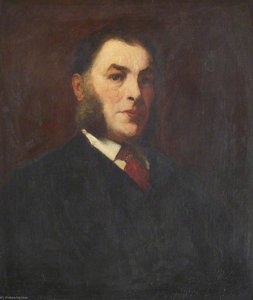
James Porter, DD, Master (1876–1900)
 Acrylic On Canvas
- WallArt
- Victorian Realism
 1896
1896 74.0 x 62.0 cm
 Peterhouse
 Read More
Hand Made Oil Reproduction
Hand-painted oil on canvas in your size and frame, made to order by our artists.




P118B $10

P118H $10

P118W $10

P438Z $10

P508JH $12

P508YH $12

P805H $10

P805Z $10

P919BZ $10

P919G $10

P919XJ $10

P959ZH $10

P968JZ $12

W106C $8

W218G $10

W218JH $8

W218Y $10

W307PJ $10

W316G $10

W316PJ $8

W316Y $10

W398PJ $8

W4111J $10

W500HY $15

W500JH $15

W692G $12

W849H $8

W940BG $15

W953PJ $8




Pick from our preset sizes that match the artwork's original proportions.

You may enter your own dimensions to fit a specific frame or space. If your selected size does not match the original image's proportions, we will either crop the artwork or extend the painting with additional hand-painted elements. A digital mockup will be sent for your approval before production begins.
Please note that the on-screen preview does not reflect the actual cropping or extension. Only the mockup will accurately show the final composition.
While custom sizes are available, we recommend selecting a dimension from the predefined list to preserve the original proportions.
After order, AllPaintingsStore.com team will email client for instructions and provide a mockup preview
Worldwide Delivery () in 3/4 weeks instead of standard 5 weeks. (16 July). No compromise on quality.

Free Worldwide Express Shipping

High-Quality Linen Canvas

Full Shipping Insurance

Customs Tax Refund Guarantee

True Color Matching Guarantee

60-Day Return Policy (Defects Only)

100% Money-Back Guarantee

Bulk Discount Offer
 Glass option is only available in size under 110 CM

James Porter, DD, Master (1876–1900)
Reproduction Medium
Reproduction Size
-


Total Price
-
Artwork Description
James Porter, DD, Master (1876–1900): A Portrait Steeped in Victorian Dignity
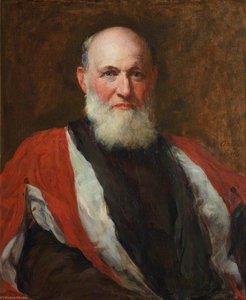
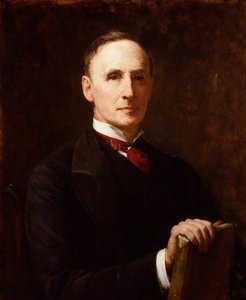
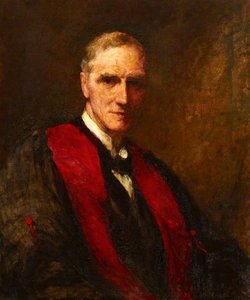
Walter William Ouless’s “James Porter, DD, Master” is more than just a depiction of an individual; it's a window into the sensibilities of late Victorian England. Painted in 1896, this portrait captures James Porter, a respected clergyman and scholar at Peterhouse College, Cambridge, with remarkable precision and understated elegance.
- Subject Matter: The painting focuses squarely on Porter’s face—a commanding presence framed by a neatly trimmed beard and mustache. His gaze is direct, conveying seriousness and intellectual contemplation.
- Style & Technique: Ouless employs a meticulous realism characteristic of his oeuvre, utilizing a technique known as stippling – dots of pigment applied to the canvas to build up tonal gradations. This method lends texture and depth to Porter’s skin tones, creating an illusion of palpable warmth and solidity.
- Historical Context: The portrait reflects the Victorian era's preoccupation with moral virtue and scholarly achievement. Porter’s position at Peterhouse underscores the importance placed on education and religious devotion during this period.
Catherine Ouless: Artistic Legacy & Influence
Walter William Ouless’s artistic journey was profoundly shaped by his wife, Catherine Ouless, herself a talented British artist. Their collaborative spirit fostered a shared appreciation for capturing the beauty of the natural world and portraying individuals with sensitivity and accuracy—a legacy that continues to resonate in contemporary art.
- Catherine’s Style: Like her husband, Catherine Ouless excelled at landscape painting, particularly focusing on Devon and Somerset. Her canvases are imbued with a luminous palette and a distinctive stippling technique reminiscent of Walter William's approach.
- Shared Vision: The couple’s artistic partnership exemplifies the Victorian ideal of domestic harmony—a commitment to nurturing creativity alongside familial responsibilities.
Exploring the Symbolism Within Detail
Beyond its technical brilliance, “James Porter, DD, Master” speaks volumes about Victorian ideals. The robe worn by Porter symbolizes authority and piety – emblems central to the clergyman’s role within society. Furthermore, the careful positioning of Porter's hands suggests composure and intellectual deliberation—qualities valued in Victorian gentlemen.
- Color Palette: Ouless utilizes a muted color palette dominated by earthy tones—browns, reds, and creams—reflecting the prevailing aesthetic preferences of the time.
- Composition: The portrait’s balanced composition reinforces Porter's dignified stature, emphasizing his importance as both a scholar and a spiritual leader.
Emotional Resonance & Artistic Impact
"James Porter, DD, Master" transcends mere representation; it evokes a sense of quiet contemplation and moral seriousness. Ouless’s masterful rendering captures not only Porter's physical appearance but also his inner character—a testament to the artist’s ability to convey profound emotion through subtle visual cues.
- Psychological Depth: The portrait’s gaze conveys a contemplative spirit, inviting viewers to consider Porter’s thoughts and beliefs.
- Enduring Appeal: This artwork continues to captivate audiences today due to its timeless beauty and its ability to communicate enduring values—a reflection of Ouless's artistic vision and his unwavering dedication to capturing the essence of human experience.
Related Artworks


Artist Biography
Paul Gauguin: A Savage Martyr of Art
Paul Gauguin, born in Paris in 1848 and tragically dying in the Marquesas Islands in 1903, remains one of the most enigmatic and influential figures in modern art. More than just a painter, he cultivated a complex persona – a “wolfish wild man” juxtaposed with a sensitive martyr dedicated to capturing the essence of primal experience. His life was a relentless pursuit of escape, a rejection of bourgeois society, and an unwavering commitment to forging a new path for artistic expression. Gauguin’s journey took him from the bustling streets of Paris to the remote islands of Tahiti and eventually to the volcanic shores of Hiva Oa, each location profoundly shaping his art and his identity.Early Life and Artistic Beginnings
Gauguin's early years were marked by a restless spirit and a nomadic upbringing. Descended from Peruvian nobility through his mother’s side, he spent his childhood in Lima, Peru, before returning to France with his family at the age of seven. This peripatetic existence instilled within him a deep-seated need for travel and adventure – a yearning that would define much of his life. He initially pursued a career as a stockbroker, but found little satisfaction in the rigid structure of commerce. His artistic inclinations began to blossom through the influence of Camille Pissarro, whom he met via his patron, Gustave Arosa, a wealthy Spanish financier with an impressive collection of modern French paintings. Gauguin’s early work reflected the Impressionist style, particularly the loose brushwork and vibrant colors championed by Pissarro. However, he quickly began to experiment, absorbing elements from Paul Cézanne's constructive approach to form – notably his use of parallel lines and simplified shapes – while simultaneously injecting a distinctly personal vision into his paintings. He purchased several Cézanne works, studying their techniques with meticulous attention, yet always striving to move beyond mere imitation, seeking instead to express the inner world of emotion and symbolism.Tahitian Exile and the Birth of a New Style
In 1891, Gauguin embarked on what would become his most significant artistic endeavor: an extended sojourn in Tahiti. He sought refuge from the perceived corruption and artificiality of European society, envisioning a return to a simpler, more authentic way of life. This decision was not simply an escape; it was a deliberate attempt to establish himself as a leader of the Parisian avant-garde – a bold assertion that he could create art divorced from the constraints of academic tradition. Tahiti provided him with a wealth of inspiration: the lush landscapes, the vibrant colors of the local culture, and the exotic rituals of the native population all found their way onto his canvases. His paintings during this period—such as *First Communion* (1880) and *Vision After the Sermon* (1887)—marked a radical departure from Impressionism, characterized by bold outlines, flattened perspectives, and intensely symbolic imagery. The influence of Japanese woodblock prints – Ukiyo-e – is particularly evident in his use of simplified forms, decorative patterns, and vibrant color combinations.Symbolism, Synthesis, and the Quest for Primitivism
Gauguin’s artistic style evolved dramatically throughout his career, reflecting his ongoing exploration of spiritual and emotional themes. He embraced Symbolism, a movement that sought to express ideas through evocative imagery rather than literal representation. He also developed a unique approach known as “Synthetism,” which combined elements of Impressionism, Post-Impressionism, and Primitivism. Gauguin was deeply fascinated by the art of ancient civilizations – particularly Polynesian cultures – believing they possessed a direct connection to the spiritual realm. He sought to capture this primal essence in his work, rejecting the conventions of Western art and embracing a more intuitive and expressive approach. His paintings often depict scenes of everyday life—fishing, dancing, and religious ceremonies—but imbued with a sense of mystery and symbolism. The iconic *Vision of the Sermon* (1887), created during his time in Brittany alongside Émile Bernard, exemplifies this synthesis, utilizing bold colors and simplified forms to convey a profound spiritual experience.Legacy and Lasting Influence
Paul Gauguin’s life and work were marked by both extraordinary creativity and personal tragedy. His struggles with poverty, illness (including syphilis), and the loss of his daughter profoundly impacted his final years. Despite these hardships, he continued to paint relentlessly until his death in 1903. His art initially met with mixed reactions, but over time, its radical innovations and expressive power gained widespread recognition. Gauguin’s influence on subsequent generations of artists is undeniable. He paved the way for Fauvism, Expressionism, and other avant-garde movements by challenging traditional notions of representation and prioritizing emotional expression above all else. His bold use of color, simplified forms, and symbolic imagery continues to inspire artists today, solidifying his place as a pivotal figure in the history of modern art – a “savage martyr” who dared to forge his own path and redefine the boundaries of artistic possibility.
walter william ouless
1848 - 1933
Quick Facts
- Artistic Movement Or Style:
- Post-Impressionism
- Symbolism
- Synthetism
- Artists Or Movements Influenced By This Artist:
- Nabis
- Fauvism
- Artists Who Influenced This Artist:
- Cézanne
- van Gogh
- Date Of Birth: June 7, 1848
- Date Of Death: May 8, 1903
- Full Name: Paul Gauguin
- Nationality: French
- Notable Artworks:
- Vision of the Sermon
- Where Do We Come From?
- Iahoteka
- Place Of Birth: Paris, France
Related Articles

The Enduring Legacy of Masterpieces: A Comprehensive Exploration of Fine Art Reproduction Techniques
Discover museum-quality art reproductions & custom paintings at AllPaintingsStore. Expert craftsmanship, personalized service, and a satisfaction guarantee. Bring timeless beauty to your home today!

Victorian Botanical Painting: Science, Art & Aesthetic Sensibility
Explore the exquisite world of Victorian botanical art! Discover the science & artistry behind stunning floral illustrations by Gould, Muckley & more. Learn about collecting, value & investment at AllPaintingsStore.
Walter Greaves: A Study in Victorian Realism & the Social Landscape of British Art
Explore the life & work of Walter Greaves, a key Victorian realist painter influenced by Whistler. Discover his London streetscapes, portraits, and enduring legacy. Learn about art appraisal & reproduction options at AllPaintingsStore.

James Sant: Capturing Victorian Childhood & the Evolving Landscape of British Genre Painting
Explore the life & art of James Sant (1820-1916), renowned Victorian portraitist to Queen Victoria. Discover his captivating depictions of childhood, landscapes, and aristocratic society. Learn about his legacy & find fine art reproductions.

From Vision to Canvas: Collaborative Art Creation and the Client as Muse in Contemporary Fine Art Reproduction
Commission bespoke art that tells *your* story. AllPaintingsStore offers museum-quality reproductions & custom paintings by skilled artists. Expert guidance, personalized service & lasting heirlooms.