


 Preview
 Send
Send Share
Share
 Details
 Guide
Guide

 Download
 Similars
 X-Ray
X-Ray Diaporama
 Stats
StatsUntitled 14

 Read More
Giclée / Art Print
Museum-quality giclée or canvas print with fast production and flexible finish options. ( Buy Hand Made Painting Switch to Digital Image)




P118B $10

P118H $10

P118W $10

P438Z $10

P508JH $12

P508YH $12

P805H $10

P805Z $10

P919BZ $10

P919G $10

P919XJ $10

P959ZH $10

P968JZ $12

W106C $8

W218G $10

W218JH $8

W218Y $10

W307PJ $10

W316G $10

W316PJ $8

W316Y $10

W398PJ $8

W4111J $10

W500HY $15

W500JH $15

W692G $12

W849H $8

W940BG $15

W953PJ $8




Pick from our preset sizes that match the artwork's original proportions.

Type the width and the height you need, to fit your frame or your wall. A print can only be cut, never made bigger than the picture, so a size with a different shape loses a part of the image. We send you a digital mockup to approve before we print anything. The picture shown on this page does not show the real cut — only the mockup does.
Worldwide Delivery () in 2 weeks instead of standard 4/5 weeks. (23 October)

Free Worldwide Express Shipping

High-Quality Linen Canvas

Full Shipping Insurance

Customs Tax Refund Guarantee

True Color Matching Guarantee

100-Day Return Policy (Defects Only)

100% Money-Back Guarantee

Bulk Discount Offer
 Glass option is only available in size under 110 CM

Untitled 14
Giclée / Art Print
Reproduction Size
-


Total Price
$ 65
A Vision of Mythic Intensity: Decoding William Blake’s Untitled 14
William Blake's “Untitled 14,” a striking black and white etching, stands as a testament to the Romantic spirit—a fervent embrace of imagination and emotion over rational observation. Executed sometime around 1820-1822, this artwork embodies Blake’s signature style: a dramatic interplay of line and form designed not merely to depict but to convey profound spiritual truths.
- Composition & Narrative Depth: The image presents a vertically oriented scene brimming with figures arranged in layered planes. At its core resides a majestic central figure, radiating an aura of divinity or regal authority, encircled by swirling forms that pulsate with movement and energy—a visual representation of Blake’s belief that God dwells within the human soul. Below this dominant presence are groupings of humanoid beings, some rendered in sorrowful postures, others gazing outwards with contemplative expressions, establishing a hierarchical narrative progression.
- Line Work & Texture: Blake's masterful technique hinges on meticulous line work—thick and thin hatching and crosshatching meticulously crafted to sculpt tonal values and imbue the artwork with palpable texture. These lines aren’t simply delineating shapes; they are conduits of emotion, mirroring the dynamism inherent in Blake’s worldview.
- Symbolic Resonance: The monochromatic palette – shades of gray, black, and white – serves as a deliberate conduit for conveying symbolic meaning. It underscores Blake's preoccupation with spiritual contemplation and rejects the decorative allure of color. Furthermore, the swirling forms surrounding the central figure symbolize divine energy or primal chaos—elements frequently explored in Blake’s prophetic visions.
- Romantic Style & Printmaking Innovation: “Untitled 14” firmly anchors itself within the Romantic movement, prioritizing subjective experience and imaginative exploration. Blake's pioneering use of etching techniques – employing an etching needle to incise lines onto metal plates – ensured exceptional detail and tonal gradation—a revolutionary approach for its time.
Historical Context & Influences
Blake’s artistic output coincided with a period of intellectual ferment in Britain, fueled by Enlightenment ideals yet increasingly haunted by anxieties surrounding industrialization and societal change. He drew inspiration from biblical narratives and mythological traditions—particularly those exploring themes of creation, redemption, and the struggle between good and evil. Like Sir William Blake Richmond, he was profoundly impacted by Romantic artists such as Caspar David Friedrich and Eugène Delacroix.
Technical Considerations & Artistic Vision
The etching process itself demanded considerable precision and patience—a painstaking endeavor that allowed Blake to achieve unparalleled textural richness and tonal subtlety. The artist’s deliberate flattening of perspective reflects a rejection of realistic representation, prioritizing instead the conveyance of spiritual insight and emotional resonance. This stylistic choice aligns perfectly with Blake's conviction that art should transcend mere imitation of nature to illuminate the hidden truths of existence.
Emotional Impact & Interpretative Significance
"Untitled 14" compels viewers to confront profound questions about faith, morality, and the human condition. Its unsettling imagery—the tormented faces of the figures below—serves as a poignant reminder of suffering endured in pursuit of spiritual enlightenment. Ultimately, Blake’s artwork invites contemplation on the transformative power of imagination and its capacity to reveal the divine within the mundane.
Questions & Answers
Who created "Untitled 14"?
"Untitled 14" was created by William Blake. The information on this page describes William Blake's original work.
How does the subject of "Untitled 14" relate to William Blake's usual themes?
"Untitled 14" depicts mythology, spirituality, line art, darkness, light contrast, divine figure, narrative scene, while William Blake's recorded themes are blake’s romantic vision, biblical narrative, spiritual intensity, printmaking experimentation, mythological symbolism. Comparing the two shows how the work relates to the artist's usual subjects.
Which artistic current is "Untitled 14" by William Blake part of?
"Untitled 14" is a work of Romantic Symbolism. The movement indicates the artistic tradition the work is part of.
Related Artworks


Artist Biography
A Visionary’s Journey: The Life and Art of William Blake
William Blake, born in London on November 28, 1757, was a figure perpetually out of step with his time, yet destined to become one of the most celebrated artists and poets of the Romantic Age. His life unfolded against the backdrop of a rapidly changing England—a world grappling with industrialization, political upheaval, and shifting spiritual beliefs. From humble beginnings as the son of a hosier, Blake’s early years were marked by an intensely vivid imagination and a propensity for visionary experiences that would profoundly shape his artistic trajectory. Though largely self-taught in formal academics, he received drawing instruction at a young age, quickly revealing a talent that hinted at the extraordinary path ahead. His apprenticeship with engraver James Basire proved pivotal, providing him not only with technical mastery but also an understanding of printmaking techniques he would later revolutionize. These early influences—the Gothic grandeur of Westminster Abbey, the classical forms of Raphael and Michelangelo—served as foundational elements in his developing aesthetic, though Blake was never one to remain bound by convention.The Illuminated World: Technique and Innovation
Blake’s artistic innovation wasn't merely about subject matter; it resided fundamentally in *how* he created. Dissatisfied with conventional engraving methods, he developed a unique process known as “illuminated printing.” This involved etching both text and illustrations onto copper plates, then hand-coloring the resulting prints—a laborious but deeply personal approach that allowed for complete artistic control. This wasn’t simply illustration accompanying poetry; it was an integrated art form where image and verse were inextricably linked, each enhancing the meaning of the other. His relief etching technique, born from a claimed visionary experience following his brother's death, further distinguished his work, granting it a distinctive textural quality and allowing for greater artistic freedom than traditional methods. Beyond printmaking, Blake also worked with watercolors and tempera paints, often depicting biblical scenes or fantastical subjects imbued with symbolic weight. A key characteristic of his style was a deliberate rejection of linear perspective in favor of a more emotive, symbolic representation—a flattening of space that drew the viewer into the heart of his visionary world.Themes of Innocence, Experience, and Rebellion
The core of Blake’s artistic output lies in its exploration of profound themes: the duality of innocence and experience, the constraints of reason versus the liberating power of imagination, and a fierce critique of societal norms.- Songs of Innocence and of Experience (1794), perhaps his most accessible work, presents a contrasting vision of childhood—one idyllic and untainted, the other marked by hardship and corruption.
- The Marriage of Heaven and Hell (1793) is a provocative prose poem that challenges conventional morality, celebrating energy, desire, and rebellion against restrictive doctrines.
- His illustrations for Dante’s *Divine Comedy* showcase his dramatic vision and ability to translate complex narratives into powerful visual imagery.
A Legacy Rediscovered: Blake's Enduring Influence
During his lifetime, William Blake remained largely marginalized, misunderstood by many of his contemporaries. His work was often dismissed as eccentric or even mad. He struggled financially throughout much of his life, relying on commissions and the support of a small circle of patrons like Thomas Butts. However, in the decades following his death on August 12, 1827, Blake’s reputation began to grow steadily. The Pre-Raphaelite Brotherhood, captivated by his visionary style and symbolic imagery, embraced him as a kindred spirit. Later movements—Symbolism and Modernism—found resonance in his emphasis on imagination, subjective experience, and spiritual themes. Today, William Blake is recognized as a pivotal figure in the Romantic movement, an artist whose work continues to inspire poets, painters, and thinkers across disciplines. His exploration of complex philosophical and religious ideas through art remains profoundly relevant, challenging us to question conventional wisdom and embrace the power of individual vision. Blake’s legacy isn't simply about his artistic achievements; it is about his unwavering commitment to creative freedom—a testament to the enduring power of imagination in a world often dominated by reason and constraint.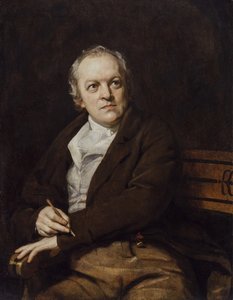
William Blake
1757 - 1827 , United Kingdom
Quick Facts
- Artistic Movement Or Style: Romanticism
- Artists Or Movements Influenced By This Artist:
- Pre-Raphaelite Brotherhood
- Symbolism
- Modernism
- Artists Who Influenced This Artist:
- Raphael
- Michelangelo
- Full Name: William Blake
- Nationality: English
- Notable Artworks:
- Songs of Innocence
- Songs of Experience
- The Tyger
- The Lamb
- Jerusalem
- The Marriage of Heaven and Hell
- Place Of Birth: London, United Kingdom
- Date Of Birth: 1757
- Date Of Death: 1827
Related Articles

Mastering Etching: A Professional Guide to Intaglio Printmaking Techniques for High-End Interior Curation
Master the intricate techniques of intaglio etching with our professional guide. Discover how fine-line printmaking adds depth and sophistication to luxury hotel interiors through high-quality, museum-grade reproductions for large-scale design projects.


