


 Preview
 Send
Send Share
Share
 Details
 Guide
Guide

 Download
 Similars
 X-Ray
X-Ray Diaporama
 Stats
StatsWilson Lowry


 Read More
Hand Made Oil Reproduction
Hand-painted oil on canvas in your size and frame, made to order by our artists. ( Switch to Print Switch to Digital Image)




P118B $10

P118H $10

P118W $10

P438Z $10

P508JH $12

P508YH $12

P805H $10

P805Z $10

P919BZ $10

P919G $10

P919XJ $10

P959ZH $10

P968JZ $12

W106C $8

W218G $10

W218JH $8

W218Y $10

W307PJ $10

W316G $10

W316PJ $8

W316Y $10

W398PJ $8

W4111J $10

W500HY $15

W500JH $15

W692G $12

W849H $8

W940BG $15

W953PJ $8




Pick from our preset sizes that match the artwork's original proportions.

Type the width and the height you need, to fit your frame or your wall. This is hand-painted, so for a size with a different shape the artist can paint a bit more around the picture, or cut a bit — you choose. We send you a digital mockup to approve before the painting starts. The picture shown on this page does not show the real result — only the mockup does.
After order, AllPaintingsStore.com team will email client for instructions and provide a mockup preview
Worldwide Delivery () in 3/4 weeks instead of standard 5 weeks. (26 October). No compromise on quality.

Free Worldwide Express Shipping

High-Quality Linen Canvas

Full Shipping Insurance

Customs Tax Refund Guarantee

True Color Matching Guarantee

100-Day Return Policy (Defects Only)

100% Money-Back Guarantee

Bulk Discount Offer
 Glass option is only available in size under 110 CM

Wilson Lowry
Reproduction Medium
Reproduction Size
-


Total Price
$ 258
A Vision in Line: Unveiling Wilson Lowry
William Blake’s monochrome engraving, “Wilson Lowry,” is more than just a portrait; it's a meticulously crafted study of human form and the power of line. Created around 1825, this piece offers a rare glimpse into the world of 18th-century London through the discerning eye of one of history’s most visionary artists. The subject, Wilson Lowry himself – an engraver and illustrator – is presented in profile within a restrained oval frame, immediately establishing a formal yet intimate connection with the viewer. Blake's genius lies not merely in depicting a man, but in capturing his essence through the deliberate manipulation of line density, creating a remarkably textured surface that mimics hair, fabric folds, and the subtle contours of face and body.

The Language of Line: Technique and Craftsmanship
Blake’s technique is a testament to his mastery of engraving. He eschewed the use of shading through hatching or cross-hatching, instead relying entirely on varying line weight – thicker lines representing darker areas, while thinner lines delineate lighter tones. This approach creates an astonishingly rich and dynamic surface, imbuing the portrait with a sense of depth and volume. The meticulous detail evident in every stroke speaks to Blake’s dedication and precision, reflecting his deep understanding of printmaking principles. Notably, this engraving was produced as part of a series, suggesting a deliberate consideration of composition and visual harmony. It's a remarkable demonstration of how seemingly simple lines can convey complex emotions and narratives.
A Portrait of an Era: Historical Context
“Wilson Lowry” is firmly rooted in the late 18th and early 19th centuries, a period of dramatic social and artistic change. William Blake’s work emerged during the Romantic Age, a time characterized by a renewed interest in emotion, imagination, and the sublime. The portrait reflects the prevailing neoclassical ideals of formality and dignity, while simultaneously hinting at Blake's own unique and often unconventional worldview. Considering that Blake was largely self-taught, his technical skill is all the more impressive. The engraving’s creation coincided with the rise of industrialization and a growing sense of social unrest – themes that would later permeate Blake’s prophetic poetry.
Symbolism and Intention: Beyond Representation
While seemingly straightforward in its depiction, “Wilson Lowry” is rich in symbolic potential. The formal pose and dignified expression suggest respect for the subject, but also a subtle sense of melancholy or introspection. Blake frequently imbued his works with layers of meaning, drawing upon biblical imagery, mythology, and personal spiritual beliefs. It’s important to note that this engraving was created as part of a larger series, and its placement within the context of Blake's broader artistic output reveals deeper thematic connections. The portrait serves not just as a likeness but as a window into the artist’s complex inner world.
Bringing Blake Home: A High-Quality Reproduction
AllPaintingsStore offers meticulously crafted, hand-painted reproductions of “Wilson Lowry” that capture the essence of this iconic artwork. Our skilled artists replicate Blake's intricate line work and subtle tonal variations with exceptional precision, ensuring a faithful representation of his original vision. Whether you’re an art enthusiast, collector, or seeking to add a touch of timeless elegance to your interior space, our reproductions provide a beautiful and authentic way to experience the enduring power of William Blake’s “Wilson Lowry.” Explore the full artwork details on our website: https://www.AllPaintingsStore.com/en/art/william-blake-wilson-lowry-8EWSFG-en/
Questions & Answers
What mood and emotion does "Wilson Lowry" by William Blake express?
In "Wilson Lowry", a romantic mood accompanies a mysterious emotion.
Where does "Wilson Lowry" fall in William Blake's career?
Within William Blake's career, "Wilson Lowry" falls in the Mature Period. The phase helps compare it with the artist's other works.
What is the perceived brightness of "Wilson Lowry" by William Blake?
Overall, "Wilson Lowry" is recorded as brilliant. Perceived brightness describes how light or dark the work appears.
Related Artworks


Artist Biography
A Visionary’s Journey: The Life and Art of William Blake
William Blake, born in London on November 28, 1757, was a figure perpetually out of step with his time, yet destined to become one of the most celebrated artists and poets of the Romantic Age. His life unfolded against the backdrop of a rapidly changing England—a world grappling with industrialization, political upheaval, and shifting spiritual beliefs. From humble beginnings as the son of a hosier, Blake’s early years were marked by an intensely vivid imagination and a propensity for visionary experiences that would profoundly shape his artistic trajectory. Though largely self-taught in formal academics, he received drawing instruction at a young age, quickly revealing a talent that hinted at the extraordinary path ahead. His apprenticeship with engraver James Basire proved pivotal, providing him not only with technical mastery but also an understanding of printmaking techniques he would later revolutionize. These early influences—the Gothic grandeur of Westminster Abbey, the classical forms of Raphael and Michelangelo—served as foundational elements in his developing aesthetic, though Blake was never one to remain bound by convention.The Illuminated World: Technique and Innovation
Blake’s artistic innovation wasn't merely about subject matter; it resided fundamentally in *how* he created. Dissatisfied with conventional engraving methods, he developed a unique process known as “illuminated printing.” This involved etching both text and illustrations onto copper plates, then hand-coloring the resulting prints—a laborious but deeply personal approach that allowed for complete artistic control. This wasn’t simply illustration accompanying poetry; it was an integrated art form where image and verse were inextricably linked, each enhancing the meaning of the other. His relief etching technique, born from a claimed visionary experience following his brother's death, further distinguished his work, granting it a distinctive textural quality and allowing for greater artistic freedom than traditional methods. Beyond printmaking, Blake also worked with watercolors and tempera paints, often depicting biblical scenes or fantastical subjects imbued with symbolic weight. A key characteristic of his style was a deliberate rejection of linear perspective in favor of a more emotive, symbolic representation—a flattening of space that drew the viewer into the heart of his visionary world.Themes of Innocence, Experience, and Rebellion
The core of Blake’s artistic output lies in its exploration of profound themes: the duality of innocence and experience, the constraints of reason versus the liberating power of imagination, and a fierce critique of societal norms.- Songs of Innocence and of Experience (1794), perhaps his most accessible work, presents a contrasting vision of childhood—one idyllic and untainted, the other marked by hardship and corruption.
- The Marriage of Heaven and Hell (1793) is a provocative prose poem that challenges conventional morality, celebrating energy, desire, and rebellion against restrictive doctrines.
- His illustrations for Dante’s *Divine Comedy* showcase his dramatic vision and ability to translate complex narratives into powerful visual imagery.
A Legacy Rediscovered: Blake's Enduring Influence
During his lifetime, William Blake remained largely marginalized, misunderstood by many of his contemporaries. His work was often dismissed as eccentric or even mad. He struggled financially throughout much of his life, relying on commissions and the support of a small circle of patrons like Thomas Butts. However, in the decades following his death on August 12, 1827, Blake’s reputation began to grow steadily. The Pre-Raphaelite Brotherhood, captivated by his visionary style and symbolic imagery, embraced him as a kindred spirit. Later movements—Symbolism and Modernism—found resonance in his emphasis on imagination, subjective experience, and spiritual themes. Today, William Blake is recognized as a pivotal figure in the Romantic movement, an artist whose work continues to inspire poets, painters, and thinkers across disciplines. His exploration of complex philosophical and religious ideas through art remains profoundly relevant, challenging us to question conventional wisdom and embrace the power of individual vision. Blake’s legacy isn't simply about his artistic achievements; it is about his unwavering commitment to creative freedom—a testament to the enduring power of imagination in a world often dominated by reason and constraint.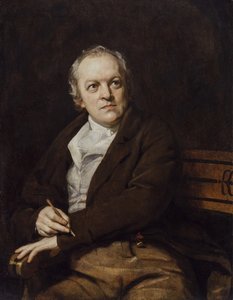
William Blake
1757 - 1827 , United Kingdom
Quick Facts
- Artistic Movement Or Style: Romanticism
- Artists Or Movements Influenced By This Artist:
- Pre-Raphaelite Brotherhood
- Symbolism
- Modernism
- Artists Who Influenced This Artist:
- Raphael
- Michelangelo
- Full Name: William Blake
- Nationality: English
- Notable Artworks:
- Songs of Innocence
- Songs of Experience
- The Tyger
- The Lamb
- Jerusalem
- The Marriage of Heaven and Hell
- Place Of Birth: London, United Kingdom
- Date Of Birth: 1757
- Date Of Death: 1827
Related Articles
Timeless Elegance: The Art of Classical Portraiture Explained
Explore the profound beauty of classical portraiture. From Netherlandish realism to 19th-century mastery, discover the techniques, symbolism, and enduring elegance that define the world's most iconic painted legacies.


