Money-Back Guarantee · 100 days Free Worldwide Delivery
449,587artworks 30,613artists 4,660museums 32languages
Catalogue entry

John Smith Warner (?)

1827. Oil On Canvas, 98.0 x 85.0 cm.

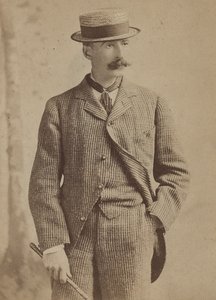
Fig. 1. Winslow Homer, John Smith Warner (?), 1827. Shown as the reproduction you are specifying: , .

§ 1Catalogue data

Dimensions
98.0 x 85.0 cm

§ 2Abstract

Collectible Description

A meticulously detailed black and white portrait by Winslow Homer from 1827 captures a distinguished gentleman in a red-tied suit, showcasing the artist’s signature realism and American spirit – discover this elegant piece.

Artist Biography

Winslow Homer (1836-1910): Explore the iconic American Realist's powerful paintings of marine life, landscapes & 19th-century life. Discover masterpieces like 'The Gulf Stream' and 'Breezing Up'.

§ 3Commentary

A Portrait of Quiet Confidence: John Smith Warner (?), c. 1827

Winslow Homer’s “John Smith Warner (?)” offers a captivating glimpse into the social landscape of early 19th-century America, rendered with the meticulous detail characteristic of his artistic journey. Executed in 1827, this black and white portrait presents a gentleman of considerable presence – a man defined by his attire and contemplative gaze. The painting’s stark monochrome palette amplifies the subject's dignified bearing, drawing attention to the textures of his dark suit and the carefully rendered lines of his beard and mustache. The subtle shift in focus, as if he is engaged in an unseen conversation or observing the world around him, imbues the image with a quiet sense of mystery and invites the viewer to imagine the narrative unfolding beyond the canvas.

Technique and Homer’s Early Training

  • Homer's distinctive style emerged not from formal European training but from a deeply rooted understanding of American life. His early work as an illustrator for Harper’s Weekly, beginning at just twelve years old, instilled in him a remarkable ability to capture detail and observe the nuances of human expression – skills honed through countless depictions of everyday scenes.
  • The painting's execution showcases Homer’s mastery of tonal gradation, achieved through precise layering of watercolor washes (a technique he initially developed during his illustration work). This careful control of light and shadow creates a sense of depth and volume, lending the subject an almost palpable presence. The sharp focus on the man's face and clothing further emphasizes his individual character.
  • The choice of black and white adds to the painting’s timeless quality, reminiscent of early photographic portraiture – a medium that was rapidly gaining popularity during this era. This stylistic decision also highlights Homer’s ability to create a powerful image with limited color palette.

Historical Context: Boston Society in the 1820s

“John Smith Warner (?)” reflects the social and cultural values of Boston society in the 1820s, a period marked by burgeoning commercial activity, rising literacy rates, and a growing emphasis on civic virtue. The gentleman depicted embodies the aspirations of the middle class – educated, respectable, and engaged with the affairs of his community. The suit itself, a symbol of status and professionalism, speaks to the increasing importance of commerce and industry in shaping American identity. This portrait offers a valuable window into the lives and appearances of those who were shaping the nation’s future.

Symbolism and Emotional Impact

Despite the lack of a confirmed sitter's name – hence the question mark in the title – the painting resonates with a profound sense of quiet dignity. The man’s averted gaze suggests introspection, perhaps a moment of contemplation or a private thought. The overall effect is one of understated elegance and timeless appeal. This reproduction allows us to connect with a pivotal moment in American art history, appreciating Homer's unique vision and his ability to capture the essence of human character within a specific historical context. The painting’s enduring power lies not just in its technical skill but also in its capacity to evoke a sense of nostalgia for a bygone era.

Questions & Answers

Is "John Smith Warner (?)" by Winslow Homer a bright or a dark artwork?

In terms of perceived brightness, "John Smith Warner (?)" by Winslow Homer is deep_shadow.

What national origin stands behind the Realism Portraiture of "John Smith Warner (?)"?

"John Smith Warner (?)" was created by Winslow Homer, born in United States of America, within the Realism Portraiture movement. The artist's origin links the work to Realism Portraiture as practiced by artists from United States of America.

What are the dimensions of the original "John Smith Warner (?)" by Winslow Homer?

The original "John Smith Warner (?)" by Winslow Homer measures 98 x 85 cm.
§ 4The artist

Winslow Homer

Winslow Homer

1836 - 1910, United States of America

Quick facts about Winslow Homer

  • Artistic Movement Or Style: American Realism
  • Artists Or Movements Influenced By This Artist: ['Later American painters']
  • Artists Who Influenced This Artist:
    • Courbet
    • Millet
  • Full Name: Winslow Homer
  • Nationality: American
  • Notable Artworks:
    • The Gulf Stream
    • Breezing Up (A Fair Wind)
    • Undertow
    • Natural Bridge, Bahamas
  • Place Of Birth: Boston, United States of America
  • Date Of Birth: 1836
  • Date Of Death: 1910

Artist Biography

A Brush with the American Spirit: The Life and Art of Winslow Homer

Winslow Homer, born in Boston in 1836, wasn’t sculpted by the traditional European art academies that shaped so many of his contemporaries. Instead, he emerged from a distinctly American experience, one rooted in practicality and observation. His journey began not with grand historical canvases, but as a commercial illustrator at the tender age of twelve for Harper's Weekly. This early apprenticeship was formative, honing an exceptional ability to capture scenes with clarity and detail – skills that would become hallmarks of his mature work. He wasn’t learning perspective in Paris; he was learning to *see* America, its people, and its unfolding story. The bustling streets of Boston, the quiet dignity of rural New England life, these were his first subjects, rendered with a precision born of necessity for the demands of print media. This foundation allowed him to transition into painting, initially in watercolor, before fully embracing the expressive potential of oil paints.

From Pastoral Scenes to the Raw Power of Nature

Homer’s early paintings often depicted idyllic scenes – children playing, farmers tending their fields, quiet moments of domesticity. These works, while charming, hinted at a deeper artistic sensibility waiting to be unleashed. The catalyst for this transformation was undoubtedly the Civil War. As a war correspondent for Harper's Weekly, Homer witnessed firsthand the brutal realities of conflict. He didn’t focus on heroic battles or grand strategies; instead, he documented the everyday lives of soldiers and civilians, the quiet moments of grief and resilience amidst chaos. This experience profoundly altered his artistic vision. The pastoral scenes gave way to more challenging subjects: veterans grappling with trauma, freed slaves navigating a new world, and the stark beauty of landscapes touched by hardship. He began to explore themes of struggle, isolation, and humanity’s precarious relationship with nature – themes that would dominate his most powerful works. His style also evolved, becoming bolder and more direct, reflecting the raw emotional impact of what he had witnessed.

Mastering Light, Texture, and the American Landscape

Winslow Homer's artistic technique is immediately recognizable for its solidity and texture. He wasn’t interested in fleeting impressions; he wanted to build up a sense of tangible reality on the canvas. His oil paintings are characterized by a direct painting approach – layers of paint applied with confidence, creating depth and luminosity. He possessed an extraordinary ability to capture light, whether it was the dazzling glare of the sun on the ocean or the soft glow of twilight over a rural landscape. This mastery extended to his watercolors, where he achieved remarkable atmospheric effects through vibrant colors and delicate washes. Breezing Up (A Fair Wind), painted in 1876, exemplifies this skill – a quintessential depiction of American maritime life, brimming with energy and movement. The Gulf Stream, created decades later, is perhaps his most iconic work, a powerful and symbolic portrayal of a lone man battling the forces of nature, a metaphor for human struggle against overwhelming odds. He wasn’t simply painting what he saw; he was conveying a feeling, an emotional truth about the human condition.

A Legacy Forged in American Realism

While Homer admired European artists like those of the Barbizon school – known for their realistic depictions of rural life – and acknowledged influences from Courbet and Millet, he ultimately forged his own distinctly American path. He rejected the prevailing academic conventions and instead focused on capturing the unique spirit of his country. His legacy lies in his ability to depict America with honesty and authenticity, without romanticizing or idealizing it. He wasn’t interested in imitating European styles; he wanted to create an art that was uniquely American, reflecting its landscapes, its people, and its challenges. Innocence, a poignant portrayal of childhood set against the backdrop of nature, and Man of Science, demonstrating his skill in capturing human psychology, are testaments to this commitment. His influence can be seen in the work of later American painters who sought to depict their own country with similar directness and emotional depth.

A Lasting Impression: Homer’s Historical Significance

Winslow Homer's art offers a profound window into 19th-century America, providing invaluable insights into the social, political, and cultural landscape of his time. His paintings are not merely beautiful representations; they are powerful statements about human resilience, the beauty and power of nature, and the complexities of the American experience. He died in 1910, leaving behind a prolific body of work that continues to resonate with audiences today. His ability to capture the essence of a nation undergoing rapid change – from the aftermath of civil war to the dawn of a new century – ensures his place as one of America’s most important and enduring artists. He wasn't just painting pictures; he was documenting a moment in time, preserving it for generations to come.
  • His work continues to inspire contemporary artists.
  • Homer remains a pivotal figure in the development of American Realism.

§ 5Comparanda

§ 6Questions

Quick Facts

  • Year: 1827
  • Influences: Illustration
  • Medium: Painting
  • Artist: Winslow Homer
  • Artistic style: Portraiture

§ 7Cite this entry

AllPaintingsStore.com, “Winslow Homer, John Smith Warner (?) (1827)”, https://allpaintingsstore.com/en/art/winslow-homer-john-smith-warner-D39DMZ-en/ArtistReproduction/ (accessed 3 October 2026).

§ 8The reproduction

Hand Made Oil Reproduction

Hand-painted oil on canvas in your size and frame, made to order by our artists. ( Switch to Print Switch to Digital Image)

It is specified on the order sheet in the margin; the present state of that sheet reads as follows.

John Smith Warner (?)

Reproduction Medium

Reproduction Size

-

Elite Senior Artist

More detail, finesse, and extra production time

-

Reproduction Frame

-

-

For artworks or reproductions larger than 105 cm (approximately 41 inches) on any side, the frame will be shipped as a kit, disassembled. This method ensures safe delivery and prevents damage during transport.

Professional assembly required - this is not a DIY product.
The kit must be assembled and the canvas stretched by an experienced professional framer, using wood glue (not supplied), a canvas stretching plier and clamps to hold the bars square while the glue dries. Incorrect assembly or uneven canvas tension can permanently damage the artwork and is not covered by our warranty.

  • All solid wood bars are included, precisely cut to size.

  • Assembled with the screws provided, plus wood glue for the corner joints, which is not supplied and must be sourced by your framer.

  • Professional tools are required and not included: a canvas stretching plier (tensioner) and clamps to hold the bars square while the glue dries.

Important:
The corner joints require wood glue, the bars must be held with clamps until the glue is fully dry, and tightening the canvas on the assembled frame requires a canvas stretching plier. None of these are included in the kit. Please arrange an experienced professional framer before ordering this size.

Nameplate

-

-

Protective Varnish

Glossy Varnish (enhances colors, protects against light/moisture)

-

Customize My Artwork

Examples of what can be changed: Replace face with customer photo; Add pet (e.g., replace cat with dog); Include hidden message in background; Change background landscape or elements.

-

Urgent

Worldwide Delivery () in 3/4 weeks instead of standard 5 weeks. (1 November). No compromise on quality.

-

Express Shipping

Worldwide Delivery () in 5 weeks. (8 November).

Included

Total Price

$ 258

Included with every order

  • Free Worldwide Express Shipping
  • High-Quality Linen Canvas
  • Full Shipping Insurance
  • Customs Tax Refund Guarantee
  • True Color Matching Guarantee
  • 100-Day Return Policy (Defects Only)
  • 100% Money-Back Guarantee
  • Bulk Discount Offer
Order sheet