Money-Back Guarantee · 100 days Free Worldwide Delivery
449,564artworks 30,613artists 4,660museums 32languages
Catalogue entry

Sloop, Bermuda

1899. Acrylic On Canvas. Metropolitan Museum of Art.

Fig. 1. Winslow Homer, Sloop, Bermuda, 1899. Shown as the reproduction you are specifying: , .

§ 1Catalogue data

§ 2Abstract

Collectible Description

Artist Biography

Winslow Homer (1836-1910): Explore the iconic American Realist's powerful paintings of marine life, landscapes & 19th-century life. Discover masterpieces like 'The Gulf Stream' and 'Breezing Up'.

§ 3Commentary

Sloop, Bermuda – A Watercolor Echo of Tranquility

Winslow Homer’s “Sloop, Bermuda,” housed within the Metropolitan Museum of Art’s impressive collection, isn't merely a depiction of a sailboat on the ocean; it’s an embodiment of American Romanticism distilled into a breathtaking watercolor. Created in 1899 during Homer’s prolific period, this painting transcends simple observation, inviting viewers to contemplate the sublime beauty found within everyday maritime life.

  • Subject Matter: The scene captures two boats – one larger and more dominant – gliding across a calm expanse of turquoise water. Scattered figures populate both vessels, engaged in leisurely activities; perhaps fishing or simply enjoying the invigorating sea breeze.
  • Artistic Style & Technique: Homer’s masterful use of watercolor exemplifies his signature style—characterized by soft tonal gradations and luminous washes that prioritize atmosphere over precise detail. The artist eschewed academic conventions, favoring instead a direct engagement with nature's textures and colors.

A small dog nestled near the smaller boat adds an element of warmth and domesticity to the composition, subtly reinforcing the theme of companionship and contentment. Homer’s deliberate brushstrokes convey a sense of stillness and serenity—a deliberate contrast to the turbulent narratives often explored in Romantic art.

Historical Context & The Spirit of Observation

Painted at the cusp of the 20th century, “Sloop, Bermuda” reflects Homer's unwavering commitment to portraying American life with honesty and sensitivity. He drew inspiration from his own experiences as a fisherman and illustrator, grounding his artistic vision in tangible observation. This approach aligns perfectly with the broader Romantic movement’s fascination with untamed landscapes and the profound connection between humanity and nature—a connection that Homer powerfully communicates through his watercolor.

  • Romantic Ideals: The painting embodies Romantic ideals of individualism, emotion, and reverence for the natural world. Homer's focus on capturing fleeting moments of beauty speaks to the movement’s belief in experiencing life fully and embracing its inherent contradictions.
  • Influence of Photography: Despite emerging during a period marked by advancements in photography—a medium capable of capturing reality with unprecedented accuracy—Homer deliberately avoided photographic realism, prioritizing instead expressive color and tonal variation.

Symbolism & Emotional Resonance

"Sloop, Bermuda" operates on multiple levels of symbolic meaning. The sea itself represents vastness, freedom, and the unknown – themes central to Romantic thought. The boats symbolize human endeavor and aspiration, albeit tempered by a quiet appreciation for the present moment. Homer’s masterful rendering of light and shadow contributes significantly to the painting's emotional impact, evoking feelings of peace, tranquility, and nostalgia.

Considered alongside other notable works like “Channel Bass” and “Four Boys on a Beach,” Homer’s “Sloop, Bermuda” stands as a testament to his enduring legacy—a celebration of American artistry and a poignant reminder that beauty can be found in the simplest of scenes. For those seeking to experience this masterpiece firsthand or acquire a stunning reproduction, AllPaintingsStore.com offers exceptional handmade oil painting reproductions of Homer’s celebrated pieces.

Questions & Answers

What level of contrast does "Sloop, Bermuda" by Winslow Homer show?

The light-dark contrast of "Sloop, Bermuda" is recorded as bold. Contrast describes how strongly light and dark areas differ.

Which palette and lead color define "Sloop, Bermuda"?

The color identity of "Sloop, Bermuda" by Winslow Homer: a neutrals palette, dominated by gray (#8b9c9e).

In what year was "Sloop, Bermuda" by Winslow Homer created?

"Sloop, Bermuda" by Winslow Homer was created in 1899.
§ 4The artist

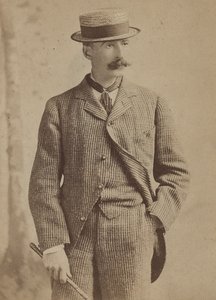
Winslow Homer

Winslow Homer

1836 - 1910, United States of America

Quick facts about Winslow Homer

  • Artistic Movement Or Style: American Realism
  • Artists Or Movements Influenced By This Artist: ['Later American painters']
  • Artists Who Influenced This Artist:
    • Courbet
    • Millet
  • Full Name: Winslow Homer
  • Nationality: American
  • Notable Artworks:
    • The Gulf Stream
    • Breezing Up (A Fair Wind)
    • Undertow
    • Natural Bridge, Bahamas
  • Place Of Birth: Boston, United States of America
  • Date Of Birth: 1836
  • Date Of Death: 1910

Artist Biography

A Brush with the American Spirit: The Life and Art of Winslow Homer

Winslow Homer, born in Boston in 1836, wasn’t sculpted by the traditional European art academies that shaped so many of his contemporaries. Instead, he emerged from a distinctly American experience, one rooted in practicality and observation. His journey began not with grand historical canvases, but as a commercial illustrator at the tender age of twelve for Harper's Weekly. This early apprenticeship was formative, honing an exceptional ability to capture scenes with clarity and detail – skills that would become hallmarks of his mature work. He wasn’t learning perspective in Paris; he was learning to *see* America, its people, and its unfolding story. The bustling streets of Boston, the quiet dignity of rural New England life, these were his first subjects, rendered with a precision born of necessity for the demands of print media. This foundation allowed him to transition into painting, initially in watercolor, before fully embracing the expressive potential of oil paints.

From Pastoral Scenes to the Raw Power of Nature

Homer’s early paintings often depicted idyllic scenes – children playing, farmers tending their fields, quiet moments of domesticity. These works, while charming, hinted at a deeper artistic sensibility waiting to be unleashed. The catalyst for this transformation was undoubtedly the Civil War. As a war correspondent for Harper's Weekly, Homer witnessed firsthand the brutal realities of conflict. He didn’t focus on heroic battles or grand strategies; instead, he documented the everyday lives of soldiers and civilians, the quiet moments of grief and resilience amidst chaos. This experience profoundly altered his artistic vision. The pastoral scenes gave way to more challenging subjects: veterans grappling with trauma, freed slaves navigating a new world, and the stark beauty of landscapes touched by hardship. He began to explore themes of struggle, isolation, and humanity’s precarious relationship with nature – themes that would dominate his most powerful works. His style also evolved, becoming bolder and more direct, reflecting the raw emotional impact of what he had witnessed.

Mastering Light, Texture, and the American Landscape

Winslow Homer's artistic technique is immediately recognizable for its solidity and texture. He wasn’t interested in fleeting impressions; he wanted to build up a sense of tangible reality on the canvas. His oil paintings are characterized by a direct painting approach – layers of paint applied with confidence, creating depth and luminosity. He possessed an extraordinary ability to capture light, whether it was the dazzling glare of the sun on the ocean or the soft glow of twilight over a rural landscape. This mastery extended to his watercolors, where he achieved remarkable atmospheric effects through vibrant colors and delicate washes. Breezing Up (A Fair Wind), painted in 1876, exemplifies this skill – a quintessential depiction of American maritime life, brimming with energy and movement. The Gulf Stream, created decades later, is perhaps his most iconic work, a powerful and symbolic portrayal of a lone man battling the forces of nature, a metaphor for human struggle against overwhelming odds. He wasn’t simply painting what he saw; he was conveying a feeling, an emotional truth about the human condition.

A Legacy Forged in American Realism

While Homer admired European artists like those of the Barbizon school – known for their realistic depictions of rural life – and acknowledged influences from Courbet and Millet, he ultimately forged his own distinctly American path. He rejected the prevailing academic conventions and instead focused on capturing the unique spirit of his country. His legacy lies in his ability to depict America with honesty and authenticity, without romanticizing or idealizing it. He wasn’t interested in imitating European styles; he wanted to create an art that was uniquely American, reflecting its landscapes, its people, and its challenges. Innocence, a poignant portrayal of childhood set against the backdrop of nature, and Man of Science, demonstrating his skill in capturing human psychology, are testaments to this commitment. His influence can be seen in the work of later American painters who sought to depict their own country with similar directness and emotional depth.

A Lasting Impression: Homer’s Historical Significance

Winslow Homer's art offers a profound window into 19th-century America, providing invaluable insights into the social, political, and cultural landscape of his time. His paintings are not merely beautiful representations; they are powerful statements about human resilience, the beauty and power of nature, and the complexities of the American experience. He died in 1910, leaving behind a prolific body of work that continues to resonate with audiences today. His ability to capture the essence of a nation undergoing rapid change – from the aftermath of civil war to the dawn of a new century – ensures his place as one of America’s most important and enduring artists. He wasn't just painting pictures; he was documenting a moment in time, preserving it for generations to come.
  • His work continues to inspire contemporary artists.
  • Homer remains a pivotal figure in the development of American Realism.

§ 5Comparanda

§ 6Questions

Quick Facts

  • Influences: Hudson River School
  • Subject or theme: Coastal seascape; leisure activities
  • Location: The Metropolitan Museum of Art
  • Year: 1899
  • Artistic style: Serene, observational

Art Quiz

There is only one correct answer for each question.

Question 1:
What artistic style is Winslow Homer primarily known for?
Question 2:
The watercolor technique employed by Homer in Sloop, Bermuda emphasizes:
Question 3:
What is notable about Homer's depiction of a dog in Sloop, Bermuda?
Question 4:
Where is Sloop, Bermuda housed?
Question 5:
What role did Harper's Weekly play in Homer’s early artistic development?

§ 7Cite this entry

AllPaintingsStore.com, “Winslow Homer, Sloop, Bermuda (1899)”, https://allpaintingsstore.com/en/art/winslow-homer-sloop-bermuda-8BX2QE-en/ArtistReproduction/ (accessed 5 October 2026).

§ 8The reproduction

Hand Made Oil Reproduction

Hand-painted oil on canvas in your size and frame, made to order by our artists. ( Switch to Print Switch to Digital Image)

It is specified on the order sheet in the margin; the present state of that sheet reads as follows.

Sloop, Bermuda

Reproduction Medium

Reproduction Size

-

Elite Senior Artist

More detail, finesse, and extra production time

-

Reproduction Frame

-

-

For artworks or reproductions larger than 105 cm (approximately 41 inches) on any side, the frame will be shipped as a kit, disassembled. This method ensures safe delivery and prevents damage during transport.

Professional assembly required - this is not a DIY product.
The kit must be assembled and the canvas stretched by an experienced professional framer, using wood glue (not supplied), a canvas stretching plier and clamps to hold the bars square while the glue dries. Incorrect assembly or uneven canvas tension can permanently damage the artwork and is not covered by our warranty.

  • All solid wood bars are included, precisely cut to size.

  • Assembled with the screws provided, plus wood glue for the corner joints, which is not supplied and must be sourced by your framer.

  • Professional tools are required and not included: a canvas stretching plier (tensioner) and clamps to hold the bars square while the glue dries.

Important:
The corner joints require wood glue, the bars must be held with clamps until the glue is fully dry, and tightening the canvas on the assembled frame requires a canvas stretching plier. None of these are included in the kit. Please arrange an experienced professional framer before ordering this size.

Nameplate

-

-

Protective Varnish

Glossy Varnish (enhances colors, protects against light/moisture)

-

Customize My Artwork

Examples of what can be changed: Replace face with customer photo; Add pet (e.g., replace cat with dog); Include hidden message in background; Change background landscape or elements.

-

Urgent

Worldwide Delivery () in 3/4 weeks instead of standard 5 weeks. (2 November). No compromise on quality.

-

Express Shipping

Worldwide Delivery () in 5 weeks. (9 November).

Included

Total Price

$ 258

Included with every order

  • Free Worldwide Express Shipping
  • High-Quality Linen Canvas
  • Full Shipping Insurance
  • Customs Tax Refund Guarantee
  • True Color Matching Guarantee
  • 100-Day Return Policy (Defects Only)
  • 100% Money-Back Guarantee
  • Bulk Discount Offer
Order sheet