

- Home

- Oil Painting Reproduction
- Benny Andrews
- Confrontation 2 (John Lewis Series)
 Buy print
 Send
Send Share
Share
 Details

 Download
 Similars
 X-Ray
X-Ray Diaporama
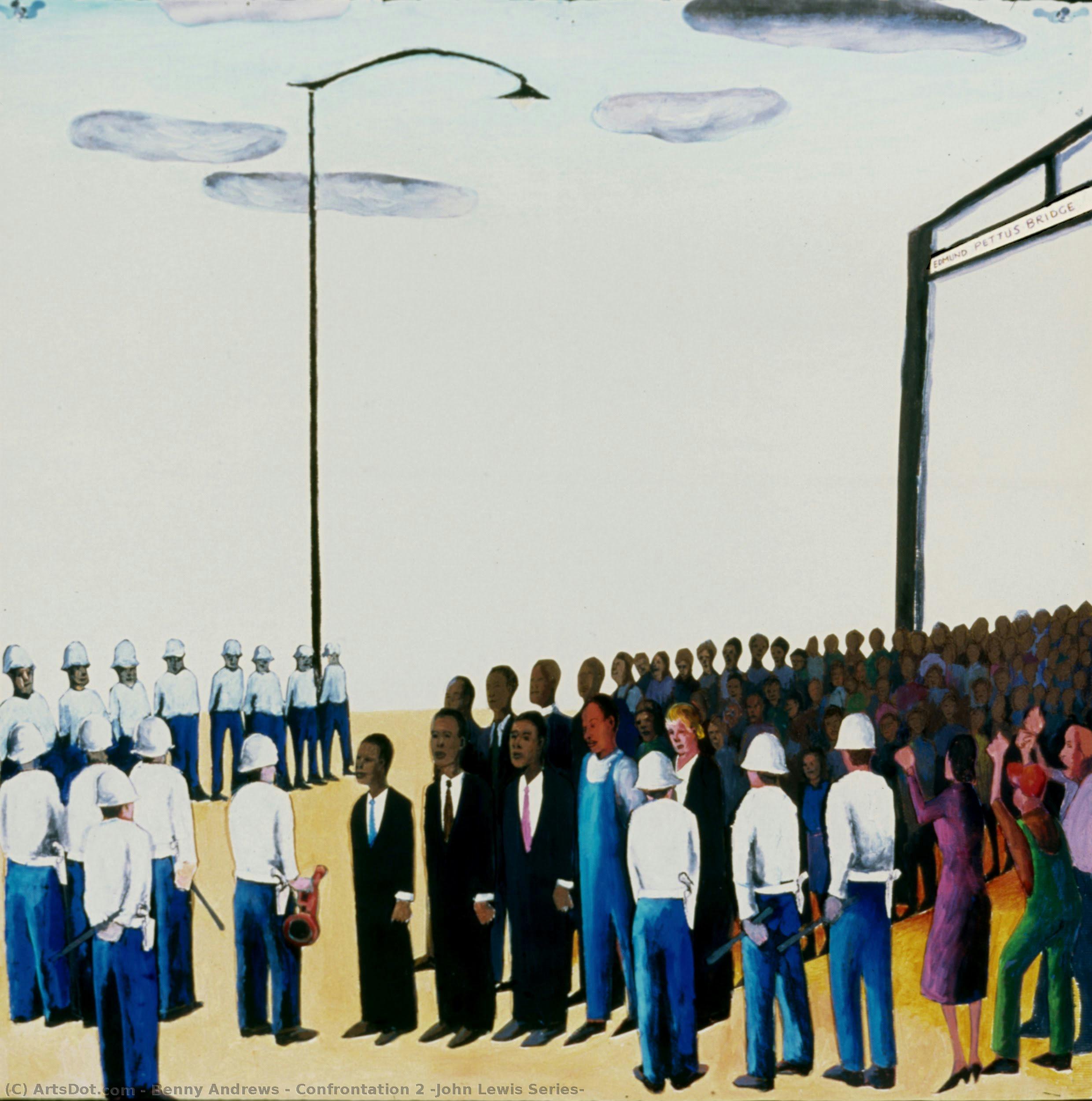
Confrontation 2 (John Lewis Series)


 Read More
Hand Made Oil Reproduction
Hand-painted oil on canvas in your size and frame, made to order by our artists.




P118B $10

P118H $10

P118W $10

P438Z $10

P508JH $12

P508YH $12

P805H $10

P805Z $10

P919BZ $10

P919G $10

P919XJ $10

P959ZH $10

P968JZ $12

W106C $8

W218G $10

W218JH $8

W218Y $10

W307PJ $10

W316G $10

W316PJ $8

W316Y $10

W398PJ $8

W4111J $10

W500HY $15

W500JH $15

W692G $12

W849H $8

W940BG $15

W953PJ $8




Pick from our preset sizes that match the artwork's original proportions.

You may enter your own dimensions to fit a specific frame or space. If your selected size does not match the original image's proportions, we will either crop the artwork or extend the painting with additional hand-painted elements. A digital mockup will be sent for your approval before production begins.
Please note that the on-screen preview does not reflect the actual cropping or extension. Only the mockup will accurately show the final composition.
While custom sizes are available, we recommend selecting a dimension from the predefined list to preserve the original proportions.
After order, AllPaintingsStore.com team will email client for instructions and provide a mockup preview
Worldwide Delivery () in 3/4 weeks instead of standard 5 weeks. (16 July). No compromise on quality.

Free Worldwide Express Shipping

High-Quality Linen Canvas

Full Shipping Insurance

Customs Tax Refund Guarantee

True Color Matching Guarantee

60-Day Return Policy (Defects Only)

100% Money-Back Guarantee

Bulk Discount Offer
 Glass option is only available in size under 110 CM

Confrontation 2 (John Lewis Series)
Reproduction Medium
Reproduction Size
-


Total Price
-
Artwork Description
A Reflection on Confrontation: Benny Andrews’ Exploration of Resilience
Benny Andrews' "Confrontation 2," part of his celebrated John Lewis Series, transcends mere depiction; it embodies a profound meditation on struggle and perseverance—themes central to both Andrews’ artistic vision and the legacy of the Civil Rights Movement. Painted in 2006, this monumental canvas captures a pivotal moment: a confrontation between protestors and police during the Selma march for voting rights, specifically referencing the Pettus Bridge incident where John Lewis bravely faced violent repression. The painting isn't simply a record of an event; it’s a visceral portrayal of human vulnerability juxtaposed against unwavering determination. Andrews employs a bold Expressionistic style characterized by distorted forms and vibrant color palettes—a deliberate departure from realistic representation—to convey the emotional intensity of the scene. Thick impasto brushstrokes dominate the composition, layering paint onto canvas to create palpable texture that mirrors the physical impact of the confrontation. Dominant hues of crimson and ochre pulsate across the surface, symbolizing anger, pain, and defiance respectively. These colors aren’t merely decorative; they actively communicate the psychological state of those involved—the protestors enduring brutality, the police enforcing order with force. The artist's masterful use of color contributes significantly to the painting's emotional resonance. The historical context surrounding "Confrontation 2" is inseparable from its significance. Andrews meticulously researched and documented the Selma march, recognizing its importance as a catalyst for legislative reform—namely, the Voting Rights Act of 1965—which dismantled discriminatory voting practices across the South. The painting serves as a powerful reminder of the sacrifices made by activists like John Lewis in pursuit of justice and equality. Furthermore, Andrews’ artistic choices reflect the broader ethos of the Civil Rights Movement: embracing nonviolent resistance as a means of achieving transformative change. Symbolically, the composition speaks volumes about confronting adversity head-on—a concept powerfully conveyed through the central figures depicted. The positioning of the individuals—grouped together yet facing outward—represents solidarity and collective courage in the face of oppression. The inclusion of a traffic light symbolizes vigilance and awareness—the need to remain watchful against injustice while striving for progress. Finally, Andrews’ deliberate use of lighting—casting shadows across the scene—underscores the darkness of repression but simultaneously illuminates the unwavering spirit of those determined to overcome it. Ultimately, "Confrontation 2" compels viewers to contemplate not only the historical narrative but also its enduring relevance. It's a testament to Andrews’ ability to transform observation into profound artistic expression—a celebration of resilience and an invitation to grapple with uncomfortable truths. The painting remains a poignant emblem of the Civil Rights Movement's struggle for dignity and freedom, continuing to inspire reflection on themes of courage, compassion, and unwavering commitment to justice.Related Artworks




Artist Biography
Benny Andrews: Life & Legacy
Early Life and Education
- Born: November 13, 1930, in Plainview, Georgia.
- Andrews grew up in a large family of ten children. His mother, Viola, instilled the importance of education, religion, and freedom of expression.
- Early Influences: His father, George Andrews, was a self-taught artist known locally as the “Dot Man,” who sparked Benny’s initial interest in art.
- He attended Fort Valley College on a two-year scholarship but left due to financial constraints and academic struggles.
- Andrews served in the U.S. Air Force from 1950 before pursuing formal artistic training.
Artistic Development & Career
- Andrews received his BFA from the School of the Art Institute of Chicago.
- He held his first solo exhibition in New York City in 1962, marking a significant step in his career.
- From 1968 to 1997, Andrews dedicated himself to teaching at Queens College, City University of New York.
- Prison Arts Program: He founded and directed a groundbreaking prison arts program that became a national model for rehabilitation through artistic expression.
- His work evolved into an expressive style characterized by bold colors and forms used to convey powerful emotions and social commentary.
Themes & Influences
- Key Themes: Andrews’ art frequently addressed themes of suffering, injustice, racial inequality, and the African American experience.
- His work often served as a visual protest against social and political issues of his time.
- He drew inspiration from personal experiences, observations of everyday life, and historical events.
- Artistic Influences: While developing his unique style, Andrews was influenced by various artistic movements, including Expressionism and Social Realism.
Notable Works
- Confrontation 2 (John Lewis Series): A powerful painting reflecting on the Civil Rights Movement and the struggles for equality.
- No More Games: A work that confronts issues of social injustice and inequality with raw emotion.
- Death of the Crow (1965): An early example of his expressive style, rendered in black and white oil on canvas.
Legacy & Historical Significance
- Benny Andrews’ work is featured in museum collections such as the Museum Collection Hugo Fischer (Bühl, Germany) and the Ogden Museum of Southern Art in New Orleans.
- Impact on Arts Education: His prison arts program demonstrated the transformative power of art for individuals facing incarceration.
- Andrews’ artistic contributions helped to raise awareness about social issues and promote dialogue around race, inequality, and justice.
- He passed away on November 10, 2006, leaving behind a lasting legacy as an artist, educator, and advocate for social change.

Benny Andrews
1930 - 2006 , United States of America
Quick Facts
- Dot Man')", 'Movement: Expressionism
- Birth Date: November 13, 1930
- Birth Place: Plainview, Georgia, USA
- Death Date: November 10, 2006
- Influenced: None, 'influenced by':
- Name: Benny Andrews
- Nationality: American
- Notable Works:
- Confrontation 2 (John Lewis Series)
- No More Games
- Death of the Crow
Related Articles

Sir John Tenniel: A Visual Chronicler of Victorian Society – Caricature, Illustration & Cultural Impact
Explore the life & work of Sir John Tenniel, Victorian England's master illustrator & political cartoonist. Discover his iconic 'Alice in Wonderland' art and lasting impact on satire & visual culture.
Beatrice Parsons: A Study in Abstract Expressionism & the Poetics of Color Field Painting
Explore the captivating world of Beatrice Parsons, a pioneering British abstract expressionist. Discover her journey from garden watercolors to evocative color field paintings and learn about her place within art history.

Morris Louis: Pioneering Color Field Painting & Abstract Expressionism's Legacy
Explore the groundbreaking abstract expressionism of Morris Louis, a pioneer of Color Field painting. Discover his innovative techniques, influential series & lasting legacy in post-war American art. Learn more at AllPaintingsStore.

John Augustus Atkinson: Romantic Visions of Rural England & Genre Painting's Evolution
Explore the captivating world of John Augustus Atkinson (1775-1830), a key figure in British Romanticism and genre painting. Discover his stunning Russian history scenes, naval art & delicate watercolors. Learn about his legacy at AllPaintingsStore.

Sir John Lavery: A Study in Scottish Impressionism & the Portraiture of a Generation
Explore the life & art of Sir John Lavery, a master of Scottish Impressionism and renowned portraitist. Discover his captivating works, Irish heritage, and lasting legacy with AllPaintingsStore.





