![[untitled] — Miné Okubo](/media/artworks/images-full/30/dc/30dc3237ae833bb1edee8fdb34914e73.jpg)
 Preview
 Send
Send Share
Share
 Details
 Guide
Guide

 Download
 Similars
 X-Ray
X-Ray Diaporama
 Stats
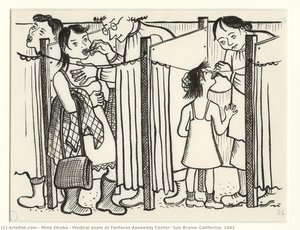
Stats[Untitled]


 Read More
The artwork displayed on this page is protected by copyright law, which means we cannot legally create or sell an identical reproduction. This protection is enforced under international agreements such as the Berne Convention and by national laws, including those outlined by the U.S. Copyright Law - Title 17.
This method fully complies with copyright regulations because it does not involve copying or duplicating the protected artwork. Instead, it is a creative reinterpretation - a new painting that is influenced by the original but not identical to it.
Giclée / Art Print
Museum-quality giclée or canvas print with fast production and flexible finish options. ( Buy Hand Made Painting Switch to Digital Image)




P118B $10

P118H $10

P118W $10

P438Z $10

P508JH $12

P508YH $12

P805H $10

P805Z $10

P919BZ $10

P919G $10

P919XJ $10

P959ZH $10

P968JZ $12

W106C $8

W218G $10

W218JH $8

W218Y $10

W307PJ $10

W316G $10

W316PJ $8

W316Y $10

W398PJ $8

W4111J $10

W500HY $15

W500JH $15

W692G $12

W849H $8

W940BG $15

W953PJ $8




Pick from our preset sizes that match the artwork's original proportions.

Type the width and the height you need, to fit your frame or your wall. A print can only be cut, never made bigger than the picture, so a size with a different shape loses a part of the image. We send you a digital mockup to approve before we print anything. The picture shown on this page does not show the real cut — only the mockup does.
Worldwide Delivery () in 2 weeks instead of standard 4/5 weeks. (25 October)

Free Worldwide Express Shipping

High-Quality Linen Canvas

Full Shipping Insurance

Customs Tax Refund Guarantee

True Color Matching Guarantee

100-Day Return Policy (Defects Only)

100% Money-Back Guarantee

Bulk Discount Offer
 Glass option is only available in size under 110 CM
![[Untitled]](/static/images/allpaintingsstore/artworks/painting.a1e74a1cb7dc.png)
[Untitled]
Giclée / Art Print
Reproduction Size
-


Total Price
$ 65
A Silent Testimony: Miné Okubo’s “Untitled” (1974)
Within the vibrant tapestry of Miné Okubo's oeuvre lies "Untitled," a 1974 painting that transcends mere representation, becoming instead a potent distillation of trauma and resilience. More than just an image, it is a carefully constructed visual narrative born from the crucible of World War II internment, offering a rare glimpse into the lived experience of Japanese Americans unjustly confined during a dark chapter in American history. The piece’s immediate impact lies in its bold color palette – a dynamic interplay of fiery reds and yellows dominating the central figure, contrasted against the calming blues of her bed and the distant expanse of the sky. This deliberate use of color isn't merely decorative; it speaks to both the intensity of emotion experienced within the camps and the yearning for freedom and tranquility.
- Style & Technique: Okubo’s style leans heavily into abstraction, a conscious choice reflecting the disorientation and emotional upheaval she endured. The figure is rendered with simplified forms, almost schematic in its execution, yet imbued with an undeniable sense of presence. Thick brushstrokes and layered paint create texture and depth, mirroring the complexities of her memories.
- Composition: The composition itself is carefully considered. The seated woman occupies a central position, drawing the viewer’s eye immediately. The sailboats in the background – a recurring motif in Okubo's work – symbolize both escape and the enduring connection to nature, hinting at a longing for a life beyond confinement.
Echoes of Internment: Historical Context
To fully appreciate “Untitled,” one must understand its genesis within the context of Japanese American internment. Following Executive Order 9066 in 1942, over 120,000 people of Japanese descent – including citizens and legal residents – were forcibly removed from their homes along the West Coast and incarcerated in camps like Tanforan and Topaz. Okubo’s experience within these camps is meticulously documented in her seminal graphic novel, *Citizen 13660*, a work that serves as both personal memoir and powerful indictment of government injustice. “Untitled” can be seen as an excerpt from this larger narrative, capturing a fleeting moment of quiet contemplation amidst the chaos and uncertainty of wartime.
The painting’s creation occurred in 1974, decades after her release from the camps. This considerable distance allows Okubo to revisit her memories with a degree of emotional detachment, yet the underlying trauma remains palpable. The work isn't about depicting the horrors of internment directly; instead, it focuses on conveying the internal landscape – the feelings of isolation, longing, and ultimately, resilience – that shaped her experience.
Symbolism & Inner Landscape
Beyond its immediate visual impact, “Untitled” is rich in symbolic meaning. The woman’s posture—seated, relaxed yet alert—suggests a quiet strength and an ability to find moments of peace within a profoundly unsettling environment. Her gaze, though not explicitly rendered, feels directed outward, perhaps towards the distant horizon or simply inward, reflecting on her past. The use of red and yellow – colors often associated with warmth, energy, and passion – could represent both the intensity of her emotions and the enduring spirit of hope.
The inclusion of the sailboats is particularly significant. They are not merely decorative elements; they symbolize a yearning for freedom, travel, and connection to the wider world. For those who experienced internment, the sea represented an escape route, a promise of a life beyond the confines of the camps. It’s a poignant reminder of what was lost and a testament to the enduring human desire for liberation.
A Legacy of Witness: Emotional Resonance
"Untitled" is more than just a painting; it's a powerful act of remembrance. Miné Okubo’s decision to transform her traumatic experiences into art serves as an extraordinary example of resilience and artistic courage. The work invites viewers to contemplate the complexities of identity, justice, and the enduring power of the human spirit. Its quiet intensity and evocative symbolism resonate deeply, prompting reflection on themes of displacement, loss, and ultimately, hope. Reproductions of this piece offer a tangible connection to Okubo’s story—a chance to honor her legacy as a vital chronicler of American history and a testament to the transformative power of art.
Questions & Answers
How do medium and movement combine in "[Untitled]"?
"[Untitled]" by Miné Okubo combines the acrylic on canvas technique with the Abstract Expressionism style. Technique and movement describe the making and the style of the work.
What is the emotional tone of "[Untitled]" by Miné Okubo?
"[Untitled]" is associated with a nostalgic feeling. The emotional tone describes the impression the work gives.
What explains the copyright situation of "[Untitled]" by Miné Okubo?
The copyright status of "[Untitled]" - still protected by copyright - follows from the artist's death in 2001.
Related Artworks


![[untitled] — Miné Okubo, Abstract Expressionism](/media/artworks/images-thumb/2d/1a/2d1ab4113ff1cb7ddab597d5f396ad91.jpg)

![[untitled] — Miné Okubo, Abstract Expressionism](/media/artworks/images-thumb/89/26/89261e2fd69db06389a5f7945b0df282.jpg)


Artist Biography
A Life Etched in Resilience: The Art of Miné Okubo
Miné Okubo, born in Riverside, California, in 1912, was an artist whose life became inextricably linked to a pivotal and painful chapter in American history. Her story is not simply one of artistic talent, but of profound courage, unwavering observation, and the power of art as witness. From her early encouragement within a family that valued creativity – her mother a skilled calligrapher, her father a scholar – Okubo embarked on a path toward formal training, studying at the University of California, Berkeley, and later venturing to Europe in 1938 to broaden her artistic horizons. This period of study was abruptly curtailed by the looming shadow of World War II, forcing her return to America just as global tensions reached a boiling point. Little could she have known that this homecoming would lead not to continued artistic exploration, but to forced incarceration and an experience that would define both her life and her art.Bearing Witness: Art Within the Walls
The attack on Pearl Harbor irrevocably altered the course of Okubo’s life, as it did for countless other Japanese Americans. In 1942, she and her brother Benji were uprooted from their home and unjustly confined to the Tanforan Assembly Center, a converted racetrack that served as a temporary holding facility before transfer to the more permanent Topaz War Relocation Center in Utah. It was within these barbed-wire confines, amidst the dust and despair, that Okubo embarked on her most significant artistic undertaking. Driven by an almost compulsive need to document the reality around her, she began creating a remarkable visual record of camp life – over 2,000 drawings and sketches meticulously rendered in pen and ink, watercolor, and charcoal. These weren’t grand historical paintings or idealized portraits; they were raw, honest depictions of daily existence: crowded living quarters, bureaucratic processes, the faces etched with worry and resignation, moments of quiet dignity amidst profound hardship. She captured the mundane details – laundry hanging on lines, children playing in the dust, meals served in mess halls – transforming them into powerful statements about resilience and the erosion of civil liberties. Okubo’s art wasn't merely a personal response; it was an act of defiance, a refusal to be silenced or erased.Citizen 13660: A Testament to Dehumanization and Hope
Upon her release from Topaz in 1944, Okubo channeled her experiences into a groundbreaking work of art and literature: Citizen 13660. Published in 1946, the book comprised 198 of her drawings accompanied by poignant text. The title itself is deeply symbolic, referencing the number assigned to her within the internment system – a stark reminder of the dehumanizing process she and so many others endured. Citizen 13660 wasn’t simply a chronicle of suffering; it was a nuanced portrayal of human spirit in the face of adversity. Okubo didn't shy away from depicting the indignities and injustices, but she also captured moments of community, humor, and quiet strength. The drawings are characterized by their directness, emotional depth, and masterful use of line and shadow. The book quickly became a seminal work documenting the Japanese American internment experience, offering an unflinching look at a dark chapter in American history that many preferred to ignore.A Continuing Legacy: Art as Social Commentary
Following the war, Okubo relocated to New York City and continued her artistic career, working as a freelance illustrator for magazines and books, and undertaking mural projects. While she never fully abandoned the themes of social justice and human dignity that had defined her wartime work, her style evolved over time. She explored different mediums and techniques, but always maintained a commitment to realism and honest observation. Okubo’s artistic influences were diverse, drawing inspiration from the Social Realist movement – which emphasized depicting social issues and everyday life with unflinching accuracy – and artists like Käthe Kollwitz, renowned for her powerful depictions of human suffering. Throughout her career, she received numerous awards and recognitions, including grants from the National Endowment for the Arts, acknowledging the significance of her contributions to American art and culture. Miné Okubo passed away in 2001, leaving behind a legacy that continues to resonate today. Her work serves as a potent reminder of the fragility of civil liberties, the importance of vigilance against prejudice and discrimination, and the enduring power of art to bear witness, challenge injustice, and inspire hope. Her drawings are not just historical documents; they are deeply human stories etched in ink and watercolor, demanding that we remember, learn from, and never repeat the mistakes of the past.
Miné Okubo
1912 - 2001 , United States of America
Quick Facts
- Full Name: Miné Okubo
- Nationality: American
- Date Of Birth: 1912
- Date Of Death: 2001
- Place Of Birth: Riverside, United States of America
- Notable Artworks:
- Citizen 13660
- Interior of Mine and Toku
- Working at the Topaz Times
- Artistic Movement Or Style: Social Realism
- Artists Who Influenced This Artist: ['Käthe Kollwitz']
- Artists Or Movements Influenced By This Artist: ['Civil Rights Movement']
Related Articles

American Regionalism: The Soul of the Heartland and the Mastery of Grant Wood
Explore the profound history of American Regionalism. Discover how Grant Wood captured the heart of the Midwest through masterpieces like American Gothic. An expert guide to the movement, its cultural impact, and the enduring beauty of American Realism.
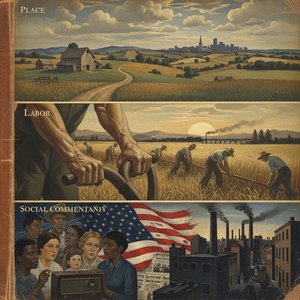
American Regionalism: A Crucible of Identity – Exploring Themes of Place, Labor & Social Commentary
Explore American Regionalism's powerful depiction of the American heartland during the Great Depression. Discover Grant Wood, Thomas Hart Benton & more. Expert analysis & high-quality art reproductions at AllPaintingsStore.

Grant Wood & American Regionalism: Identity, Myth & the Rural Landscape
Explore the world of Grant Wood & American Regionalism with AllPaintingsStore. Discover the symbolism behind 'American Gothic', recurring themes, and the movement's lasting impact on art history. High-quality reproductions available.
American Realism's Defining Works: 10 Masterpieces for Your Home
Explore 10 defining American Realism masterpieces – Hopper, Homer & more. Discover the stories behind these iconic paintings and bring timeless art to your home with AllPaintingsStore's museum-quality reproductions. Explore the full collection online.
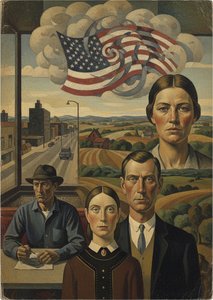
Echoes of Place: Regionalism & American Identity in Interwar Art
Explore the rise of American Regionalism in interwar art! Discover Grant Wood, Thomas Hart Benton & the movement's impact on American identity. Expert analysis & historical context.
![[Untitled]](/media/artworks/images-thumb/99/e8/99e8a9067d016b065f6cdee3ab5f27d0.jpg)