Money-Back Guarantee · 100 days Free Worldwide Delivery
449,587artworks 30,613artists 4,660museums 32languages
Currency
    Language
      Atelier · Est. 2015 · Paris, France
      AllPaintingsStore
      allpaintingsstore.com
      Catalogue entry

      Erasing

      Gouache.

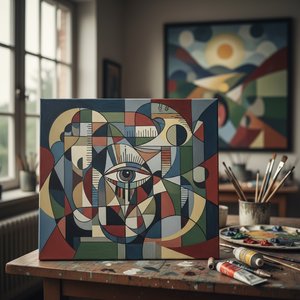
      Fig. 1. Paul Klee, Erasing. Shown as the reproduction you are specifying: , .

      § 1Catalogue data

      § 2Abstract

      Collectible Description

      Paul Klee's "Erasing" depicts a distorted face overlaid with a cross, rendered in warm reds and oranges. Smaller faces surround the central figure, embodying Klee’s signature blend of abstraction and emotional resonance.

      Artist Biography

      Paul Klee blended Expressionism and Cubism in works like Ships in the Dark. Discover his vibrant world of color and form today.

      § 3Commentary

      The Fragility of Memory and Form

      In the twilight of his prolific career, Paul Klee gifted the world with Erasing, a work that serves as a haunting meditation on the ephemeral nature of existence. Painted in 1940, amidst the profound shadows cast by the Second World War, this canvas transcends mere abstraction to touch upon the very essence of loss and transformation. The painting presents an enigmatic central face, marked by a striking cross, which acts as a focal point for a larger, fragmented dance of smaller, ghostly impressions. These faces, scattered across the composition like echoes in a fading dream, suggest a struggle against the inevitable tide of forgetting. It is a piece that does not merely depict a subject but captures a psychological state, inviting the viewer to contemplate the instability of our own recollections and the beauty found within the process of decay.

      A Masterful Symphony of Texture and Tone

      Klee’s technical prowess is on full display through his meticulous layering of color and texture, creating a surface that feels both deeply physical and ethereally light. Utilizing a sophisticated blend of watercolor washes and gouache, the artist achieves a depth that draws the eye into its warm, earthy depths. The palette—a rich arrangement of reds, oranges, and deep browns—evokes a sense of autumnal melancholy, yet it remains vibrantly alive with energy. Through the use of thick impasto strokes, Klee adds a tactile dimension to the work, allowing light to catch the ridges of paint and breathe life into the distorted features. This interplay between the delicate transparency of washes and the heavy presence of impasto mirrors the tension between the seen and the unseen, the tangible and the spiritual.

      An Enduring Legacy for the Discerning Collector

      For the art enthusiast or the interior designer seeking a centerpiece with profound narrative weight, Erasing offers an unparalleled opportunity to possess a fragment of modern history. The painting’s ability to harmonize geometric precision with organic spontaneity makes it a versatile yet commanding presence in any curated space. It functions not just as decoration, but as a conversation piece that bridges the gap between Surrealist mystery and Expressionist emotion. Whether placed in a contemporary gallery setting or a sophisticated private study, this reproduction of Klee’s vision brings an atmosphere of intellectual stimulation and contemplative warmth, reminding us that even in the act of erasing, there is a profound creation of meaning.

      Questions & Answers

      Is there a slideshow for "Erasing" by Paul Klee?

      "Erasing" by Paul Klee can be viewed as a slideshow on the artwork's Diaporama page.

      Where can I buy a hand-painted reproduction of "Erasing" by Paul Klee?

      Hand-painted copies of "Erasing" by Paul Klee are sold on this website: a hand-painted oil reproduction on linen canvas, ordered from its Hand-Painted Reproduction page.

      What feeling does "Erasing" by Paul Klee convey?

      "Erasing" by Paul Klee conveys a reflective feeling within an overall calm mood.
      § 4The artist

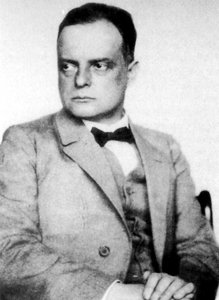
      Paul Klee

      Paul Klee

      1879 - 1940, Switzerland

      Quick facts about Paul Klee

      • Artistic Movement Or Style:
        • Expressionism
        • Cubism
        • Surrealism
      • Artists Who Influenced This Artist:
        • Pablo Picasso
        • Georges Braque
        • Robert Delaunay
        • Vincent van Gogh
        • Paul Cézanne
      • Full Name: Paul Klee
      • Nationality: German and Swiss
      • Notable Artworks:
        • Hammamet with Its Mosque
        • Ships in the Dark
        • Walpurgis Night
        • The Protector
      • Place Of Birth: Münchenbuchsee, Switzerland
      • Date Of Birth: 1879
      • Date Of Death: 1940

      Artist Biography

      A Life of Line and Lyricism

      Born in Münchenbuchsee, Switzerland, on December 18, 1879, Paul Klee entered a world shaped by the rhythms of music. His father, Hans Wilhelm Klee, was a German music teacher, and his mother, Ida Marie, was a Swiss singer. This early immersion in sound provided a foundation for a visual language that often mirrored musical arrangement. While he initially pursued the violin with great talent, eventually deciding that modern music lacked the creative pull he craved, he turned his focus toward the Academy of Fine Arts in Munich. His studies there between 1898 and 1901 were marked by an early mastery of drawing, though he famously struggled with color during those first cold winters.

      The transition from a draftsman to an abstract thinker was not immediate. Klee’s early years involved exploring the boundaries of Symbolism and Art Nouveau, often working in black and white or through experimental techniques like needle drawing on blackened glass. A significant shift occurred in 1914 during a visit to Tunisia. The intense light of North Africa allowed him to detach color from physical description, using it instead as an independent force. This period provided the necessary push toward abstraction, moving his work away from mere representation and toward a more personal, symbolic vocabulary.

      The Bauhaus Years and Political Shadows

      Klee’s career reached a period of intense theoretical and creative activity during his time at the Bauhaus. From 1920 to 1930, he joined the faculty of this influential school of design and architecture, working alongside figures like Wassily Kandinsky. It was here that much of his prolific output occurred, particularly small-scale watercolors and drawings on paper. His teaching allowed him to explore the relationship between color and form with scientific precision, a subject he documented extensively in his notebooks. These writings, which examined the mechanics of design, are now regarded as essential texts for understanding modern composition.

      The stability of this era was abruptly interrupted by the rise of National Socialism. In 1933, Klee was dismissed from his position at the Academy of Fine Arts in Düsseldorf because the Nazi regime classified his work as “degenerate.” Forced to return to his native Bern, his later years were marked by a shift in tone. As political turmoil grew and his own health declined, his lines became heavier, turning into black bars, and his forms grew more generalized. The whimsicality of his earlier years gave way to a more somber, melancholic perspective, reflecting the gravity of the era.

      A Lasting Visual Language

      The breadth of Klee’s output is immense, totaling some 10,000 works that range from delicate sketches to larger, more structured compositions. His ability to blend influences from Cubism, Expressionism, and Surrealism resulted in a style that felt both childlike and deeply intellectual. He utilized a variety of media, including:

      • Zinc-plate etchings
      • Watercolor on gauze and paper
      • Lithographs
      • Charcoal and pencil drawings

      His work remains a study in balance, where titles often provided the necessary context for his often cryptic imagery. Whether through the use of simple stick figures or complex, colorful grids, he sought to express the inner world of ideas rather than the surface of reality. He died on June 29, 1940, in Muralto, Switzerland, leaving behind a body of work that bridged the gap between the figurative and the abstract.

      § 5Comparanda

      § 6Questions

      Quick Facts

      • Artist: Paul Klee
      • Dimensions: 23 x 18 cm
      • Subject or theme: Human figure; Spirituality
      • Movement: Expressionism
      • Artistic style: Abstract Expressionism
      • Location: Neue Sammlung, Munich

      Art Quiz

      There is only one correct answer for each question.

      Question 1:
      What artistic movement is Paul Klee primarily associated with?
      Question 2:
      The painting prominently features a cross in the center of what?
      Question 3:
      What color palette dominates the overall aesthetic of “Erasing”?’
      Question 4:
      Paul Klee’s artistic approach can be described as...
      Question 5:
      Considering Klee's background in music, how does “Erasing” reflect this influence?

      § 7Cite this entry

      AllPaintingsStore.com, “Paul Klee, Erasing”, https://allpaintingsstore.com/en/art/paul-klee-erasing-8LT44B-en/ArtistReproduction/ (accessed 1 October 2026).

      § 8The reproduction

      Hand Made Oil Reproduction

      Hand-painted oil on canvas in your size and frame, made to order by our artists. ( Switch to Print Switch to Digital Image)

      It is specified on the order sheet in the margin; the present state of that sheet reads as follows.

      Erasing

      Reproduction Medium

      Reproduction Size

      -

      Elite Senior Artist

      More detail, finesse, and extra production time

      -

      Reproduction Frame

      -

      -

      For artworks or reproductions larger than 105 cm (approximately 41 inches) on any side, the frame will be shipped as a kit, disassembled. This method ensures safe delivery and prevents damage during transport.

      Professional assembly required - this is not a DIY product.
      The kit must be assembled and the canvas stretched by an experienced professional framer, using wood glue (not supplied), a canvas stretching plier and clamps to hold the bars square while the glue dries. Incorrect assembly or uneven canvas tension can permanently damage the artwork and is not covered by our warranty.

      • All solid wood bars are included, precisely cut to size.

      • Assembled with the screws provided, plus wood glue for the corner joints, which is not supplied and must be sourced by your framer.

      • Professional tools are required and not included: a canvas stretching plier (tensioner) and clamps to hold the bars square while the glue dries.

      Important:
      The corner joints require wood glue, the bars must be held with clamps until the glue is fully dry, and tightening the canvas on the assembled frame requires a canvas stretching plier. None of these are included in the kit. Please arrange an experienced professional framer before ordering this size.

      Nameplate

      -

      -

      Protective Varnish

      Glossy Varnish (enhances colors, protects against light/moisture)

      -

      Customize My Artwork

      Examples of what can be changed: Replace face with customer photo; Add pet (e.g., replace cat with dog); Include hidden message in background; Change background landscape or elements.

      -

      Urgent

      Worldwide Delivery () in 3/4 weeks instead of standard 5 weeks. (29 October). No compromise on quality.

      -

      Express Shipping

      Worldwide Delivery () in 5 weeks. (5 November).

      Included

      Total Price

      $ 258

      Included with every order

      • Free Worldwide Express Shipping
      • High-Quality Linen Canvas
      • Full Shipping Insurance
      • Customs Tax Refund Guarantee
      • True Color Matching Guarantee
      • 100-Day Return Policy (Defects Only)
      • 100% Money-Back Guarantee
      • Bulk Discount Offer
      Order sheet