- Home

- Oil Painting Reproduction
- Paul Nash
- Harbour and Room

 Buy print
 Send
Send Share
Share
 Details

 Download
 Similars
 X-Ray
X-Ray Diaporama
Harbour and Room
 Oil On Canvas
- WallArt
- Surrealism
 1932
1932 91.0 x 71.0 cm
 Tate Liverpool
 Read More
Hand Made Oil Reproduction
Hand-painted oil on canvas in your size and frame, made to order by our artists.




P118B $10

P118H $10

P118W $10

P438Z $10

P508JH $12

P508YH $12

P805H $10

P805Z $10

P919BZ $10

P919G $10

P919XJ $10

P959ZH $10

P968JZ $12

W106C $8

W218G $10

W218JH $8

W218Y $10

W307PJ $10

W316G $10

W316PJ $8

W316Y $10

W398PJ $8

W4111J $10

W500HY $15

W500JH $15

W692G $12

W849H $8

W940BG $15

W953PJ $8




Pick from our preset sizes that match the artwork's original proportions.

You may enter your own dimensions to fit a specific frame or space. If your selected size does not match the original image's proportions, we will either crop the artwork or extend the painting with additional hand-painted elements. A digital mockup will be sent for your approval before production begins.
Please note that the on-screen preview does not reflect the actual cropping or extension. Only the mockup will accurately show the final composition.
While custom sizes are available, we recommend selecting a dimension from the predefined list to preserve the original proportions.
After order, AllPaintingsStore.com team will email client for instructions and provide a mockup preview
Worldwide Delivery () in 3/4 weeks instead of standard 5 weeks. (16 July). No compromise on quality.

Free Worldwide Express Shipping

High-Quality Linen Canvas

Full Shipping Insurance

Customs Tax Refund Guarantee

True Color Matching Guarantee

60-Day Return Policy (Defects Only)

100% Money-Back Guarantee

Bulk Discount Offer
 Glass option is only available in size under 110 CM

Harbour and Room
Reproduction Medium
Reproduction Size
-


Total Price
-
Artwork Description
Paul Nash: Bridging Surrealism and Landscape – An Exploration of Isolation and Remembrance
Paul Nash (1889–1946) stands as one of the most distinctive voices in British Modernism, a painter whose unsettling visions of the natural world captivated audiences during his lifetime and continue to resonate with contemporary viewers. Born in Kensington, London, Nash’s formative years were marked by familial upheaval – his mother suffered from mental illness, prompting a move to Iver Heath where he hoped for respite. This early experience instilled within him a profound sensitivity to psychological states, which would subsequently permeate his artistic output. His formal training at the Slade School of Fine Art solidified his dedication to landscape painting, though he deliberately shunned figure drawing, prioritizing instead the exploration of mood and atmosphere through meticulously crafted compositions.- Early Influences: Nash’s artistic sensibilities were profoundly shaped by figures like William Blake and J.M.W. Turner. Blake's mystical symbolism and Turner’s dramatic depictions of light and shadow served as crucial precedents for Nash’s approach to portraying the sublime—the awe-inspiring grandeur of nature that simultaneously inspires terror and reverence.
- Landscape Vision: Nash’s obsession with landscapes, particularly those imbued with ancient history – burial mounds and Iron Age hill forts – became a central preoccupation throughout his career. He sought to capture not merely visual appearances but also the psychological resonance of these sites, reflecting on themes of time, mortality, and the enduring presence of the past.
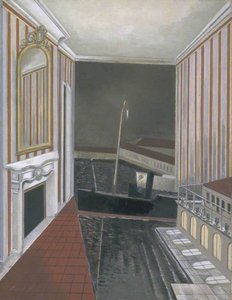
- Surrealist Techniques: By the 1930s Nash embraced Surrealism, experimenting with techniques that deliberately disrupted conventional perspective and flattened spatial depth. This stylistic shift mirrored his fascination with dreams and unconscious thought, as evidenced in paintings like ‘Harbour and Room’ where he employed a disconcerting mirror image to convey the unsettling feeling of confronting death—a preoccupation rooted in Shelley's poetic reflections on mortality.
‘Harbour and Room’: A Maze of Perception
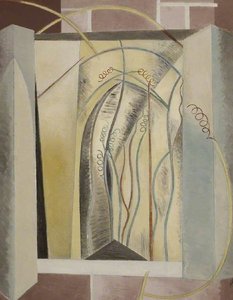
‘Harbour and Room,’ completed in 1936, exemplifies Nash’s masterful blend of Surrealist principles and meticulous observation. Painted in oil on canvas, the artwork presents a claustrophobic interior scene—a seemingly endless corridor or series of rooms dominated by muted grey tones and repetitive geometric patterns. The composition is deliberately skewed, creating a disorienting effect that draws the viewer into a labyrinthine space reminiscent of Turner’s atmospheric landscapes. Nash utilized bold lines to define walls and furniture, reinforcing the sense of confinement and mirroring the psychological anxieties explored in his oeuvre.- Symbolic Depth: The artwork's muted color palette—primarily greyed-out hues—serves as a deliberate counterpoint to the vibrancy of Turner’s canvases. Symbolically, ‘Harbour and Room’ speaks to themes of isolation, entrapment, and the unsettling nature of domesticity.
- Mirror Image: Nash's masterful use of perspective—specifically the inclusion of a large mirror reflecting ships in the harbour—represents a key element of Surrealist technique. As Margaret Nash recounted, this reflection embodies “the idea of renewal that he had expressed figuratively in Diving Stage,” highlighting Nash’s exploration of cyclical patterns and confronting mortality.
- Texture & Technique: The visible brushstrokes contribute to the painting's textural richness, conveying a sense of immediacy and capturing the subtle nuances of light and shadow—a hallmark of Nash’s artistic style.
Legacy and Influence
Nash’s contribution to British art history extends beyond his individual paintings; he profoundly impacted subsequent generations of artists who embraced Surrealism and explored similar themes of psychological landscape. His unwavering commitment to capturing the emotional essence of place—combined with his innovative stylistic approaches—solidifies his position as a pivotal figure in Modernist painting, ensuring that ‘Harbour and Room’ and other works continue to inspire contemplation and provoke dialogue about perception, memory, and the enduring power of art to confront existential anxieties. His exploration of the subconscious and his masterful depiction of desolate landscapes cemented his place among Britain's most important artists.Related Artworks





Artist Biography
Early Life and Influences
- Born: Kensington, United Kingdom (1889)
- Died: 1946
- Paul Nash was born on May 11, 1889, in London. His father, William Harry Nash, was a barrister, and his mother, Caroline Maude, displayed signs of mental illness from an early age. The family moved to Iver Heath, Buckinghamshire, when Paul was young, a move intended to benefit his mother's health.
- Education: He attended the Parsons School of Art and later the Slade School of Fine Art. While proficient in landscape painting, he struggled with figure drawing.
- Early Influences: Nash was heavily influenced by William Blake and J.M.W. Turner, evident in his early works. He also drew inspiration from landscapes featuring ancient historical elements like burial mounds and Iron Age hill forts.
Artistic Style and Development
- Style: Paul Nash's style blended modernism with traditional techniques. He utilized bold colors, geometric shapes, and abstract forms, distinguishing him from contemporaries.
- Surrealist Leanings: While not strictly a Surrealist, Nash was influenced by the movement, particularly after seeing a Giorgio de Chirico exhibition in 1928. His work incorporated symbolic landscapes with everyday objects.
- War Art: During World War I and II, Nash served as an official war artist. His depictions of battlefields were notable for their haunting beauty and exploration of the impact of conflict on the landscape. Notable works include "The Menin Road."
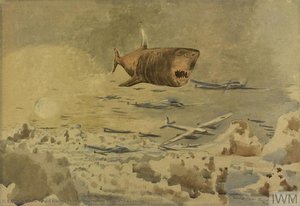
- "Aerial Creatures": A series produced during WWII featuring anthropomorphic depictions of aircraft crashed in landscapes, demonstrating his evolving style and symbolism.
Major Achievements and Recognition
- Pioneer of British Modernism: Nash played a crucial role in shaping British modern art, bridging traditional landscape painting with modernist aesthetics.
- War Art Legacy: His wartime paintings are considered iconic representations of the conflict's impact on both soldiers and the environment.
- Unit One Group: He co-founded Unit One in 1933 alongside Ben Nicholson and Barbara Hepworth, a significant group within the British art scene.
- Writer and Designer: Beyond painting, Nash was also a respected writer on art and designed applied arts such as stage scenery, fabrics, and posters.
Influences and Legacy
- Influence on Subsequent Artists: Nash's unique style and use of color influenced generations of artists who followed.
- Connection to Romanticism: His work is often linked to the English Romantic tradition, particularly through his connection to William Blake and J.M.W. Turner.
- Exploration of Man vs. Nature: A recurring theme in Nash's later works was the relationship between humanity and nature, explored through symbolic imagery.
- Continued Relevance: His paintings continue to be celebrated for their beauty, symbolism, and historical significance, remaining relevant to contemporary audiences.
Exhibitions and Collections
- Ruskin Gallery: Nash's work has been exhibited at the Ruskin Gallery in the United Kingdom.
- Tate Britain: His pieces can be found within the Tate Britain’s collection.
- Imperial War Museum: Several of his war art pieces are housed in the Imperial War Museum.
- York Art Gallery: His work is also part of the York Art Gallery's collection.
- Government Art Collection: A selection of Nash’s artworks are displayed within the Government Art Collection.

Paul Nash
1889 - 1946 , United Kingdom
Quick Facts
- Artistic Movement Or Style: Surrealism, Modernism
- Artists Or Movements Influenced By This Artist: ['Modern artists']
- Artists Who Influenced This Artist:
- William Blake
- J.M.W. Turner
- Wolfgang Lettl
- Date Of Birth: May 11, 1889
- Date Of Death: July 11, 1946
- Full Name: Paul Nash
- Nationality: British
- Notable Artworks: ['The Menin Road']
- Place Of Birth: Kensington, United Kingdom
Related Articles

Surrealist Painting Masterpieces: 10 Artworks That Redefined Reality | AllPaintingsStore
Journey into the dreamlike world of Surrealism! Explore 10 masterpieces by Dali, Magritte & Miró that redefined art. Discover their stories & find museum-quality reproductions to elevate your home decor on AllPaintingsStore.com.
René Magritte's Masterpieces: 25 Surrealist Paintings for Art Lovers | AllPaintingsStore
Explore 25 iconic René Magritte paintings & delve into the world of surrealism. Discover the stories behind 'The Son of Man', 'Golconda' & more. Find museum-quality art reproductions and elevate your home decor with AllPaintingsStore.com.

The Art of Emphasis: Scaling Artwork for Impactful Statement Walls
Elevate your interiors with impactful statement walls! Expert guide on scaling artwork for perfect proportions & design harmony. Custom solutions & free consultations at AllPaintingsStore.

Paul Nash: Modernism, Myth & the British Landscape – A Visionary Artist
Explore the evocative landscapes & poignant war art of Paul Nash (1889-1946), a key figure in British Modernism. Discover his unique style and lasting impact on art history with AllPaintingsStore.

Van Gogh's Masterpieces: Explore 25 Iconic Paintings & Art for Your Home
Journey through Vincent van Gogh's 25 most iconic paintings! Explore 'Starry Night', 'Sunflowers,' and more—discover the stories, techniques & emotions behind these Post-Impressionist masterpieces. Find museum-quality art reproductions for your home at AllPaintingsStore.com.