- Home

- Oil Painting Reproduction
- Paul Nash
- The Window, Iver Heath

 Buy print
 Send
Send Share
Share
 Details

 Download
 Similars
 X-Ray
X-Ray Diaporama
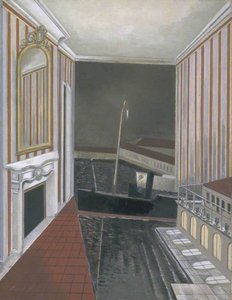
The Window, Iver Heath
 Oil On Canvas
- WallArt
- British Modernism
 84.0 x 62.0 cm
 Bbc England
 Read More
Hand Made Oil Reproduction
Hand-painted oil on canvas in your size and frame, made to order by our artists.




P118B $10

P118H $10

P118W $10

P438Z $10

P508JH $12

P508YH $12

P805H $10

P805Z $10

P919BZ $10

P919G $10

P919XJ $10

P959ZH $10

P968JZ $12

W106C $8

W218G $10

W218JH $8

W218Y $10

W307PJ $10

W316G $10

W316PJ $8

W316Y $10

W398PJ $8

W4111J $10

W500HY $15

W500JH $15

W692G $12

W849H $8

W940BG $15

W953PJ $8




Pick from our preset sizes that match the artwork's original proportions.

You may enter your own dimensions to fit a specific frame or space. If your selected size does not match the original image's proportions, we will either crop the artwork or extend the painting with additional hand-painted elements. A digital mockup will be sent for your approval before production begins.
Please note that the on-screen preview does not reflect the actual cropping or extension. Only the mockup will accurately show the final composition.
While custom sizes are available, we recommend selecting a dimension from the predefined list to preserve the original proportions.
After order, AllPaintingsStore.com team will email client for instructions and provide a mockup preview
Worldwide Delivery () in 3/4 weeks instead of standard 5 weeks. (16 July). No compromise on quality.

Free Worldwide Express Shipping

High-Quality Linen Canvas

Full Shipping Insurance

Customs Tax Refund Guarantee

True Color Matching Guarantee

60-Day Return Policy (Defects Only)

100% Money-Back Guarantee

Bulk Discount Offer
 Glass option is only available in size under 110 CM

The Window, Iver Heath
Reproduction Medium
Reproduction Size
-


Total Price
-
Artwork Description
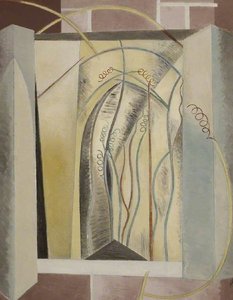
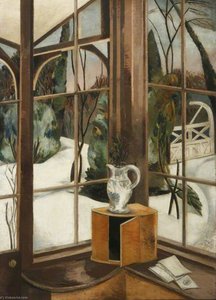
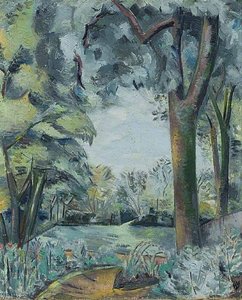
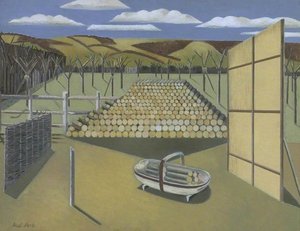
A Winter’s Still Life: Paul Nash's "The Window, Iver Heath"
Paul Nash’s “The Window, Iver Heath,” painted in 1926, isn’t merely a depiction of a room; it’s a carefully constructed meditation on observation, isolation, and the quiet beauty of the English countryside. Nestled within the confines of a large window frame, the scene unfolds as a meticulously rendered interior landscape juxtaposed with a starkly evocative winter exterior. The painting immediately draws the eye to the window itself – a rectangular portal that acts as both barrier and gateway, framing a snow-laden garden and hinting at a world beyond.
Nash, a pivotal figure in British Modernism, was deeply influenced by the Pre-Raphaelites and J.M.W. Turner, evident in his masterful use of light and color. He moved away from purely representational painting, embracing geometric forms and abstract elements – a characteristic powerfully displayed here. The window’s panes aren't simply architectural details; they become active participants in shaping the composition, dividing the scene into distinct zones of observation and experience. The overall style leans towards early 20th-century realism, yet infused with a distinctly modernist sensibility, prioritizing form and atmosphere over strict photographic accuracy.
Details of Composition and Technique
Within the window’s embrace, a sense of domestic tranquility prevails. A small wooden table holds a silver pitcher brimming with water, a delicate wooden box, and scattered sheets of paper – objects imbued with a quiet intimacy. The meticulous rendering of these items, particularly the pitcher's reflective surface and the textures of the wood, speaks to Nash’s dedication to capturing subtle details and creating a tactile quality on the canvas. The artist skillfully employs layering and glazing techniques, building up color gradually to achieve remarkable depth and luminosity – a testament to his mastery of oil paint.
Crucially, the painting isn't simply about depicting objects; it’s about their relationship to light and shadow. The strong directional light streaming through the window casts dramatic shadows, adding dimension and emphasizing the three-dimensionality of the scene. The muted color palette – dominated by blues, greens, and browns – perfectly reflects the cold, winter atmosphere outside, while the interior elements offer a subtle contrast with warmer tones. Lines are used purposefully to define shapes—the window frame’s sharp angles, the tree branches' organic curves, and the geometric forms of the furniture—creating a balanced yet dynamic composition.
Symbolism and Context
“The Window, Iver Heath” resonates with themes of observation and introspection. The act of looking through the window becomes an act of contemplation, inviting the viewer to consider both the world within and the world beyond. The winter landscape itself carries symbolic weight – representing isolation, dormancy, and perhaps a yearning for connection. Nash’s childhood spent in Iver Heath, a rural area steeped in folklore and ancient history, undoubtedly informed his artistic vision.
Furthermore, the painting can be interpreted as a reflection on the relationship between nature and domesticity. The window acts as a bridge between these two realms, suggesting a desire to integrate the beauty of the natural world into the comforts of home. The inclusion of the papers hints at creative pursuits or intellectual activity – further enriching the painting’s layered meaning.
A Timeless Masterpiece for Art and Interior Design
“The Window, Iver Heath” is more than just a beautiful painting; it's a sophisticated work of art that continues to captivate viewers with its evocative atmosphere and meticulous detail. Its timeless appeal makes it an ideal choice for collectors seeking pieces that embody the spirit of British Modernism. Reproductions offer a wonderful opportunity to bring this serene winter landscape into any interior space, adding a touch of contemplative elegance and artistic depth.




Artist Biography
Early Life and Influences
- Born: Kensington, United Kingdom (1889)
- Died: 1946
- Paul Nash was born on May 11, 1889, in London. His father, William Harry Nash, was a barrister, and his mother, Caroline Maude, displayed signs of mental illness from an early age. The family moved to Iver Heath, Buckinghamshire, when Paul was young, a move intended to benefit his mother's health.
- Education: He attended the Parsons School of Art and later the Slade School of Fine Art. While proficient in landscape painting, he struggled with figure drawing.
- Early Influences: Nash was heavily influenced by William Blake and J.M.W. Turner, evident in his early works. He also drew inspiration from landscapes featuring ancient historical elements like burial mounds and Iron Age hill forts.
Artistic Style and Development
- Style: Paul Nash's style blended modernism with traditional techniques. He utilized bold colors, geometric shapes, and abstract forms, distinguishing him from contemporaries.
- Surrealist Leanings: While not strictly a Surrealist, Nash was influenced by the movement, particularly after seeing a Giorgio de Chirico exhibition in 1928. His work incorporated symbolic landscapes with everyday objects.
- War Art: During World War I and II, Nash served as an official war artist. His depictions of battlefields were notable for their haunting beauty and exploration of the impact of conflict on the landscape. Notable works include "The Menin Road."
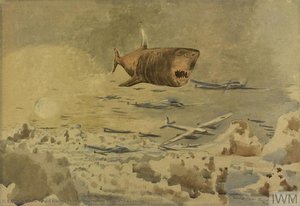
- "Aerial Creatures": A series produced during WWII featuring anthropomorphic depictions of aircraft crashed in landscapes, demonstrating his evolving style and symbolism.
Major Achievements and Recognition
- Pioneer of British Modernism: Nash played a crucial role in shaping British modern art, bridging traditional landscape painting with modernist aesthetics.
- War Art Legacy: His wartime paintings are considered iconic representations of the conflict's impact on both soldiers and the environment.
- Unit One Group: He co-founded Unit One in 1933 alongside Ben Nicholson and Barbara Hepworth, a significant group within the British art scene.
- Writer and Designer: Beyond painting, Nash was also a respected writer on art and designed applied arts such as stage scenery, fabrics, and posters.
Influences and Legacy
- Influence on Subsequent Artists: Nash's unique style and use of color influenced generations of artists who followed.
- Connection to Romanticism: His work is often linked to the English Romantic tradition, particularly through his connection to William Blake and J.M.W. Turner.
- Exploration of Man vs. Nature: A recurring theme in Nash's later works was the relationship between humanity and nature, explored through symbolic imagery.
- Continued Relevance: His paintings continue to be celebrated for their beauty, symbolism, and historical significance, remaining relevant to contemporary audiences.
Exhibitions and Collections
- Ruskin Gallery: Nash's work has been exhibited at the Ruskin Gallery in the United Kingdom.
- Tate Britain: His pieces can be found within the Tate Britain’s collection.
- Imperial War Museum: Several of his war art pieces are housed in the Imperial War Museum.
- York Art Gallery: His work is also part of the York Art Gallery's collection.
- Government Art Collection: A selection of Nash’s artworks are displayed within the Government Art Collection.

Paul Nash
1889 - 1946 , United Kingdom
Quick Facts
- Artistic Movement Or Style: Surrealism, Modernism
- Artists Or Movements Influenced By This Artist: ['Modern artists']
- Artists Who Influenced This Artist:
- William Blake
- J.M.W. Turner
- Wolfgang Lettl
- Date Of Birth: May 11, 1889
- Date Of Death: July 11, 1946
- Full Name: Paul Nash
- Nationality: British
- Notable Artworks: ['The Menin Road']
- Place Of Birth: Kensington, United Kingdom
Related Articles

George Barret the Elder: Pioneering British Pastoral Painting & Landscape's Rise
Explore the life & art of George Barret Sr., a pioneer of British pastoral painting. Discover his influence on Romantic landscape art, patronage, and collecting tips from AllPaintingsStore.

Snowy Masterpieces: 10 Famous Paintings & Art for a Winter Aesthetic
Explore 10 famous snow paintings by Monet, Degas & more! Discover the stories behind these serene winter landscapes and iconic artworks. Find museum-quality art reproductions for your home at AllPaintingsStore.com.

Brian Hatton: A Study in Early 20th-Century British Landscape Painting & Rural Identity
Explore the captivating landscapes & portraits of Brian Hatton (1887-1916), a promising British artist lost too soon. Discover his unique style, Herefordshire roots, and lasting legacy in early 20th-century art.

James Sant: Capturing Victorian Childhood & the Evolving Landscape of British Genre Painting
Explore the life & art of James Sant (1820-1916), renowned Victorian portraitist to Queen Victoria. Discover his captivating depictions of childhood, landscapes, and aristocratic society. Learn about his legacy & find fine art reproductions.

John Frederick Lewis: Orientalism, Detail & Genre Painting in 19th-Century British Art
Explore the captivating Orientalist paintings of John Frederick Lewis! Discover his mastery of detail, genre scenes & influence on 19th-century British art. Learn about his life, techniques & legacy at AllPaintingsStore.